Context & Writers Techniques (Edexcel A-Level English Literature): Revision Notes
📚Revision Notes
Context & Writer's Techniques
Context of 'Waiting for Godot'
Samuel Beckett: Life and Background
Early Life
-
Born in 1906 in Foxrock, Dublin, Ireland.
-
Studied French, Italian, and English at Trinity College Dublin.
-
Moved to Paris in 1928, where he became part of the literary and artistic circles. Career
-
Worked as James Joyce's assistant, which greatly influenced his writing.
-
Known for his works in both French and English, exploring themes of existentialism and absurdity.
-
"Waiting for Godot" (1953) is his most famous play, epitomising the Theatre of the Absurd. World War II
-
Lived in Paris during the Nazi occupation and worked with the French Resistance.
-
After being betrayed, he fled to the south of France and lived in hiding, working as a farm labourer.
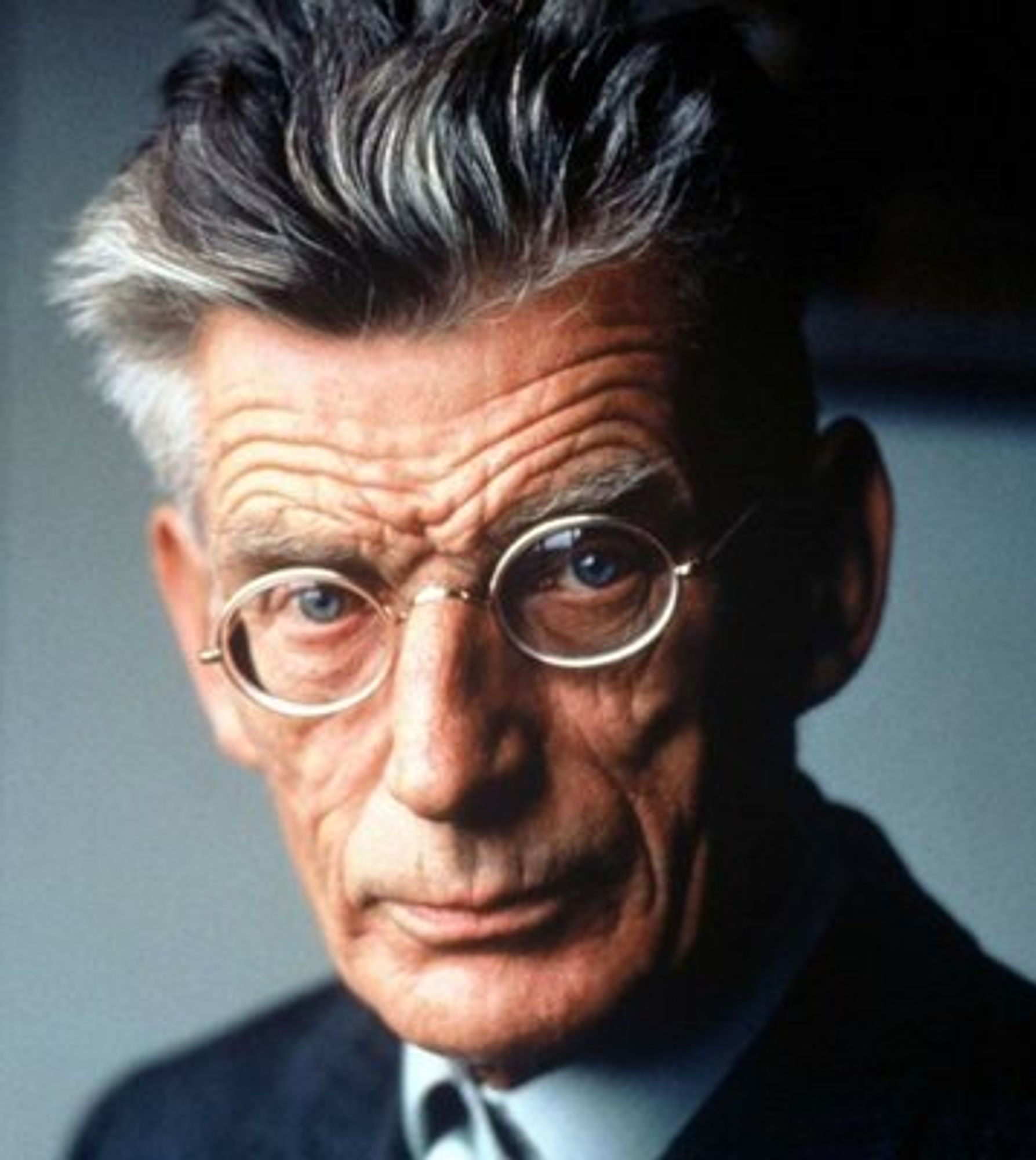
Samuel Beckett
-
Post-war, he was awarded the Croix de Guerre for his bravery. Relevance to "Waiting for Godot":
-
Beckett's wartime experiences and existential philosophy heavily influenced the themes of waiting, uncertainty, and the human condition in the play.
History of "Waiting for Godot"
Writing and Performance
-
Written in 1948-1949, originally in French as "En attendant Godot."
-
Premiered in Paris in 1953 and English at the Arts Theatre in London in 1955. Reception
-
Initially received with confusion and mixed reviews but soon gained recognition for its innovative structure and profound themes.
-
Celebrated for its minimalist approach and deep philosophical questions. Performance History
-
Performed worldwide, becoming one of the most influential plays of the 20th century.
-
Continues to be a staple in modern theatre, with various interpretations and adaptations highlighting its universal themes.
Literary Contexts
Genre of the Play
-
Theatre of the Absurd: Exemplifies the Theatre of the Absurd, characterised by existential themes, nonsensical dialogue, and minimalistic settings.
-
Emphasises the absurdity of human existence and the futility of seeking inherent meaning in life.
-
Vaudeville and Slapstick: Incorporates elements of vaudeville and slapstick comedy, as seen in the interactions between Vladimir and Estragon.
-
Beckett was influenced by silent film comedians like Charlie Chaplin, blending humour with existential dread. Historical and Political Context
-
Post-World War II: Reflects the disillusionment and existential crisis following World War II.
-
The trauma of the Holocaust and the collective guilt of survivors are subtly woven into the play's themes of memory and forgetfulness.
-
Cold War Era: Written during the early Cold War period, reflecting the pervasive sense of uncertainty and threat of nuclear annihilation. Cultural and Social Context
-
Existentialism and Absurdism: Engages deeply with existentialist and absurdist philosophy, questioning the meaning of life, the inevitability of death, and human resilience in the face of absurdity.
-
Influences from philosophers like Albert Camus and Jean-Paul Sartre are evident.
-
Religious References: Contains numerous biblical allusions, including the character Godot as a possible representation of God, and discussions of the two thieves crucified alongside Jesus. Philosophical Context
-
Existentialist Philosophy: Beckett's work is heavily influenced by existentialist thought, particularly the ideas of meaningless existence and the human condition as described by Camus and Sartre.
-
Explores themes of despair, hope, and the absurdity of life.
-
Nihilism: Elements of nihilism permeate the play, with characters confronting the void and the lack of inherent meaning in life.
Useful Contextual Concepts
- Theatre of the Absurd: Understand the characteristics of the Theatre of the Absurd, including its focus on existential themes, minimalist settings, and nonsensical dialogue.
- Post-World War II Disillusionment: Recognise the impact of World War II on the collective psyche and how it is reflected in the play's themes of uncertainty and futility.
- Existentialism and Absurdism: Familiarise with the existential and absurdist philosophies that influence the play, questioning the meaning of life and human existence.
- Religious Allusions: Be aware of the biblical references and their implications, particularly the character of Godot and the story of the two thieves.
- Nihilism: Look for the play's exploration of nihilistic themes, emphasising the absence of inherent meaning in life and the human response to this realisation.
Writer's Techniques in 'Waiting for Godot'
Minimalism and Sparse Setting
Set Design
-
The play's set is famously sparse, often limited to a single tree and a country road, emphasising desolation and emptiness.
-
Example: The minimalistic stage direction describes "A country road. A tree. Evening," which forces the audience to focus on the dialogue and interactions between characters. Focus on Dialogue
-
The lack of detailed settings ensures the audience's attention is on the characters' dialogue and existential musings.
-
Example: The interaction between Estragon and Vladimir is foregrounded by the absence of distracting scenery: "Nothing to be done," Estragon's opening line, sets the tone for the play's focus on their existential plight.
Repetition
Actions and Routines
-
Characters frequently repeat actions, phrases, and routines, which underscores the sense of stagnation and futility.
-
Example: Estragon repeatedly struggles with his boots, and Vladimir with his hat, illustrating the monotony of their existence: "Estragon: (giving up again). Nothing to be done.". Existential Theme
-
Repetition reinforces the existential theme that life is an endless cycle of waiting without meaningful progress.
-
Example: The recurring line, "We're waiting for Godot," highlights the perpetual state of anticipation without resolution.
Absurdity and Illogical Dialogue
Nonsensical Conversations
-
The dialogue often appears illogical and nonsensical, reflecting the absurdity of human existence.
-
Example: Estragon and Vladimir's discussions frequently drift into absurdity: "Estragon: What did we do yesterday? Vladimir: What did we do yesterday?". Disorientation
-
Characters engage in conversations that lack conventional structure and coherence, mirroring the chaotic nature of the world.
-
Example: The circular nature of their dialogue, such as "Vladimir: What do we do now? Estragon: Wait." creates a sense of confusion and lack of direction. Questioning Reality
-
The absurdity serves to disorient the audience, making them question the nature of reality and communication.
-
Example: The discussion about meeting Godot involves contradictory statements that undermine any clear understanding: "Estragon: And if he comes? Vladimir: We'll be saved.".
Silence and Pauses
Tension and Isolation
-
The strategic use of silence and pauses in the dialogue creates tension and emphasises the characters' isolation and despair.
-
Example: The frequent pauses, such as after Vladimir's hopeful assertions, "(Silence.)" highlight the uncertainty and discomfort in their wait. Emphasis on Emptiness
-
These pauses force the audience to confront the emptiness and meaninglessness that the characters experience.
-
Example: Estragon's line, "Nothing happens, nobody comes, nobody goes, it's awful!" is followed by a significant pause, accentuating the void. Dramatic Tool
-
Silence is used as a dramatic tool to convey the unspoken emotions and thoughts of the characters.
-
Example: The silence after Estragon's outburst, "Estragon: I can't go on like this." (Silence.) underlines his despair.
Physical Comedy and Slapstick
Comedic Elements
-
Despite the play's serious themes, Beckett incorporates elements of physical comedy and slapstick.
-
Example: The hat-swapping scene, where Vladimir and Estragon repeatedly exchange hats, adds a layer of absurd physical comedy: "(They simultaneously stop, turn and look at the tree.)". Contrast with Dread
-
These comedic moments contrast with the underlying existential dread, highlighting the absurdity of the human condition.
-
Example: Estragon falling while taking off his boot provides a humourous break from the otherwise bleak dialogue: "Estragon: (giving up again). Nothing to be done.". Engagement and Emphasis
-
Physical comedy serves to engage the audience while also emphasising the characters' helplessness and vulnerability.
-
Example: The repetitive nature of Estragon's attempts to remove his boots and Vladimir's hat adjustments showcases their helplessness: "He takes off his hat again, peers inside it, feels about inside it, shakes it, puts it on again.".
Symbolism
Simple Symbols
-
Beckett uses simple yet powerful symbols to convey complex themes.
-
Example: The barren tree symbolises both life and death, hope and despair: "Tomorrow everything will be better.". Tree Symbolism
-
The tree can be interpreted as a symbol of life, death, or hope, depending on its condition.
-
Example: The leafless tree in Act 1 and the presence of leaves in Act 2 suggest a faint glimmer of hope amid despair. Other Symbols
-
Other symbols, such as hats and boots, are used to explore themes of identity, routine, and survival.
-
Example: The repeated action of taking off and putting on hats may symbolise the search for meaning and identity: "Vladimir takes off his hat (the bowler hat), peers inside it, feels about inside it, shakes it, puts it on again.".
Non-linear Structure
Defying Traditional Narrative
-
The play's structure defies traditional linear narrative, reflecting the unpredictability and lack of clear progression in life.
-
Example: The two acts mirror each other, with no significant plot development, emphasising the cyclic nature of their wait. Cyclical Nature
-
Events in the play do not follow a conventional plotline, instead looping back on themselves.
-
Example: Both acts end with the characters deciding to leave but not moving, "Vladimir: Well? Shall we go? Estragon: Yes, let's go. (They do not move.)". Reinforcement of Themes
-
This structure reinforces the themes of waiting and the cyclical nature of existence.
-
Example: The repetitive dialogue and actions throughout the play underscore the endless cycle of waiting: "Estragon: Let's go. Vladimir: We can't. Estragon: Why not? Vladimir: We're waiting for Godot.".