Giuseppe by Roderick Ford (Edexcel A-Level English Literature): Revision Notes
📚Revision Notes
Giuseppe by Roderick Ford
Analysis of the Title
The title "Giuseppe" introduces the central character who recounts a horrific tale from his past. It suggests a personal and possibly intimate narrative, focusing on the experiences and actions of Giuseppe during World War II in Sicily.
Structure and Form
Form, Metre, and Rhyme
- The poem is written in free verse, consisting of six irregular stanzas.
- There is no consistent rhyme scheme or metre, which gives the poem a conversational and narrative tone.
- The free verse form allows for flexibility in storytelling, reflecting the fragmented and disturbing nature of Giuseppe's recollection.
Speaker
- The speaker is the narrator who recounts a story told by their Uncle Giuseppe.
- The tone is one of horror and fascination as the speaker grapples with the unsettling details of the story and the implications of Giuseppe's actions.
Setting
- The setting is a courtyard behind an aquarium in Sicily during World War II.
- This location is described with vivid imagery, contrasting the beauty of the bougainvillaea with the gruesome act of butchering a mermaid.
Poetic Devices
Imagery
- The poem uses stark and vivid imagery to convey the horror of the mermaid's butchering.
- For example, "the dry and dusty ground" and "a ripe golden roe / from her side" paints a detailed and unsettling picture of the events.
Juxtaposition
- Juxtaposition is used to contrast the ordinary and the horrific, such as the serene setting of the courtyard with the violent act of killing the mermaid.
- This contrast heightens the sense of shock and underscores the brutality of the act.
Simile
- The poem employs a critical simile when describing the mermaid's scream: "she screamed like a woman in terrible fear."
- This simile emphasises the mermaid's humanity and the atrocity of the act.
Irony
- There is a dark irony in the involvement of figures like a priest and a doctor, who are typically associated with care and healing, in the butchery.
- This irony underscores the theme of dehumanisation and moral corruption.
Enjambment
- Enjambment is used to create suspense and emphasise certain details, such as in the line: "but the priest who held one of her hands / while her throat was cut," which initially misleads the reader about the priest's role.
Key Themes
Evil, Cruelty, and Dehumanisation
- The poem explores the capacity for evil and cruelty in human beings, especially when they dehumanise their victims.
- The killers justify their actions by insisting the mermaid is "just a fish," a form of self-delusion necessary to commit such an atrocity.
- This theme is illustrated when Giuseppe recounts, "said she was only a fish, and fish can't speak. / But she screamed like a woman in terrible fear."
Guilt, Shame, and the Horrors of Human Nature
- The poem delves into the guilt and shame felt by Giuseppe and possibly the other participants in the murder.
- Despite their justifications, the killers' actions and the details they remember betray their deep-seated guilt.
- Giuseppe's inability to look the speaker in the eye signifies his enduring shame: "but couldn't look me in the eye, / for which I thank God."
Line by Line Analysis
Lines 1-7
My Uncle Giuseppe told me
that in Sicily in World War Two,
in the courtyard behind the aquarium,
where the bougainvillaea grows so well,
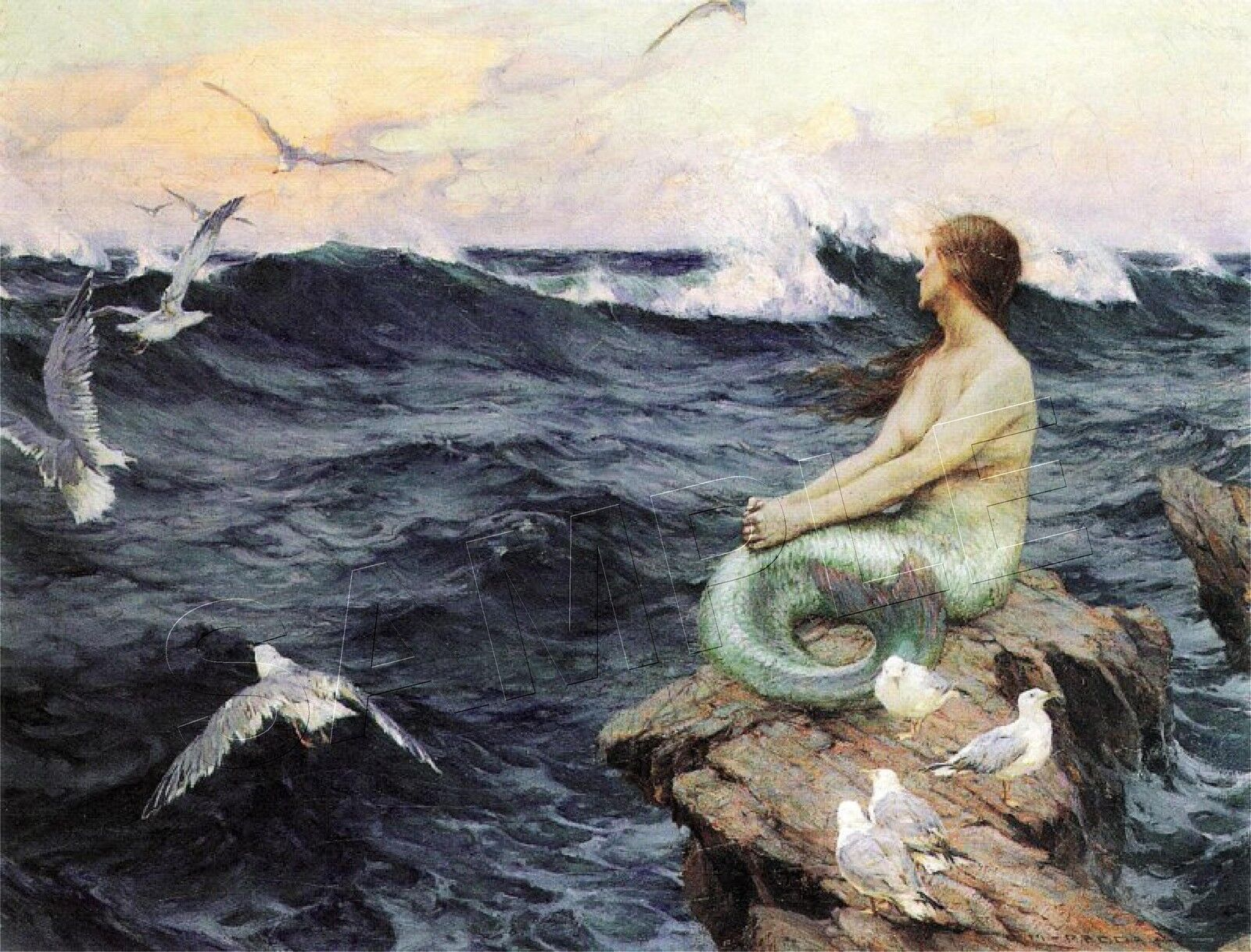
the only captive mermaid in the world
was butchered on the dry and dusty ground
by a doctor, a fishmonger, and certain others.
"My Uncle Giuseppe told me / that in Sicily in World War Two,"
- The poem begins with the speaker recounting a story from their Uncle Giuseppe.
- This opening sets a historical and personal context, suggesting a mix of memory and confession.
"in the courtyard behind the aquarium, / where the bougainvillaea grows so well,"
- The serene imagery of the courtyard and bougainvillaea contrasts sharply with the violent events to come.
- This juxtaposition highlights the horror of the mermaid's fate.
"the only captive mermaid in the world / was butchered on the dry and dusty ground / by a doctor, a fishmonger, and certain others."
- The introduction of a mermaid, a mythical creature, adds a surreal element to the poem.
- The detailed description of her butchery by respectable community members (a doctor, and fishmonger) suggests a breakdown of moral norms.
Lines 8-13
She, it, had never learned to speak
because she was simple, or so they'd said,
but the priest who held one of her hands
while her throat was cut,
said she was only a fish, and fish can't speak.
But she screamed like a woman in terrible fear.
"She, it, had never learned to speak / because she was simple, or so they'd said,"
- The use of "She, it" reflects the dehumanisation of the mermaid, reducing her to an object.
- This line suggests attempts to justify the butchery by diminishing the mermaid's humanity.
"but the priest who held one of her hands / while her throat was cut,"
- The enjambment creates a moment of ambiguity about the priest's role.
- The revelation that the priest held her down adds to the horror and irony of the scene.
"said she was only a fish, and fish can't speak. / But she screamed like a woman in terrible fear."
- The priest's assertion contrasts with the mermaid's human-like scream, emphasising the moral conflict and guilt.
- This line underscores the theme of dehumanisation and the denial of shared humanity.
Lines 14-18
And when they took a ripe golden roe
from her side, the doctor said
this was proof she was just a fish
and anyway an egg is not a child,
but refused when some was offered to him.
"And when they took a ripe golden roe / from her side, the doctor said / this was proof she was just a fish / and anyway an egg is not a child,"
- The description of the roe and the doctor's justification reflects their attempts to rationalise their actions.
- The insistence that "an egg is not a child" highlights their denial and guilt.
"but refused when some was offered to him."
- The doctor's refusal to eat the roe indicates his internal conflict and recognition of the act's horror.
- This moment reveals the hypocrisy and moral struggle of the participants.
Lines 19-23
Then they put her head and her hands
in a box for burial
and someone tried to take her wedding ring,
but the others stopped him,
and the ring stayed put.
"Then they put her head and her hands / in a box for burial"
- The burial of the mermaid's head and hands, the most human parts, signifies a mockery of respect.
- This act reveals their partial acknowledgement of her humanity.
"and someone tried to take her wedding ring, / but the others stopped him, / and the ring stayed put."
- The presence of a wedding ring further humanises the mermaid, suggesting she had a life and relationships.
- The decision to leave the ring indicates a last vestige of decency among the killers.
Lines 24-25
The rest they cooked and fed to the troops.
They said a large fish had been found on the beach.
- The practical use of the mermaid's body for food reflects the dire circumstances and moral compromises made during wartime.
- The lie about the fish underscores their guilt and need to justify their actions to themselves and others.
Lines 26-29
Starvation forgives men many things,
my uncle, the aquarium keeper, said,
but couldn't look me in the eye,
for which I thank God.
"Starvation forgives men many things, / my uncle, the aquarium keeper, said,"
- Giuseppe's statement reflects his attempt to justify the atrocity by blaming it on extreme circumstances.
- His role as the aquarium keeper, a caretaker, adds irony to his involvement in the killing.
"but couldn't look me in the eye, / for which I thank God."
- The final lines highlight Giuseppe's enduring guilt and shame.
- The speaker's gratitude for Giuseppe's inability to meet their gaze suggests relief that he still feels remorse, providing a small measure of redemption.