Out of the Bag by Seamus Heaney (Edexcel A-Level English Literature): Revision Notes
📚Revision Notes
Out of the Bag by Seamus Heaney
Analysis of the Title
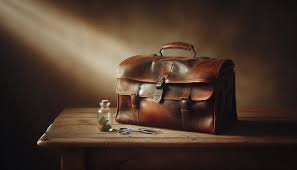
The title "Out of the Bag" is a pun that refers to both the literal bag of Doctor Kerlin, which the child narrator believes contains newborn babies, and the metaphorical "bag" of childhood secrets and myths that are revealed as one grows up. The title suggests a journey from innocence to knowledge, highlighting the themes of revelation and the loss of childhood wonder.
Structure and Form
Form, Metre, and Rhyme
- The poem is written in free verse, consisting of four irregular stanzas.
- It does not follow a consistent rhyme scheme or metre, giving the poem a natural and conversational tone.
- The free verse form allows for a fluid narrative that reflects the speaker's stream of consciousness and the blending of past and present memories.
Speaker
- The speaker is Seamus Heaney himself, recounting his childhood memories and reflections on Doctor Kerlin, childbirth, and the connection between myth and reality.
- The tone shifts from the wonder and confusion of childhood to the more reflective and analytical perspective of adulthood.
Setting
- The poem's setting shifts between Heaney's childhood home in Northern Ireland, the ancient Greek healing site of Epidaurus, and the Catholic pilgrimage site of Lourdes.
- These settings highlight the contrast between personal, local experiences and broader, cultural or mythological contexts.
Poetic Devices
Imagerys
- The poem is rich in vivid imagery, such as the detailed descriptions of Doctor Kerlin's bag: "its lined insides (The colour of a spaniel's inside lug)".
- Imagery is used to convey the magical and mysterious perception of the doctor and the childbirth process.
Simile
- Similes are used to create vivid comparisons, such as "like a hypnotist" and "like the rosebud in his buttonhole", which enhance the magical and surreal quality of Doctor Kerlin's actions.
Enjambment
- Enjambment is employed to create a flowing narrative and build suspense, as seen in lines like "the trap-sprung mouth / Unsnibbed and gaping wide." This technique mimics the child's continuous stream of thought.
Allusion
- The poem contains allusions to Greek mythology and Catholic traditions, linking personal memories with broader cultural narratives.
- For example, "Sanctuaries of Asclepius (called asclepions) / Were the equivalent of hospitals" and references to Lourdes and Epidaurus connect the poem to ancient and modern healing practices.
Key Themes
Childhood Innocence and Imagination
- The poem explores the imaginative world of childhood, where the speaker believes that Doctor Kerlin's bag contains newborn babies.
This theme is illustrated by the line: "All of us came in Doctor Kerlin's bag."
Myth, Medicine, and Healing
- Heaney reflects on the intersection of myth, medicine, and healing, suggesting that belief and ritual play a crucial role in these practices.
This theme is evident in the lines: "Sanctuaries of Asclepius (called asclepions) / Were the equivalent of hospitals / In ancient Greece."
Poetry and the Creative Process
- The poem draws parallels between the creative process of writing poetry and the rituals of healing and childbirth.
This is highlighted in the line: "the cure / By poetry that cannot be coerced."
Line by Line Analysis
Lines 1-6
All of us came in Doctor Kerlin's bag.
He'd arrive with it, disappear to the room
And by the time he'd reappear to wash
Those nosy, rosy, big, soft hands of his
In the scullery basin, its lined insides
(The colour of a spaniel's inside lug)
"All of us came in Doctor Kerlin's bag."
- The poem begins with a bold statement that sets the tone for the magical and mysterious perception of Doctor Kerlin.
- The speaker recalls the childhood belief that Doctor Kerlin's bag contained newborn babies.
"He'd arrive with it, disappear to the room / And by the time he'd reappear to wash"
- Doctor Kerlin's visits follow a ritualistic pattern, adding to the sense of mystery and awe surrounding him.
"Those nosy, rosy, big, soft hands of his / In the scullery basin, its lined insides / (The colour of a spaniel's inside lug)"
- The detailed description of Doctor Kerlin's hands and the interior of his bag highlights the child's fascination with the doctor's physical presence and tools.
Lines 7-12
Were empty for all to see, the trap-sprung mouth
Unsnibbed and gaping wide. Then like a hypnotist
Unwinding us, he'd wind the instruments
Back into their lining, tie the cloth
Like an apron round itself,
Darken the door and leave
"Were empty for all to see, the trap-sprung mouth / Unsnibbed and gaping wide."
- The bag's emptiness is emphasised, creating a sense of wonder and mystery about what it once contained.
"Then like a hypnotist / Unwinding us, he'd wind the instruments / Back into their lining"
- The simile of the hypnotist suggests the magical and entrancing nature of Doctor Kerlin's actions.
"Darken the door and leave"
- The finality of Doctor Kerlin's departure adds to the enigmatic atmosphere, leaving the child in awe and curiosity.
Lines 13-18
With the bag in his hand, a plump ark by the keel ...
Until the next time came and in he'd come
In his fur-lined collar that was also spaniel-coloured
And go stooping up to the room again, a whiff
Of disinfectant, a Dutch interior gleam
Of waistcoat satin and highlights on the forceps.
"With the bag in his hand, a plump ark by the keel ... / Until the next time came and in he'd come"
- The bag is compared to an ark, suggesting it is a vessel of life and mystery.
- The repetition of Doctor Kerlin's visits reinforces the ritualistic nature of his appearance.
"In his fur-lined collar that was also spaniel-coloured / And go stooping up to the room again, a whiff / Of disinfectant, a Dutch interior gleam / Of waistcoat satin and highlights on the forceps."
- The luxurious description of Doctor Kerlin's attire and the imagery of the disinfectant and surgical tools create a vivid picture of his presence and the aura of cleanliness and precision he brings.
Lines 19-24
Getting the water ready, that was next—
Not plumping hot, and not lukewarm, but soft,
Sud-luscious, saved for him from the rain-butt
And savoured by him afterwards, all thanks
Denied as he towelled hard and fast,
Then held his arms out suddenly behind him
"Getting the water ready, that was next— / Not plumping hot, and not lukewarm, but soft, / Sud-luscious, saved for him from the rain-butt"
- The specific temperature and quality of the water emphasise the care and preparation involved in Doctor Kerlin's visits.
- The term "sud-luscious" suggests a sensory richness and satisfaction associated with the water.
"And savoured by him afterwards, all thanks / Denied as he towelled hard and fast, / Then held his arms out suddenly behind him"
- Doctor Kerlin's enjoyment of the water and his refusal of thanks highlight his self-sufficiency and routine.
Lines 25-30
To be squired and silk-lined into the camel coat.
At which point he once turned his eyes upon me,
Hyperborean, beyond-the-north-wind blue,
Two peepholes to the locked room I saw into
Every time his name was mentioned, skimmed
Milk and ice, swabbed porcelain, the white
"To be squired and silk-lined into the camel coat. / At which point he once turned his eyes upon me, / Hyperborean, beyond-the-north-wind blue,"
- The ceremonial donning of the coat underscores Doctor Kerlin's authoritative and almost regal presence.
- His eyes are described with a mythical quality, reinforcing his god-like image in the child's eyes.
"Two peepholes to the locked room I saw into / Every time his name was mentioned, skimmed / Milk and ice, swabbed porcelain, the white"
- The metaphor of "peepholes" in the locked room suggests the child's curiosity and imagination about the mysteries of childbirth.
- The imagery of milk, ice, and porcelain evokes a sense of cleanliness and coldness, contrasting with the warmth of life.
Lines 31-37
And chill of tiles, steel hooks, chrome surgery tools
And blood dreeps in the sawdust where it thickened
At the foot of each cold wall. And overhead
The little, pendent, teat-hued infant parts
Strung neatly from a line up near the ceiling—
A toe, a foot and shin, an arm, a cock
A bit like the rosebud in his buttonhole.
"And chill of tiles, steel hooks, chrome surgery tools / And blood dreeps in the sawdust where it thickened / At the foot of each cold wall."
- The imagery here is stark and sterile, resembling a surgical or slaughterhouse environment, which reflects the child's eerie perception of childbirth.
"And overhead / The little, pendent, teat-hued infant parts / Strung neatly from a line up near the ceiling— / A toe, a foot and shin, an arm, a cock"
- The gruesome imagery of dismembered infant parts emphasises the child's misunderstanding and fear of the birthing process.
"A bit like the rosebud in his buttonhole."
- This simile juxtaposes the grotesque with the delicate, highlighting the child's attempt to make sense of the doctor's actions through familiar objects.
Lines 38-43
Poeta doctus Peter Levi says
Sanctuaries of Asclepius (called asclepions)
Were the equivalent of hospitals
In ancient Greece. Or of shrines like Lourdes,
Says poeta doctus Graves. Or of the cure
By poetry that cannot be coerced,
"Poeta doctus Peter Levi says / Sanctuaries of Asclepius (called asclepions) / Were the equivalent of hospitals / In ancient Greece."
- The reference to ancient Greek healing sites ties the personal childhood memory to a broader historical and cultural context.
"Or of shrines like Lourdes, / Says poeta doctus Graves. Or of the cure / By poetry that cannot be coerced,"
- The comparison to Lourdes and the idea of healing through poetry underscores the mystical and spiritual aspects of medicine and art.
Lines 44-49
Say I, who realised at Epidaurus
That the whole place was a sanatorium
With theatre and gymnasium and baths,
A site of incubation, where "incubation"
Was technical and ritual, meaning sleep
When epiphany occurred and you met the god ...
"Say I, who realised at Epidaurus / That the whole place was a sanatorium / With theatre and gymnasium and baths,"
- Heaney reflects on his visit to Epidaurus, recognising it as a holistic healing site that integrates physical and mental rejuvenation.
"A site of incubation, where 'incubation' / Was technical and ritual, meaning sleep / When epiphany occurred and you met the god ..."
- The concept of incubation, both in its ancient and metaphorical sense, connects the healing practices of the past with the creative process of poetry.
Lines 50-55
Hatless, groggy, shadowing myself
As the thurifer I was in an open air procession
In Lourdes in '56
When I nearly fainted from the heat and fumes,
Again I nearly fainted as I bent
To pull a bunch of grass and hallucinated
"Hatless, groggy, shadowing myself / As the thurifer I was in an open air procession / In Lourdes in '56"
- Heaney recalls a disorienting experience at Lourdes, where he served as a thurifer, highlighting the physical and spiritual intensity of the event.
"When I nearly fainted from the heat and fumes, / Again I nearly fainted as I bent / To pull a bunch of grass and hallucinated"
- The physical exhaustion and near-fainting episodes tie the sensory experiences to a deeper, almost mystical realisation.
Lines 56-61
Doctor Kerlin at the steamed-up glass
Of our scullery window, starting in to draw
With his large pink index finger dot-faced men
With button-spots in a straight line down their fronts
And women with dot breasts, giving them all
A set of droopy sausage-arms and legs
"Doctor Kerlin at the steamed-up glass / Of our scullery window, starting in to draw / With his large pink index finger dot-faced men"
- The hallucination of Doctor Kerlin drawing on the window suggests the enduring impact of his childhood perceptions and the blending of memory and imagination.
"With button-spots in a straight line down their fronts / And women with dot breasts, giving them all / A set of droopy sausage-arms and legs"
- The childlike drawings emphasise the innocence and creativity of the speaker's childhood imagination.
Lines 62-67
That soon began to run. And then as he dipped and laved
In the generous suds again, miraculum:
The baby bits all came together swimming
Into his soapy big hygienic hands
And I myself came to, blinded with sweat,
Blinking and shaky in the windless light.
"That soon began to run. And then as he dipped and laved / In the generous suds again, miraculum: / The baby bits all came together swimming"
- The miraculous reassembly of the baby parts in the suds underscores the magical and surreal quality of the speaker's vision.
"Into his soapy big hygienic hands / And I myself came to, blinded with sweat, / Blinking and shaky in the windless light."
- The vision ends with the speaker regaining consciousness, blending the mystical experience with the physical reality of his surroundings.
Lines 68-73
Bits of the grass I pulled I posted off
To one going into chemotherapy
And one who had come through. I didn't want
To leave the place or link up with the others.
It was mid-day, mid-May, pre-tourist sunlight
In the precincts of the god,
"Bits of the grass I pulled I posted off / To one going into chemotherapy / And one who had come through."
- Heaney's gesture of sending grass clippings to cancer patients reflects his reverence for the healing powers of Epidaurus.
"I didn't want / To leave the place or link up with the others. / It was mid-day, mid-May, pre-tourist sunlight / In the precincts of the god,"
- The desire to remain in the sacred, tranquil environment of Epidaurus highlights its significance as a place of personal and spiritual reflexion.
Lines 74-79
The very site of the temple of Asclepius.
I wanted nothing more than to lie down
Under hogweed, under seeded grass
And to be visited in the very eye of the day
By Hygeia, his daughter, her name still clarifying
The haven of light she was, the undarkening door.
"The very site of the temple of Asclepius. / I wanted nothing more than to lie down / Under hogweed, under seeded grass"
- The speaker expresses a deep longing to immerse himself in the natural and sacred surroundings of the temple of Asclepius.
"And to be visited in the very eye of the day / By Hygeia, his daughter, her name still clarifying / The haven of light she was, the undarkening door."
- The invocation of Hygeia, the goddess of health, symbolises the healing and enlightening power of the place, offering a moment of epiphany and clarity.
Lines 80-85
The room I came from and the rest of us all came from
Stays pure reality where I stand alone,
Standing the passage of time, and she's asleep
In sheets put on for the doctor, wedding presents
That showed up again and again, bridal
And usual and useful at births and deaths.
"The room I came from and the rest of us all came from / Stays pure reality where I stand alone,"
- The return to the room of his birth emphasises its enduring significance as the origin of life and family.
"Standing the passage of time, and she's asleep / In sheets put on for the doctor, wedding presents / That showed up again and again, bridal / And usual and useful at births and deaths."
- The imagery of the sheets, used for both births and deaths, highlights the cyclical nature of life and the continuity of family traditions.
Lines 86-89
Me at the bedside, incubating for real,
Peering, appearing to her as she closes
And opens her eyes, then lapses back
Into a faraway smile whose precinct of vision
"Me at the bedside, incubating for real,"
- The speaker reflects on his role as an observer and participant in the process of birth, symbolising his connection to the cycle of life.
"Peering, appearing to her as she closes / And opens her eyes, then lapses back / Into a faraway smile whose precinct of vision"
- The intimate moment between the speaker and the mother suggests a deep, unspoken bond and a shared understanding of the miracle of life.
Lines 90-94
I would enter every time, to assist and be asked
In that hoarsened whisper of triumph,
"And what do you think
Of the new wee baby the doctor brought for us all
When I was asleep?"
"I would enter every time, to assist and be asked / In that hoarsened whisper of triumph,"
- The speaker recalls being a part of the birthing process, highlighting the communal and celebratory nature of childbirth.
"And what do you think / Of the new wee baby the doctor brought for us all / When I was asleep?"
- The mother's triumphant whisper reflects the joy and wonder of new life, encapsulating the poem's themes of birth, myth, and the continuity of life.