Songs of Innocence: Holy Thursday by William Blake (Edexcel A-Level English Literature): Revision Notes
📚Revision Notes
Songs of Innocence: Holy Thursday by William Blake
Context
- "Holy Thursday" is part of William Blake's Songs of Innocence, published in 1789.
- The poem reflects Blake's concerns about social issues, especially the treatment of children in society.
- Blake was an engraver and a poet, deeply involved in the social and political issues of his time, which is significant to understanding his critical perspective on institutionalised charity and religion.
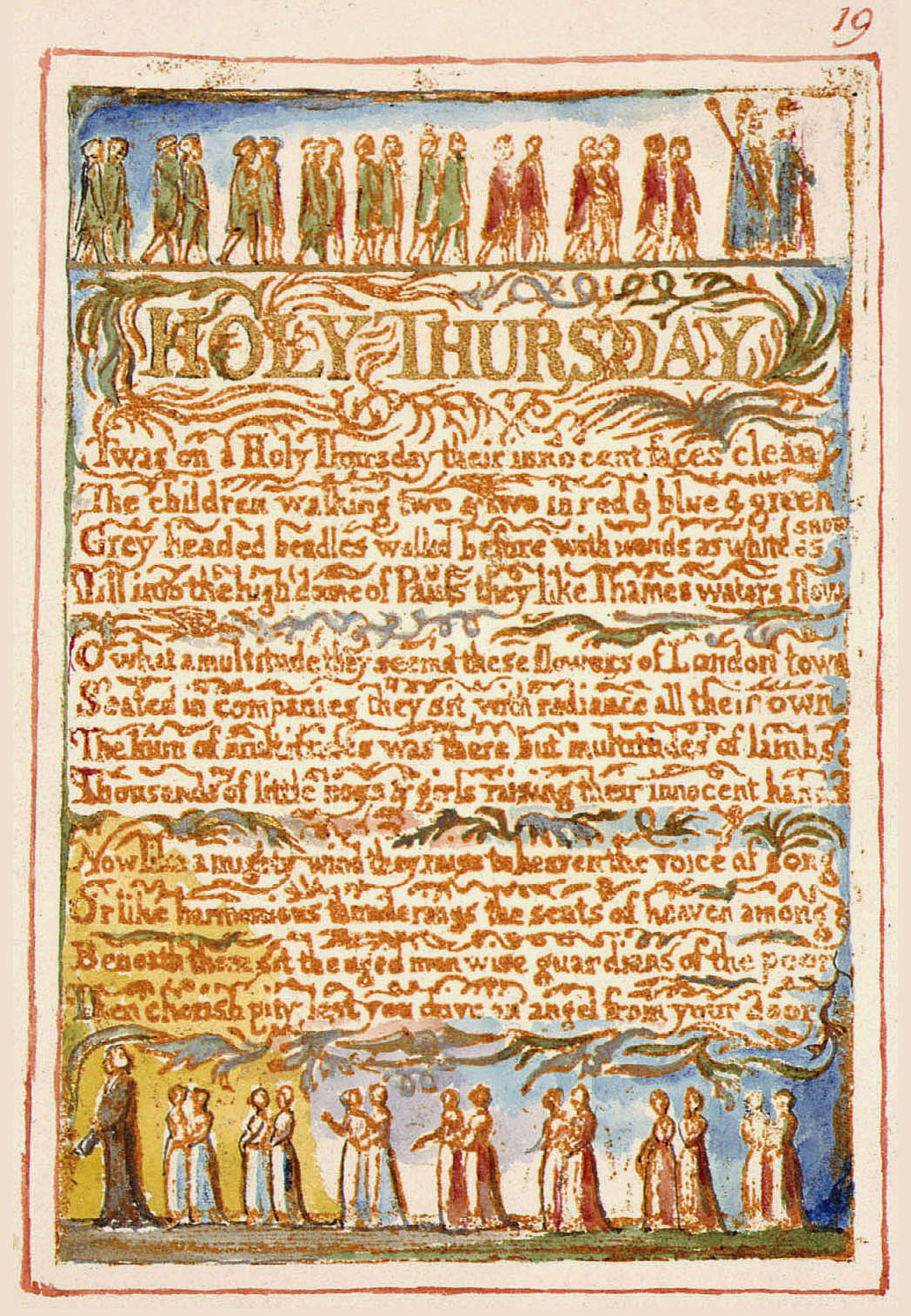
- The poem describes an annual event on Ascension Day, when charity school children attended a special service in St. Paul's Cathedral, highlighting the contrast between the innocence of children and the harsh reality of their lives.
Structure and Form
- The poem consists of three quatrains.
- Each stanza follows an AABB rhyme scheme.
- Written in rhymed couplets, providing a rhythmic and song-like quality.
- The regular metre and rhyme scheme enhance the poem's simplicity and the innocence associated with the children, contrasting with the underlying critique of society.
Key Themes
Innocence and Purity
- "Twas on a Holy Thursday their innocent faces clean"
- Highlights the purity and innocence of the children.
- Blake contrasts this innocence with the corruption of the institutions supposed to protect them.
Social Critique
- "Grey-headed beadles walkd before with wands as white as snow,"
- Criticises the authority figures who appear pure and righteous but are complicit in maintaining social inequality.
- Reflects Blake's disdain for the hypocrisy of social and religious institutions.
Religion and Ritual
- "Till into the high dome of Pauls they like Thames waters flow"
- Describes the ritualistic procession into St. Paul's Cathedral.
- Blake uses this imagery to question the sincerity and effectiveness of religious charity.
Natural Imagery
- "O what a multitude they seemd these flowers of London town"
- Uses natural imagery to depict the children as flowers, emphasising their fragility and beauty.
- Contrasts the vitality of the children with the rigid structure of society.
Voice of the Marginalised
- "Thousands of little boys & girls raising their innocent hands"
- Highlights the collective presence of the children, suggesting their potential power if their voices were truly heard.
- This reflects Blake's advocacy for the oppressed and his desire to give them a voice.
Similar Poems
- "Songs of Experience: London": Shares themes of social critique and the harsh realities of urban life, focusing on the suffering caused by societal institutions.
- "Songs of Experience: The Tyger": Explores themes of innocence and experience, with a focus on the complexity of creation and the nature of good and evil.
- "Ode to the West Wind" by Percy Bysshe Shelley: Addresses themes of transformation and change, reflecting on the power of nature and the potential for renewal in society.
- "Ode on a Grecian Urn" by John Keats: Explores themes of beauty, art, and the transient nature of human experience, similar to Blake's contemplation of innocence and experience.
Line by Line Analysis
Stanza 1
Twas on a Holy Thursday their innocent faces clean The children walking two & two in red & blue & green Grey-headed beadles walkd before with wands as white as snow, Till into the high dome of Pauls they like Thames waters flow
"Twas on a Holy Thursday their innocent faces clean"
- Sets the scene with a specific event, highlighting the children's innocence.
- The word "clean" emphasises purity and preparation for a holy event.
"The children walking two & two in red & blue & green"
- Describes the orderly procession of children, creating a visual image of their colourful attire.
- The colours red, blue, and green symbolise vibrancy and life.
"Grey-headed beadles walkd before with wands as white as snow,"
- Introduces the authority figures leading the children, contrasting their grey heads with white wands.
- "White as snow" implies purity, but Blake's tone suggests irony, criticising their superficial righteousness.
"Till into the high dome of Pauls they like Thames waters flow"
- Uses a simile to compare the children's movement to the flowing Thames, emphasising their number and collective presence.
- The "high dome of Pauls" represents the grandeur and authority of the church.
Stanza 2
O what a multitude they seemd these flowers of London town Seated in companies they sit with radiance all their own The hum of multitudes was there but multitudes of lambs Thousands of little boys & girls raising their innocent hands
"O what a multitude they seemd these flowers of London town"
- Metaphorically describes the children as flowers, highlighting their beauty and fragility.
- The "multitude" emphasises the vast number of children affected by poverty.
"Seated in companies they sit with radiance all their own"
- Depicts the children seated in groups, their inherent radiance contrasting with their dire circumstances.
- "Radiance" suggests an inner light and purity.
"The hum of multitudes was there but multitudes of lambs"
- Compares the children's collective sound to a hum, likening them to lambs, symbols of innocence and gentleness.
- The repetition of "multitudes" emphasises their overwhelming presence.
"Thousands of little boys & girls raising their innocent hands"
- Highlights the sheer number of children and their innocence.
- "Raising their innocent hands" suggests a gesture of supplication or prayer, adding to the sense of vulnerability.
Stanza 3
Now like a mighty wind they raise to heaven the voice of song Or like harmonious thunderings the seats of Heaven among Beneath them sit the aged men wise guardians of the poor Then cherish pity, lest you drive an angel from your door
"Now like a mighty wind they raise to heaven the voice of song"
- Simile compares the children's singing to a mighty wind, emphasising its power and collective strength.
- The image of raising their voices to heaven suggests a plea for divine intervention.
"Or like harmonious thunderings the seats of Heaven among"
- Continues the comparison, likening their song to harmonious thunder, combining power and beauty.
- "Seats of Heaven" implies a celestial audience, adding a spiritual dimension.
"Beneath them sit the aged men wise guardians of the poor"
- Describes the authority figures as "aged men" and "wise guardians", a phrase loaded with irony given Blake's critique.
- Suggests that these guardians are supposed to protect the poor but may be failing in their duty.
"Then cherish pity, lest you drive an angel from your door"
- Concludes with a moral imperative to cherish pity and compassion.
- Implies that neglecting the innocent and poor is akin to driving angels away, reinforcing the spiritual and ethical responsibility to care for them.