What Maisie Knew: Context & Writers Techniques (Edexcel A-Level English Literature): Revision Notes
📚Revision Notes
What Maisie Knew: Context & Writers Techniques
Context
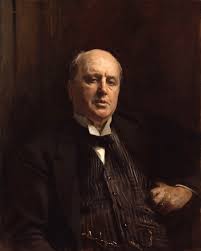
Brief Biography of Henry James
Early Life:
-
Henry James was born in New York City in 1843 into a wealthy, intellectual family. His father, Henry James Sr., was a theologian and philosopher, and his brother, William James, became a famous psychologist and philosopher. Education and Career:
-
James travelled extensively in his youth, studying with tutors in Europe and the United States. He briefly attended Harvard Law School but soon realised his passion for writing. He published his first novel, Watch and Ward, in 1871 and went on to write numerous novels, short stories, and literary criticism. Major Works:
-
Some of James's most famous works include The Portrait of a Lady, The Turn of the Screw, and The Wings of the Dove. He is considered one of the key figures of 19th-century literary realism and a pioneer of the modern psychological novel.
Writing Style and Themes:
James is known for his detailed psychological insight, complex characters, and exploration of social and cultural issues. His works often focus on the clash between American and European cultures. James moved to England in 1876 and became a British citizen in 1915, a year before his death.
The Novel's History
- When and Where Written: What Maisie Knew was written between 1892 and 1897, primarily in England.
- Initial Reception: The novel was well-received, though some critics found its subject matter controversial. It is now considered one of James's important works, showcasing his skill in psychological realism.
- Publication: The novel was serialised in the Chap-Book and New Review in 1897 and published as a book later that year.
Literary Contexts
Historical and Political Context
- Victorian Era: The novel was written during the Victorian era, a time characterised by strict social mores and a rigid class system. Divorce and child custody were particularly sensitive issues, often reflecting broader anxieties about family and morality.
- Social Change: The late 19th century saw significant social changes, including evolving attitudes towards marriage, divorce, and women's rights. These changes provide a backdrop for the novel's exploration of a child's perspective on adult relationships.
Cultural and Social Context
- Realism and Psychological Novel: James's work is part of the literary realism movement, focusing on detailed, realistic depictions of characters and their inner lives. What Maisie Knew exemplifies this with its deep psychological insight into Maisie's perceptions and experiences.
- Childhood and Innocence: The novel's focus on a child's viewpoint was innovative for its time, highlighting themes of innocence, perception, and the loss of innocence in a morally complex world.
Philosophical, Religious, and Intellectual Ideas
- Moral Ambiguity: The novel explores the moral ambiguity of adult behaviour from the innocent perspective of a child. It raises questions about right and wrong, and the impact of adult decisions on children.
- Perception and Reality: James delves into the nature of perception and reality, particularly how Maisie interprets and understands the adult world around her. This theme is central to many of James's works, reflecting his interest in psychology and consciousness.
Useful Concepts to Be Aware of in the Novel
- Narrative Structure: The novel uses a third-person limited perspective, primarily from Maisie's point of view. This allows readers to see the world through her innocent and often confused eyes, adding depth to the portrayal of adult relationships.
- Symbolism: Maisie herself symbolises innocence and the impact of adult immorality on children. The shifting custody arrangements and her interactions with various guardians reflect the instability and complexity of adult relationships.
- Character Complexity: James creates complex, morally ambiguous characters whose actions and motivations are scrutinised through Maisie's observations. This adds layers of psychological depth to the narrative.
- Social Critique: The novel critiques Victorian social norms, particularly those surrounding marriage, divorce, and the treatment of children. James uses the story to highlight the emotional and psychological toll of these norms on individuals, especially the innocent.
Writer's Techniques
Structure and Plot
Single Perspective
- The novel is primarily narrated from the perspective of Maisie, a young girl caught between her divorced parents.
- This structure allows readers to experience the complexities of adult relationships and moral ambiguities through the innocent and often confused eyes of a child.
Non-linear Development
- The novel does not follow a strictly linear timeline, with frequent flashbacks and shifts in focus that reflect Maisie's fragmented understanding of her world.
- This non-linear approach emphasises the disjointed and chaotic environment Maisie navigates.
Episodic Plot
- The narrative unfolds in an episodic manner, with each chapter presenting a new event or revelation in Maisie's life.
- This episodic structure highlights the fragmented nature of Maisie's upbringing and the instability she faces.
Language and Style
Detailed Descriptions
- James's prose is rich with detailed descriptions that create a vivid sense of place and character.
- His meticulous attention to detail helps convey the complexities of the social environments Maisie inhabits.
Formal and Elevated Language
- The language in "What Maisie Knew" is formal and elevated, reflecting James's literary style and the social milieu of the characters.
- This style underscores the sophistication and often pretentious nature of the adult characters.
Psychological Depth
- The narrative delves deeply into the psychological states of the characters, particularly Maisie's parents and guardians.
- James uses indirect discourse to explore the inner thoughts and motivations of the characters, providing insight into their moral ambiguities.
Symbols
The Doll
- Maisie's doll symbolises her innocence and the childhood she is rapidly losing due to the manipulations and neglect of the adults around her.
- The doll represents Maisie's need for comfort and stability in a world where these are scarce.
The Sea
- The sea, often mentioned in the novel, symbolises the vast and unpredictable nature of Maisie's life and the emotional turbulence she experiences.
- It reflects the constant change and lack of control Maisie feels as she is shuffled between different guardians and environments.
The Window
- Windows frequently appear in the novel, symbolising Maisie's perspective and her view of the adult world.
- They represent both a barrier and a means of connection between Maisie's inner world and the external realities she observes.