The Adventures of Huckleberry Finn: Character Analysis (Edexcel A-Level English Literature): Revision Notes
📚Revision Notes
The Adventures of Huckleberry Finn: Character Analysis
Huckleberry Finn
Overview
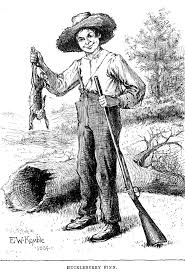
Huckleberry Finn is the protagonist and narrator of Mark Twain's The Adventures of Huckleberry Finn. As a young boy with a troubled background, Huck embodies the themes of freedom and moral development. His journey down the Mississippi River with Jim, a runaway slave, leads him to challenge societal norms and develop his moral compass.
Key Plot Moments
- Escape from Pap
- Huck escapes from his abusive father, Pap, by faking his death and heading down the Mississippi River.
- Meeting Jim
- Huck meets Jim on Jackson's Island, and they decide to travel together. Their companionship becomes central to the narrative.
- Moral Dilemma
- Huck struggles with the societal belief that helping Jim escape is wrong but ultimately decides to protect his friend.
- Wilks Episode
- Huck helps to expose the Duke and King's fraud against the Wilks sisters, showcasing his growing moral awareness.
- The decision to Free Jim
- Huck resolves to free Jim from captivity, even if it means "going to hell," demonstrating his moral maturity.
Key Themes
- Freedom and Civilisation: Huck's journey represents a quest for freedom from societal constraints and hypocrisy.
- Friendship and Loyalty: The bond between Huck and Jim is central, highlighting themes of loyalty and mutual respect.
- Moral Growth: Huck's internal conflicts and decisions reflect his growth from societal conformity to moral independence.
Key Quotes
"All right, then, I'll go to hell"—and [I] tore [my note to Miss Watson] up.
- This quote marks Huck's rejection of societal norms in favour of his moral judgement. It signifies his commitment to Jim's freedom, even at a personal cost.
"I do believe [Jim] cared just as much for his people as white folks does for their'n. It don't seem natural, but I reckon it's so."
- Huck acknowledges Jim's humanity and emotional depth, challenging the racist beliefs he was raised with.
"The Widow Douglas, she took me for her son, and allowed she would sivilize me; but it was rough living in the house all the time, considering how dismal regular and decent the widow was in all her ways."
- This quote highlights Huck's discomfort with societal expectations and his yearning for freedom.
"I'm unfavourable to killin' a man as long as you can git around it; it ain't good sense, it ain't good morals."
- Huck's pragmatic approach to morality reflects his inner conflict between societal rules and personal ethics.
"The pitifulest thing out is a mob; that's what an army is—a mob; they don't fight with courage that's born in them, but with courage that's borrowed from their mass, and from their officers."
- This critique of mob mentality reflects Huck's evolving understanding of individual and collective morality.
Jim
Overview
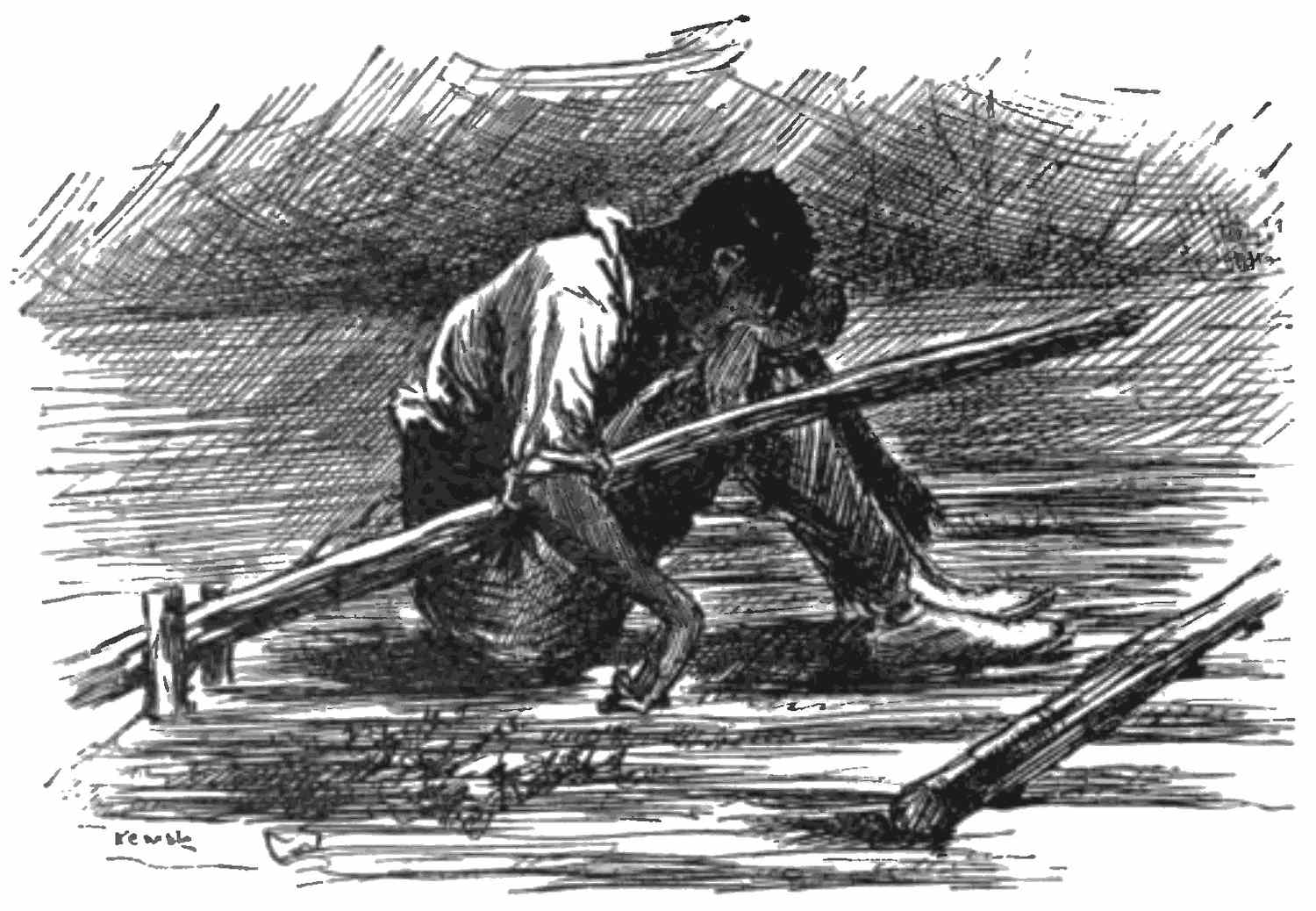
Jim is one of Miss Watson's slaves who escapes in fear of being sold and separated from his family. Throughout the novel, Jim serves as a moral guide and father figure to Huck, and their friendship becomes a central element of the story.
Key Plot Moments
- Escape from Miss Watson
- Jim runs away to avoid being sold and separated from his family, meeting Huck on Jackson's Island.
- Superstitions and Wisdom
- Despite his superstitions, Jim provides practical wisdom and emotional support to Huck throughout their journey.
- Captured and Sold
- Jim is captured and sold by the Duke and King, leading to Huck's moral crisis and decision to rescue him.
- Revealed Freedom
- At the end of the novel, it is revealed that Miss Watson had freed Jim in her will, making his journey technically unnecessary but symbolically profound.
Key Themes
- Human Dignity and Equality: Jim's character challenges the racist stereotypes of the time, highlighting his humanity and moral integrity.
- Freedom and Oppression: Jim's quest for freedom parallels Huck's, though he is from physical bondage and systemic racism.
- Friendship and Loyalty: Jim's unwavering loyalty to Huck underscores the themes of friendship and mutual respect.
Key Quotes
"Well, he [Jim] was right; he was most always right; he had an uncommon level head, for a nigger."
- This quote shows Huck's growing respect for Jim's intelligence and wisdom, despite his internalised racism.
"I do believe [Jim] cared just as much for his people as white folks does for their'n. It don't seem natural, but I reckon it's so."
- Huck's realisation of Jim's deep love for his family signifies a pivotal moment in Huck's moral development.
"Yes—en I's rich now come to look at it. I owns myself, en I's wuth eight hund'd dollars."
- Jim's declaration of self-worth highlights his understanding of freedom and personal value, contrasting the dehumanising nature of slavery.
"I doan' mine one er two kings, but dat's enough. Dis one's powerful drunk, en de duke ain' much better."
- Jim's humourous yet insightful commentary on the Duke and King reveals his perceptiveness and practical wisdom.
"I'm unfavourable to killin' a man as long as you can git around it; it ain't good sense, it ain't good morals."
- Jim's pragmatic morality provides a counterpoint to the more extreme views of other characters, emphasising his role as a moral compass.
Tom Sawyer
Overview
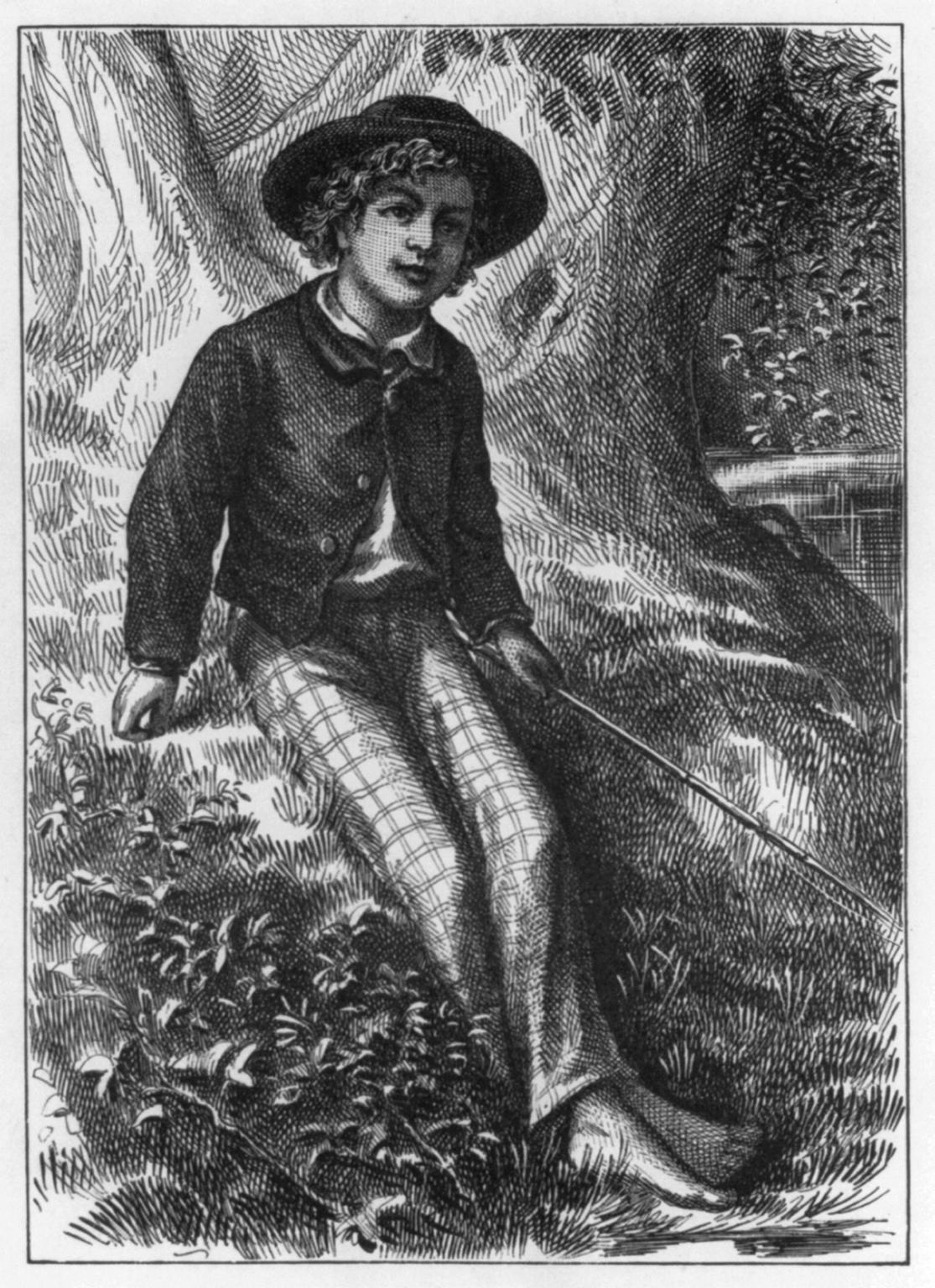
Tom Sawyer is Huck's best friend and the protagonist of Twain's earlier novel The Adventures of Tom Sawyer. In Huckleberry Finn, Tom represents societal norms and romanticised notions of adventure, often conflicting with Huck's more practical and morally driven approach.
Key Plot Moments
- Tom's Gang
- Tom forms a gang of boys, initiating Huck into their imaginative and often reckless adventures.
- Rescue Plan for Jim
- Tom devises an elaborate and unnecessary plan to free Jim, prioritising adventure over practicality.
- Revealing Jim's Freedom
- Tom reveals that Miss Watson had freed Jim in her will, showcasing his disregard for Jim's immediate suffering.
- Injured During Escape
- Tom is shot during the attempt to free Jim, highlighting the real dangers of his fantastical plans.
- Return to Civilization
- Tom's actions contrast sharply with Huck's desire to escape societal constraints, emphasising their differing worldviews.
Key Themes
- Romanticism vs. Realism: Tom's romanticised notions of adventure often clash with Huck's practical realism.
- Influence of Society: Tom embodies the societal norms and expectations that Huck seeks to escape.
- Moral Growth: Tom's lack of moral development contrasts with Huck's evolving conscience, underscoring different paths to maturity.
Key Quotes
"The Widow Douglas, she took me for her son, and allowed she would sivilize me; but it was rough living in the house all the time, considering how dismal regular and decent the widow was in all her ways."
- Tom's influence helps Huck resist societal norms, yet he remains tied to them through his friendship with Tom.
"I'm unfavourable to killin' a man as long as you can git around it; it ain't good sense, it ain't good morals."
- This quote reflects Tom's influence on Huck's developing sense of morality, even if Tom himself is less morally mature.
"The pitifulest thing out is a mob; that's what an army is—a mob; they don't fight with courage that's born in them, but with courage that's borrowed from their mass, and from their officers."
- Tom's adherence to societal norms is contrasted with Huck's more independent moral judgments.
"All right, then, I'll go to hell"—and [I] tore [my note to Miss Watson] up.
- Huck's decision to protect Jim, even at the cost of his friendship with Tom, highlights his moral growth.
"I do believe [Jim] cared just as much for his people as white folks does for their'n. It don't seem natural, but I reckon it's so."
- Huck's recognition of Jim's humanity stands in contrast to Tom's more superficial understanding of people.
The Duke and King
Overview
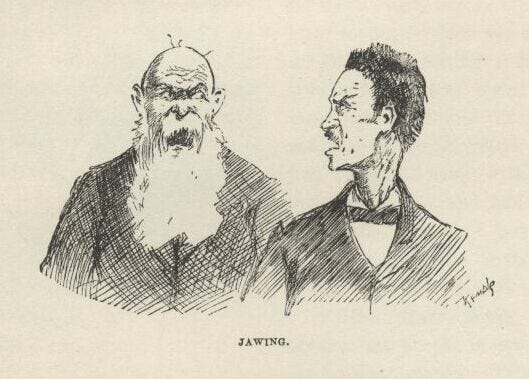
The Duke and King are con men who join Huck and Jim on their journey down the Mississippi River. They represent the corrupt and exploitative aspects of society, providing a sharp contrast to Huck and Jim's growing friendship and moral integrity.
Key Plot Moments
- Joining Huck and Jim
- The Duke and King join Huck and Jim, posing as displaced royalty to gain sympathy and resources.
- Scamming Villages
- They engage in various cons, including a fraudulent Shakespearean performance and the Royal Nonesuch scam.
- Wilks Fraud
- The Duke and King attempt to swindle the Wilks sisters by posing as their long-lost relatives.
- Selling Jim
- They betray Huck and Jim by selling Jim back into slavery, leading to Huck's moral crisis and decision to rescue him.
- Final Capture
- The Duke and King are eventually caught tarred and feathered by an angry mob, symbolising their ultimate downfall.
Key Themes
- Greed and Corruption: The Duke and King embody the worst aspects of human nature, driven by greed and deception.
- Moral Decay: Their presence highlights the moral decay that Huck must navigate and reject.
- Societal Hypocrisy: Their actions expose the gullibility and hypocrisy of the societies they exploit.
Key Quotes
"The pitifulest thing out is a mob; that's what an army is—a mob; they don't fight with courage that's born in them, but with courage that's borrowed from their mass, and from their officers."
- This quote reflects the manipulative tactics of the Duke and King, who exploit mob mentality for personal gain.
"I do believe [Jim] cared just as much for his people as white folks does for their'n. It don't seem natural, but I reckon it's so."
- Huck's growing empathy for Jim is contrasted with the Duke and King's lack of empathy for anyone.
"All right, then, I'll go to hell"—and [I] tore [my note to Miss Watson] up.
- Huck's moral decision to help Jim underscores the Duke and King's moral bankruptcy.
"I'm unfavourable to killin' a man as long as you can git around it; it ain't good sense, it ain't good morals."
- The Duke and King's actions demonstrate their complete disregard for morality, unlike Huck's developing conscience.
"Well, he [Jim] was right; he was most always right; he had an uncommon level head, for a nigger."
- This quote highlights the contrast between Jim's wisdom and the Duke and King's foolishness and deceit.
The Widow Douglas and Miss Watson
Overview
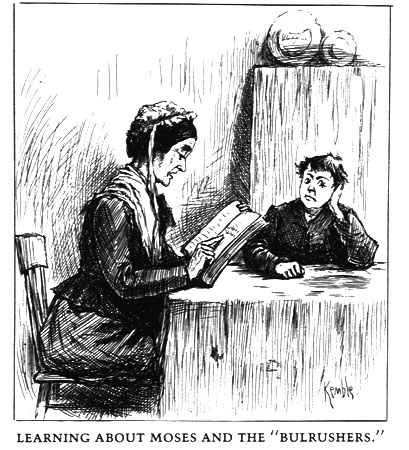
The Widow Douglas and Miss Watson are central figures in Huckleberry Finn's life, serving as his guardians at the beginning of the novel. The Widow Douglas is kind and gentle, aiming to "sivilize" Huck through her moral and religious teachings, while Miss Watson is more strict and severe in her attempts to reform Huck.
Key Plot Moments
- Initial Guardianship
- The Widow Douglas and Miss Watson take Huck in an attempt to civilise him through religious instruction and proper behaviour.
- Religious Education
- They provide Huck with conflicting views on religion, with Miss Watson telling him to pray for what he wants and the Widow Douglas teaching him about spiritual gifts.
- Imposing Civilization
- Both characters impose societal norms on Huck, which makes him feel constrained and leads him to run away.
- Hypocrisy in Teachings
- The Widow Douglas forbids Huck from smoking while she uses snuff, illustrating societal hypocrisy.
- Role in Huck's Moral Development
- Despite their flaws, their teachings contribute to Huck's understanding of morality and societal expectations.
Key Themes
- Hypocrisy of Society
- Their actions often reflect the broader societal hypocrisy that Huck critiques throughout the novel.
- Civilization vs. Freedom
- Their attempts to civilise Huck contrast with his desire for freedom and adventure.
- Religion and Morality
- Their differing teachings on religion highlight the complexities and contradictions in societal moral values.
Key Quotes
"The Widow Douglas she took me for her son, and allowed she would sivilize me; but it was rough living in the house all the time, considering how dismal regular and decent the widow was in all her ways; and so when I couldn't stand it no longer, I lit out."
- This quote illustrates Huck's discomfort with the constraints of civilised life imposed by the Widow Douglas.
"Miss Watson she kept pecking at me, and it got tiresome and lonesome."
- Huck's feelings towards Miss Watson highlight her stricter, more oppressive approach to his upbringing.
"She told me to pray every day, and whatever I asked for I would get it. But it warn't so. I tried it."
- This quote shows Huck's scepticism towards Miss Watson's simplistic religious teachings.
"The widow cried over me, and called me a poor lost lamb, and she called me a lot of other names, too, but she never meant no harm by it."
- Despite her attempts to reform Huck, the Widow Douglas's affection and good intentions are evident.
"She said the thing a body could get by praying for it was 'spiritual gifts.' This was too many for me, but she told me what she meant—I must help other people, and do everything I could for other people, and look out for them all the time, and never think about myself."
- The Widow Douglas's lessons on spirituality and selflessness contrast with Miss Watson's more practical teachings.
Pap
Overview
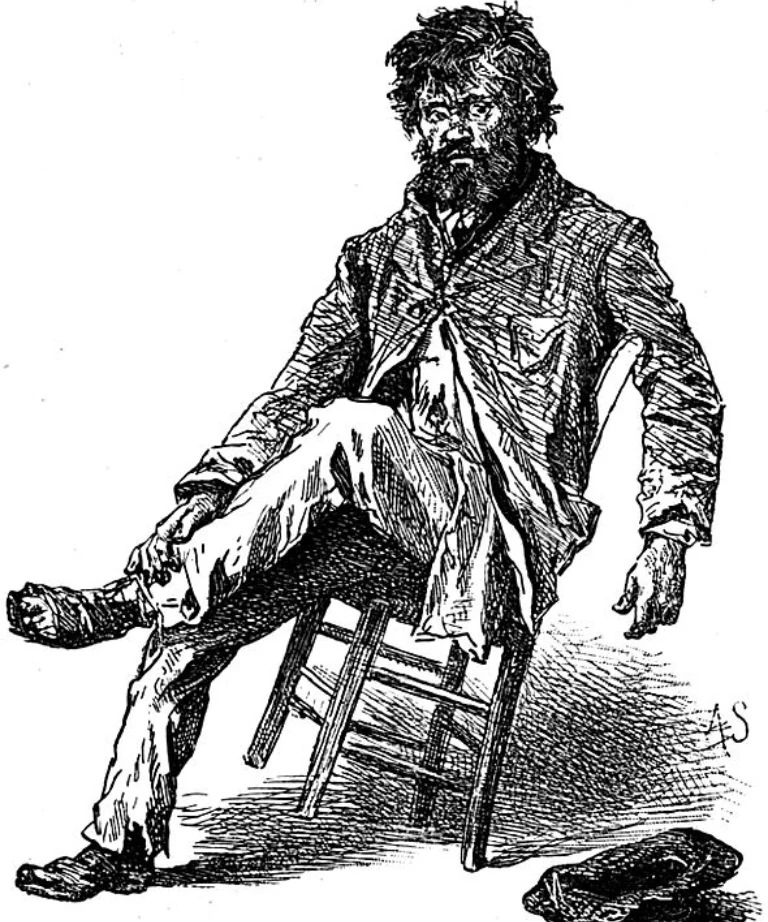
Pap, Huck's father, is a drunken and abusive figure who opposes Huck's attempts to better himself through education and civilised living. He represents the antithesis of the moral and social values that other characters try to instil in Huck.
Key Plot Moments
- Return to Town
- Pap returns to town to reclaim custody of Huck, motivated by Huck's newfound wealth.
- Abduction
- He kidnaps Huck and takes him to a secluded cabin, isolating him from the Widow Douglas and Miss Watson's influence.
- Drunken Rants
- Pap's drunken rants against the government and society reveal his deep-seated racism and ignorance.
- Physical Abuse
- He frequently beats Huck, showcasing his violent and erratic behaviour.
- Huck's Escape
- Huck fakes his death to escape from Pap's abusive control, setting off on his journey down the Mississippi River.
Key Themes
- Racism and Ignorance
- Pap's views reflect the deeply ingrained racism and ignorance prevalent in society.
- Hypocrisy and Corruption
- Pap embodies the hypocrisy and moral corruption that Huck learns to recognise and reject.
- Freedom and Control
- Pap's desire to control Huck contrasts with Huck's yearning for freedom.
Key Quotes
"And looky here—you drop that school, you hear? I'll learn people to bring up a boy to put on airs over his own father and let on to be better'n what he is."
- This quote shows Pap's resentment towards Huck's attempts at self-improvement and education.
"The judge he felt kind of sore. He said he reckoned a body could reform the ole man [Pap] with a shot-gun maybe, but he didn't know no other way."
- The new judge's attempt to reform Pap highlights the futility of trying to change deeply ingrained behaviours.
"When they told me there was a State in this country where they'd let that nigger vote, I drawed out. I says I'll never vote again."
- Pap's rant against an educated black man voting reveals his racist attitudes and opposition to social progress.
"I got to light out for the territory ahead of the rest, because Aunt Sally she's going to adopt me and sivilize me and I can't stand it. I been there before."
- Huck's decision to escape civilisation reflects his desire to avoid becoming like Pap, who is trapped by societal constraints and personal vices.
"He chased me round and round the place with a clasp-knife, calling me the Angel of Death, and saying he would kill me."
- This quote illustrates Pap's violent and unstable nature, reinforcing Huck's need to escape from him.
Colonel Sherburn
Overview
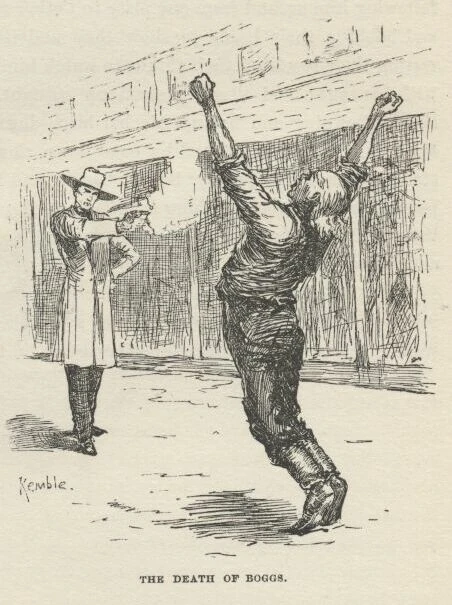
Colonel Sherburn is a minor but significant character in the novel, known for his cold-blooded killing of Boggs and his subsequent confrontation with a lynch mob. He represents the theme of individual morality versus mob mentality.
Key Plot Moments
- Killing of Boggs
- Sherburn shoots the drunkard Boggs in cold blood, displaying his ruthlessness.
- Confrontation with the Mob
- A mob forms to lynch Sherburn, but he confronts them alone and disperses them with a scornful speech.
- Speech on Courage
- Sherburn's speech criticises the cowardice and hypocrisy of the mob, revealing his contempt for societal norms.
- Impact on Huck
- Huck witnesses the event, which influences his understanding of courage and morality.
Key Themes
- Individual vs. Society
- Sherburn's actions and speech highlight the tension between individual morality and societal norms.
- Hypocrisy
- Sherburn's critique of the mob exposes the hypocrisy and cowardice within society.
- Cowardice and Courage
- His confrontation with the mob explores the nature of true courage versus mob mentality.
Key Quotes
"The pitifulest thing out is a mob; that's what an army is—a mob; they don't fight with courage that's born in them, but with courage that's borrowed from their mass, and from their officers."
- This quote encapsulates Sherburn's disdain for mob mentality and his belief in individual courage.
"But a mob without any man at the head of it, is beneath pitifulness."
- Sherburn's view of leaderless mobs reflects his contempt for collective cowardice.
"Sherburn calls the mob out on their hypocrisy, giving a psychological explanation for their (false) sense of empowerment as a group and a critique of their deficiencies as individuals."
- This analysis of Sherburn's speech underscores his critical perspective on societal behaviour.
"Sherburn is free, but a danger to society in his freedom, a dark vision of what Huck could become if he follows a path of violence."
- Sherburn's character serves as a warning to Huck about the dangers of unchecked individualism and violence.
"He makes laws, however unjust, and enforces them with brutal surety."
- This quote highlights Sherburn's authoritarian nature and his role as a symbol of unjust authority.
The Grangerfords and Shepherdsons
Overview
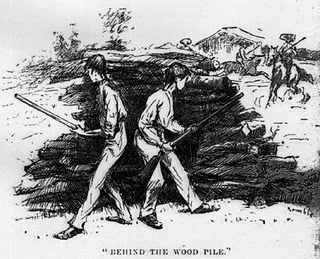
The Grangerfords and Shepherdsons are two feuding families that Huck encounters during his journey. Their senseless and violent feud serves as a critique of entrenched social conflicts and the absurdity of family honour.
Key Plot Moments
- Introduction to the Families
- Huck is introduced to the Grangerfords and learns about their long-standing feud with the Shepherdsons.
- Huck's Friendship with Buck
- Huck befriends Buck Grangerford, who explains the nature of the feud.
- Miss Sophia's Elopement
- Miss Sophia Grangerford elopes with Harney Shepherdson, escalating the conflict.
- Battle and Bloodshed
- A violent clash between the families results in several deaths, including Buck's.
- Huck's Escape
- Huck witnesses the senseless violence and escapes with Jim, disillusioned by the experience.
Key Themes
-
Feuds and Honor
-
The family feud critiques the concept of honour and the destructive nature of revenge.
-
Innocence and Corruption
-
The involvement of children in the feud highlights the transmission of hatred and violence across generations.
-
Hypocrisy
-
Despite their outward civility and religiosity, both families engage in brutal violence.
Key Quotes
"Huck observes that many slaves serve the Grangerford family, each Grangerford being tended to by one slave."
- This quote illustrates the Grangerfords' wealth and reliance on slavery, highlighting the hypocrisy of their supposed honour.
"Like a miniature Civil War, the Grangerford-Shepherdson feud has cost many lives, and Buck himself casually supposes that it will end only when everybody involved has been killed."
- Buck's perspective on the feud underscores its senselessness and the inevitability of continued violence.
"Mr. Grangerford implies that the feud is waged for the sake of honour, which is bestowed by society on its members."
- This quote reveals the societal pressures that perpetuate the feud and the hollow nature of such honour.
"Even though Huck hates the mindless violence he witnesses to the point that he feels sick, and the part of human nature that gives rise to such violence, he only does so because he has such a deep love for human goodness."
- Huck's reaction to the violence highlights his innate moral sensibility and compassion.
"Just as the Grangerford-Shepherdson feud is hypocritical, so too is it hypocritical that a person as cultivated and seemingly good as Mr. Grangerford should own slaves."
- This quote emphasises the deep-rooted hypocrisy and moral contradictions within the families.
Sally and Silas Phelps
Overview
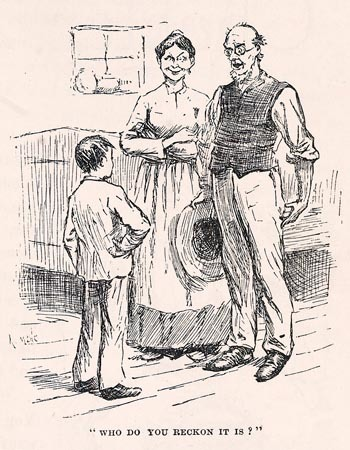
Sally and Silas Phelps are Tom Sawyer's aunt and uncle, who unwittingly become involved in the final stages of Huck and Jim's adventure. They represent typical Southern plantation owners and embody both the hospitality and contradictions of Southern society.
Key Plot Moments
- Arrival at the Phelps Farm
- Huck arrives at the Phelps farm, where he is mistaken for Tom Sawyer.
- Jim's Imprisonment
- The Phelpses are holding Jim as a runaway slave, believing they are doing the right thing.
- Tom's Elaborate Rescue Plan
- Tom Sawyer concocts an elaborate and unnecessary plan to free Jim, involving the Phelpses.
- Revelation and Resolution
- Jim's status as a free man is revealed, and the Phelpses are surprised but ultimately accepting.
- Huck's Decision
- Huck decides to "light out for the Territory" to avoid being civilised by Aunt Sally.
Key Themes
- Slavery and Freedom
- The Phelpses' role in Jim's imprisonment highlights the pervasive acceptance of slavery.
- Innocence and Ignorance
- The Phelpses' actions reflect a blend of innocence and ignorance regarding the moral issues of slavery.
- Hospitality and Kindness
- Despite their complicity in slavery, the Phelpses are depicted as kind and hospitable.
Key Quotes
"Uncle Silas, whom Huck considers the 'innocentest, best old soul,' and who is not only a farmer but also a preacher, is merely pleased that his mule could go to town and back so quickly."
- This quote highlights Uncle Silas's good-natured simplicity and innocence.
"As Aunt Sally pranked Uncle Silas about Tom's arrival, so does Tom prank Aunt Sally."
- This shows the familial bonds and playful nature of the Phelps household.
"Huck feels sick at how cruel people are to one another, and realises that he couldn't have a hard feeling towards the duke and king even if he wanted to."
- Huck's reaction to the duke and king's punishment reflects his growing empathy and moral development.
"Despite all the wrong they did him, Huck tries to save the duke and king from capture, revealing his commitment to freedom for all over even societal justice."
- Huck's actions underscore his evolving sense of justice and compassion.
"Uncle Silas is an upstanding member of society and a person whom Huck respects very much, and yet he thinks it acceptable, even moral, to hold Jim prisoner."
- This quote encapsulates the moral contradictions embodied by the Phelpses.