Lady Audley's Secret: Context & Writers Techniques (Edexcel A-Level English Literature): Revision Notes
📚Revision Notes
Lady Audley's Secret: Context & Writers Techniques
Context
Brief Biography of Mary Elizabeth Braddon
Early Life:
-
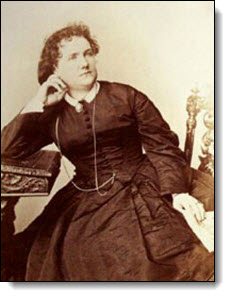
Mary Elizabeth Braddon was born in London to solicitor and writer Henry Braddon and his Irish wife, Fanny White. Her parents' marriage broke down due to Henry's infidelity and financial irresponsibility when Mary was five years old. Early Career:
-
In 1857, Braddon began acting to support herself and her mother. She published her first novel three years later and met publisher John Maxwell, beginning an affair with him despite his wife living in an asylum. Personal Life:
-
Braddon and Maxwell had six children together and married in 1874 after the death of Maxwell's first wife. Braddon died in Richmond in 1915.
Literary Success:
- Braddon experienced her first commercial success with Lady Audley's Secret in 1862. She continued to write prolifically throughout her life, founding the literary magazine Belgravia, which focused on sensation fiction.
The Novel's History
- When and Where Written: Lady Audley's Secret was written in England and published in 1862.
- Initial Reception: The novel was a commercial success and is one of the most popular examples of sensation fiction, although it faced criticism for its sensational subject matter.
Literary Contexts
Historical and Political Context
- Victorian Era: The novel offers commentary on English society during the Victorian era (1837-1901), a time when women were expected to dedicate themselves to family and home. Women had few rights and were financially dependent on their husbands. The era also saw significant economic growth and the rise of the middle class, leading to social anxieties about class mobility.
- Gender Roles: The rigid gender roles of the time are central to the novel, as it explores the limited agency afforded to women and the consequences of stepping outside these roles.
Cultural and Social Context
- Sensation Fiction: Lady Audley's Secret is a quintessential example of sensation fiction, a genre that emerged in the mid-19th century and focused on sensational subjects like crime and social anxieties. This genre often explored the darker sides of Victorian society.
Philosophical, Religious, and Intellectual Ideas
- Social Mobility and Class Anxiety: The novel reflects Victorian anxieties about social mobility and the perceived threat of lower-class individuals climbing the social ladder.
- Women's Agency: Braddon's portrayal of Lady Audley challenges the traditional roles of women, illustrating the lengths to which women might go to assert their agency in a restrictive society.
- Morality and Crime: The novel examines the moral ambiguities of its characters, particularly Lady Audley, who resorts to crime to secure her place in society.
Useful Concepts to Be Aware of in the Novel
- Sensation Fiction: Understanding the characteristics of sensation fiction, including its focus on sensational and shocking events, is crucial to appreciating Lady Audley's Secret.
- Victorian Gender Roles: The novel critiques the limited roles available to women in Victorian society and highlights the consequences of deviating from these roles.
- Class and Social Mobility: The anxieties surrounding class and social mobility are central to the novel, reflecting broader Victorian concerns about the stability of the social order.
- Gothic Elements: The novel incorporates Gothic elements such as doubles and hidden identities, adding to the suspense and psychological complexity of the story.
- Narrative Structure: The third-person omniscient point of view allows for a detailed exploration of multiple characters' thoughts and motivations, providing a comprehensive view of the social dynamics at play.
- Moral Ambiguity: The characters in the novel often operate in morally grey areas, challenging readers to consider the complexities of right and wrong within the constraints of Victorian society.
Writer's Techniques
Structure and Plot
Episodic Structure
- "Lady Audley's Secret" follows an episodic structure, where the plot unfolds through a series of interconnected incidents and revelations.
- This structure allows Braddon to build suspense and maintain the reader's interest by revealing secrets gradually.
Use of Cliff-hangers
- Braddon frequently ends chapters with cliff-hangers, creating a sense of suspense and anticipation.
- This technique keeps readers engaged and eager to find out what happens next, enhancing the novel's sensational appeal.
Dual Narrative
- The novel juxtaposes the narratives of Robert Audley and Lady Audley, highlighting their contrasting moral journeys.
- Robert's transformation from indolence to action contrasts with Lady Audley's descent into crime, emphasising themes of justice and retribution.
Language and Style
Sensationalism
- Braddon employs sensationalist language to captivate readers, focusing on dramatic events and heightened emotions.
- The novel's language is designed to evoke strong emotional reactions, making the narrative more engaging and thrilling.
Irony and Satire
- Irony is used to critique Victorian social norms, especially concerning gender roles and class.
- Lady Audley's outward appearance of innocence is ironically contrasted with her criminal actions, satirising the superficial judgments of society.
Gothic Elements
- Gothic language is used to create an atmosphere of mystery and suspense, with descriptions of dark, decaying settings and hidden secrets.
- Audley Court, with its ruined walls and shadowy interiors, serves as a gothic backdrop that enhances the novel's mood of foreboding and intrigue.
Symbols
Audley Court
- Audley Court symbolises the decay of the upper class and the moral corruption hidden beneath a veneer of respectability.
- The mansion's physical deterioration mirrors the ethical decline of its inhabitants and the crumbling facade of Victorian propriety.
Lady Audley's Golden Curls
- Lady Audley's golden curls represent the deceptive nature of appearances. They are described as a halo, symbolising innocence and angelic beauty, which contrasts with her true, sinister nature.
- As the plot progresses, her hair is compared to fire, evoking images of rage and hell, indicating her inner turmoil and guilt.
The Portrait
- The unfinished portrait of Lady Audley captures her dual nature. The painter depicts her delicate face as both alluring and sinister, with elements of red suggesting danger and wickedness.
- This portrait symbolises the tension between Lady Audley's outward charm and her inner malevolence, revealing the truth that lies beneath her facade.