The War of the Worlds: Context & Writers Techniques (Edexcel A-Level English Literature): Revision Notes
📚Revision Notes
The War of the Worlds: Context & Writers Techniques
Context
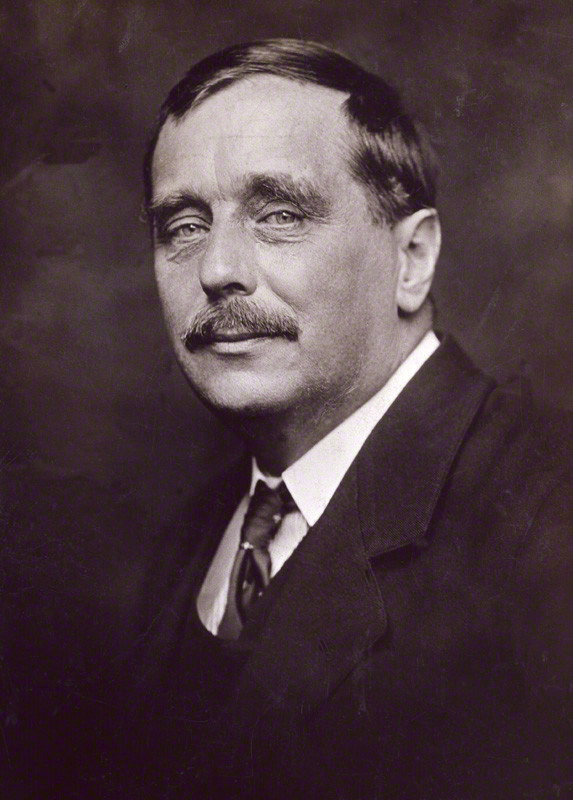
Brief Biography of H. G. Wells
Early Life:
-
H. G. Wells was born into a working-class British family, the youngest of four children. His education was inconsistent due to financial difficulties. His father's injury forced Wells to work in various apprenticeships, which influenced his views on social justice and inequality. Education:
-
Wells apprenticed under a chemist and eventually earned a place at university, where he studied biology under Thomas Henry Huxley, a fervent supporter of Darwin's theory of natural selection. Career:
-
Wells began his writing career with biology textbooks and short stories. His short story "The Chronic Argonauts" evolved into his famous novel The Time Machine. He wrote extensively in the science fiction genre, defining many of its conventions. Wells also authored realist novels, nonfiction, and political works. He was nominated for the Nobel Prize in Literature four times and is recognised as one of the "fathers of science fiction."
Death:
- Wells continued to write and influence the literary world until he died in 1946.
The Novel's History
- When and Where Written: The War of the Worlds was written in 1897 in England.
- Initial Reception: The novel was well-received and is considered a cornerstone of science fiction and invasion literature.
- Publication: The novel was first serialised in Pearson's Magazine in 1897 and later published as a book in 1898.
Literary Contexts
Historical and Political Context
- Darwin's Influence: Wells's exposure to Darwin's theory of natural selection through Thomas Henry Huxley significantly influenced The War of the Worlds. The Martians' eventual demise due to their lack of adaptation to Earth's bacteria endorses Darwin's theory.
- Invasion Literature: The novel belongs to the genre of invasion literature, which gained popularity in the late 19th and early 20th centuries. This genre, exemplified by George Tompkyns Chesney's "The Battle of Dorking" (1871), tapped into national fears of invasion. Wells took this concept further by introducing alien invaders, playing on xenophobia and fear of the unknown.
Cultural and Social Context
- Victorian Era: The novel is set in Victorian England, reflecting the societal anxieties and technological advancements of the time. The Industrial Revolution and the associated class stratification are underlying themes in Wells's work, as seen in his other novel The Time Machine.
- Science and Progress: Wells's interest in science and progress is evident in the novel's depiction of advanced alien technology and the potential consequences of scientific discovery.
Philosophical, Religious, and Intellectual Ideas
- Natural Selection: The concept of natural selection is central to the novel, with the Martians ultimately succumbing to Earth's microbes due to their lack of evolutionary adaptation.
- Social Commentary: The novel critiques colonialism and the treatment of indigenous peoples by drawing parallels between the Martians' invasion of Earth and European colonisation. It also reflects on human hubris and the potential dangers of technological advancement.
Useful Concepts to Be Aware of in the Novel
- First-Person Narration: The novel is told from a first-person perspective, providing an immersive and personal account of the Martian invasion.
- Episodic Structure: Originally serialised, the novel has an episodic structure with multiple climaxes, reflecting the suspenseful and serialised nature of its publication.
- Technological Imagination: Wells's imaginative depiction of Martian technology, such as the tripods and heat-ray, has influenced countless works in science fiction and inspired real-world technological advancements.
- Impact on Popular Culture: The War of the Worlds has inspired numerous adaptations, including Orson Welles's infamous 1938 radio broadcast, which caused widespread panic, and influenced scientific developments, such as Robert H. Goddard's invention of the liquid-fuelled rocket.
- Themes of Survival and Resilience: The novel explores themes of survival and human resilience in the face of an overwhelming and seemingly invincible force.
Writer's Techniques
Structure and Plot
Episodic Structure
- "The War of the Worlds" employs a loosely episodic structure, with events unfolding in a series of scenes that depict the Martian invasion and its aftermath.
- This structure mirrors the chaotic and unpredictable nature of the invasion, heightening the sense of uncertainty and tension throughout the novel.
First-Person Narration
- The story is told through a first-person perspective, providing an intimate and personal account of the narrator's experiences.
- This narrative style allows readers to engage deeply with the narrator's psychological journey and his evolving perceptions of the Martian threat.
Two-Part Division
- The novel is divided into two books: "Book One: The Coming of the Martians" and "Book Two: The Earth Under the Martians."
- This division highlights the shift from initial curiosity and shock to survival and resistance, reflecting the transformation of human society in response to the invasion.
Language and Style
Scientific and Journalistic Tone
- H.G. Wells employs a scientific and journalistic tone, using precise and detailed descriptions to create a sense of realism.
- This style grounds the fantastical elements of the story in a believable context, enhancing the plausibility of the Martian invasion.
Use of Irony
- Irony is a significant stylistic device in the novel, particularly in the depiction of human arrogance and the fragility of civilisation.
- The Martians, despite their technological superiority, are ultimately defeated by bacteria, highlighting the limits of human understanding and control over nature.
Descriptive Imagery
- Wells uses vivid and often unsettling imagery to depict the Martians and the devastation they cause.
- For example, the red weed that spreads across the landscape serves as a powerful symbol of the alien invasion's invasive and destructive nature.
Symbols
The Red Weed
- The red weed, a Martian plant that spreads rapidly, symbolises the invasive and overpowering nature of the Martian conquest.
- It represents the profound and visible impact of the Martians on the Earth, altering the landscape and ecosystem.
The Heat-Ray
- The Martians' heat ray is a symbol of technological superiority and destructive power.
- It underscores the theme of human vulnerability in the face of advanced alien technology, as well as the potential for technological advancements to cause massive devastation.
The Cylinder
- The Martian cylinders, from which the invaders emerge, symbolise the unknown and the fear of the other.
- They also represent the beginning of the invasion and the breakdown of normalcy, marking a turning point in the narrative.