Beloved: Context & Writer Techniques (Edexcel A-Level English Literature): Revision Notes
📚Revision Notes
Beloved: Context & Writer Techniques
Context
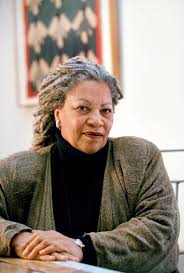
Brief Biography of Toni Morrison
Early Life:
-
Toni Morrison, born Chloe Anthony Wofford, grew up in Ohio where she developed a passion for literature and storytelling. Education and Career:
-
Morrison studied English at Howard University and Cornell University. She taught English at various universities and worked as an editor before publishing her first novel, The Bluest Eye, in 1970.
Major Works and Awards:
-
Morrison published Beloved in 1987, winning the Pulitzer Prize for Fiction. In 1993, she received the Nobel Prize in Literature. Her works often focus on the experiences of black women in the United States. Later life and death:
-
Morrison held the Robert F. Goheen Chair in the Humanities at Princeton University from 1989 to 2006. She passed away in 2019 at the age of 88 from complications of pneumonia.
The Novel's History
- When and Where Written: Beloved was written in the early 1980s in Albany, New York.
- Publication: The novel was published in 1987.
- Initial Reception: Beloved was critically acclaimed, winning the Pulitzer Prize and becoming a significant work in American literature.
Literary Contexts
Historical and Political Context
- Civil War and Fugitive Slave Act: The novel is set against the backdrop of the Civil War and the Fugitive Slave Act, which allowed slave owners to reclaim escaped slaves. The story draws from the true account of Margaret Garner, a runaway slave who killed her daughter to prevent her return to slavery.
- Legacy of Slavery: Beloved explores not only the brutal realities of slavery but also its enduring psychological and social impacts.
Cultural and Social Context
- American Narratives of Slavery: While unique in its modern perspective, Beloved can be contextualised alongside other narratives of slavery such as Harriet Beecher Stowe's Uncle Tom's Cabin and Frederick Douglass's Narrative of the Life of Frederick Douglass.
- Biblical Allusions: The novel is rich with references to the Bible, enhancing its thematic depth and resonance. These allusions include the four horsemen of the apocalypse and parallels to Jesus' miracles.
Philosophical, Religious, and Intellectual Ideas
- Memory and Trauma: The novel delves deeply into themes of memory and trauma, particularly how the past haunts the present.
- Identity and Belonging: It also explores the search for identity and belonging in the face of a history marked by dislocation and oppression.
- Redemption and Forgiveness: Themes of redemption and forgiveness are central, with characters seeking to reconcile with their pasts and find peace.
Useful Concepts to Be Aware of in the Novel
- Narrative Structure: Beloved employs a third-person omniscient point of view interspersed with first-person passages from various characters, providing a multifaceted perspective on the story.
- Symbolism and Imagery: The novel uses powerful symbols and imagery, such as the character of Beloved herself, representing the physical manifestation of repressed trauma and memory.
- Historical Fiction: As a work of historical fiction, the novel reconstructs the experiences of African Americans during and after slavery, blending factual history with imaginative storytelling.
- Cultural Impact: Beloved has had a profound cultural impact, inspiring adaptations in film and theatre, and prompting discussions about the legacy of slavery and the African American experience.
- Gothic Elements: The novel contains elements of Gothic literature, such as the haunted house at 124 Bluestone Road, which symbolises the pervasive and inescapable nature of the past.
Writer's Techniques
Structure and Plot
Nonlinear Narrative
- The novel "Beloved" employs a nonlinear narrative, with events unfolding through flashbacks and fragmented memories.
- This structure reflects the disjointed and traumatic experiences of the characters, particularly Sethe, as they navigate their past and present.
Multiple Perspectives
- The narrative is presented from multiple perspectives, including third-person omniscient and first-person passages from various characters.
- This approach allows readers to understand the complexity of each character's experiences and the lasting impact of slavery on their lives.
Stream of Consciousness
- Morrison uses a stream of consciousness to delve into the inner thoughts and emotions of her characters, particularly Sethe.
- This technique provides an intimate and immersive experience, allowing readers to feel the characters' pain, guilt, and longing.
Language and Style
Symbolic and Poetic Language
- Morrison's language is rich with symbolism and poetic devices, enhancing the emotional depth and thematic complexity of the novel.
- For example, the recurring image of the chokecherry tree on Sethe's back symbolises both the pain of her past and the beauty of her resilience.
Use of Dialect and Vernacular
- The dialogue often reflects the vernacular and dialect of the characters, grounding the story in its historical and cultural context.
- This stylistic choice adds authenticity and voice to the characters, highlighting their individuality and shared experiences.
Biblical and Mythical Allusions
- The novel is replete with biblical and mythical allusions, such as the four horsemen who come to take Sethe back to slavery, reminiscent of the Four Horsemen of the Apocalypse.
- These allusions add layers of meaning, connecting the characters' struggles to broader themes of suffering, redemption, and justice.
Symbols
The Ghost
- The ghost of Beloved symbolises the haunting legacy of slavery and the unresolved trauma it inflicts on those who experienced it.
- Beloved's presence forces the characters to confront their pasts and the pain they have suppressed.
The Colour Red
- The colour red appears throughout the novel, symbolising both life and death, love and violence.
- For example, the red light that envelops 124 when Beloved is present underscores the intensity of the emotions and memories that haunt the house.
The Chokecherry Tree
- Sethe's scar, described as a chokecherry tree, represents the physical and emotional scars of slavery.
- It symbolises both the brutal violence inflicted upon her and her strength in surviving and enduring such pain.
Water and the Ohio River
- Water, particularly the Ohio River, symbolises freedom and the boundary between slavery and liberation.
- The river also represents the transition between life and death, as Beloved emerges from the water, symbolising a rebirth or return from the afterlife.