Modulus & Argument (Edexcel A-Level Further Mathematics): Revision Notes
📚Revision Notes
1.1.3 Modulus & Argument
Overview
These two concepts are important for understanding how to represent complex numbers in a geometric form using the Argand diagram.
Modulus of a Complex Number
The modulus of a complex number is the distance of the point representing the complex number from the origin on an Argand diagram (a 2D plane where the real part is on the and the imaginary part is on the ).
The modulus is denoted by . The formula for the modulus is:
where is the real part and is the imaginary part of the complex number.
Example
Example 1: Finding the Modulus For
So, the modulus of is
Argument of a Complex Number
The argument of a complex number is the angle that the line representing the complex number makes with the positive real axis () on the Argand diagram.
The argument is denoted by and is measured in radians.
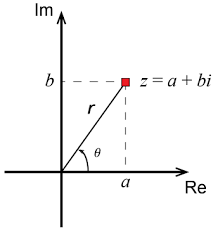
To find the argument, use the following formula:
However, you must consider which quadrant the complex number is in, as the angle might need adjustment depending on whether and are positive or negative.
Example
Example 2: Finding the Argument For
Step 1: Find the modulus
Step 2: Find the argument:
So, the argument of is radians (or ).
Argand Diagram
The Argand diagram is a 2D plane where:
- The represents the real part of a complex number.
- The represents the imaginary part.
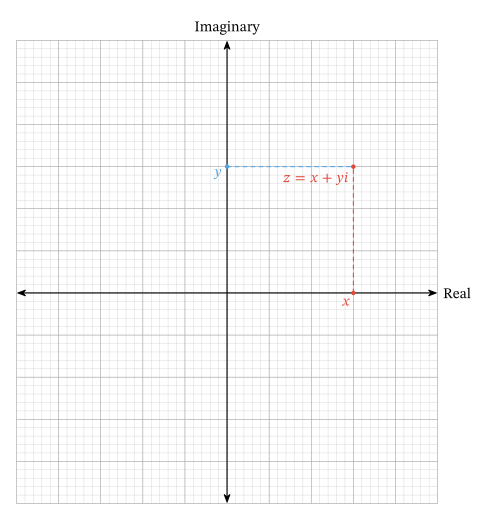
A complex number is plotted as the point .
The modulus gives the distance from the origin to this point, and the argument gives the angle made with the positive real axis.
Note Summary
Note
Common Mistakes:
- Incorrect Calculation of Modulus: Forgetting to square both the real and imaginary parts or making arithmetic errors in
- Wrong Quadrant for Argument: Misidentifying the quadrant of the complex number and not adjusting the angle accordingly.
- Ignoring Radian Measures: Using degrees instead of radians when solving for the argument in contexts requiring radians.
- Mistaking Real and Imaginary Parts: Confusing (real part) and (imaginary part) when calculating the argument.
- Skipping Argand Diagram Checks: Failing to visualise the complex number on the Argand diagram to verify modulus and argument.
Note
Key Formulas:
Modulus of
Argument of (when ):
(Adjust based on the quadrant.)
Polar Form of a Complex Number:
General Angle Adjustments:
-
Quadrant I: as calculated.
-
Quadrant II:
-
Quadrant III:
-
Quadrant IV: or Converting Between Forms:
-
From Cartesian () to Polar (): Use and
-
From Polar to Cartesian: