Product Moment Correlation Coefficient (Edexcel A-Level Further Mathematics): Revision Notes
📚Revision Notes
21.2.2 Product Moment Correlation Coefficient
Product Moment Correlation Coefficient
The PMCC is a mathematical measure of how linearly correlated two variables are. It is calculated as follows:
For a sample of n pairs of observations ():
Formula
The Product Moment Correlation Coefficient is:
As we can see from inside the bracket, measures the distance of each point from the mean.
The Meaning of
- takes values between -1 and 1. A value of 1 corresponds to perfect positive correlation between and .
- A value of -1 corresponds to perfect negative correlation between and .


Perfect positive linear correlation
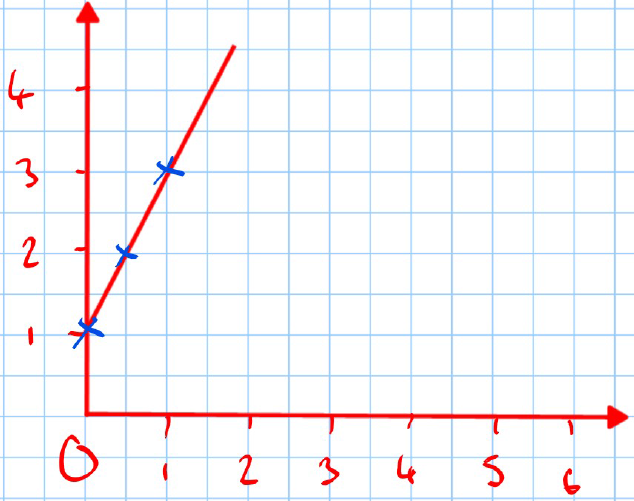
Perfect positive linear correlation
("Gradient has no bearing on correlation coefficient.")
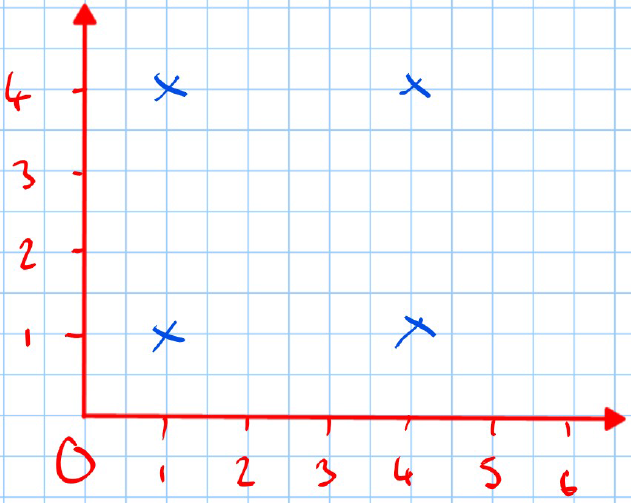
No linear correlation between and
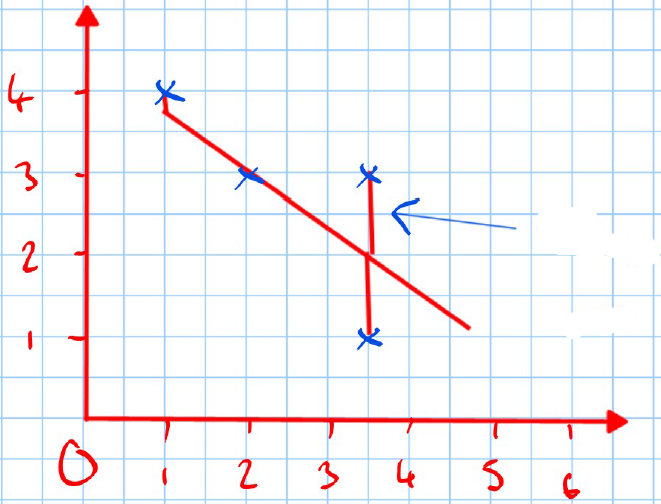
Here is close to
Strong negative correlation
These vertical distances from the line are called residuals.
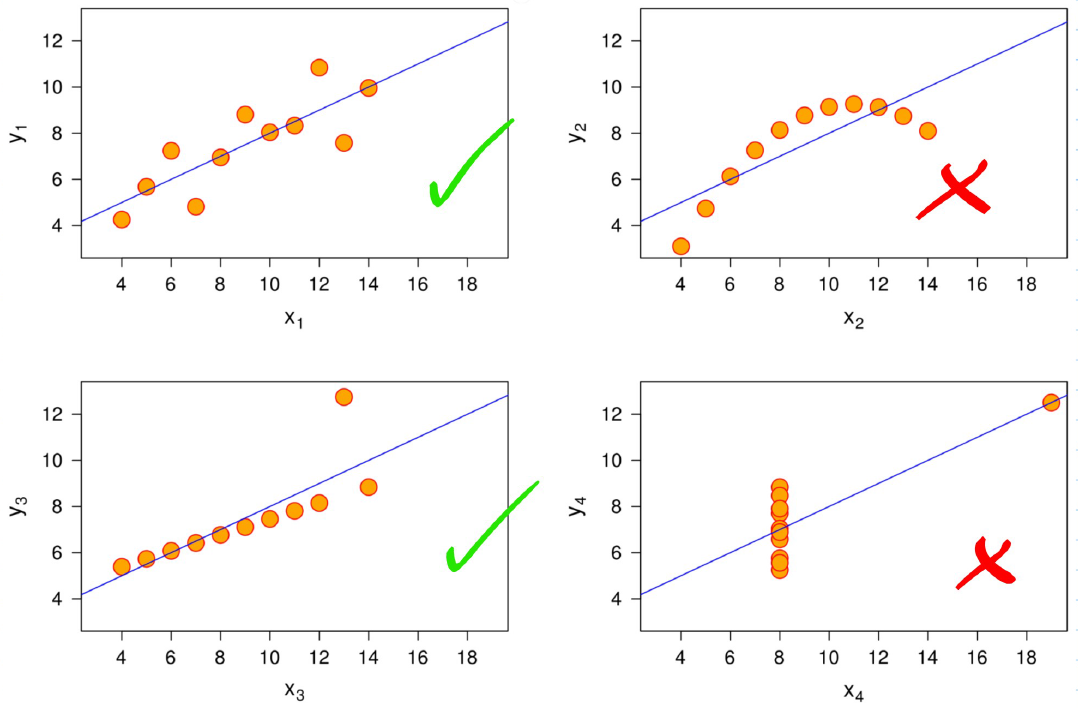
It is not always appropriate to calculate r, e.g., when the data is not linear. All of the above have the same value of .
Note
The Effect of Coding on : Coding and has no effect on r.
Note
Example:
Calculate the PMCC (also known as ) for the following data:
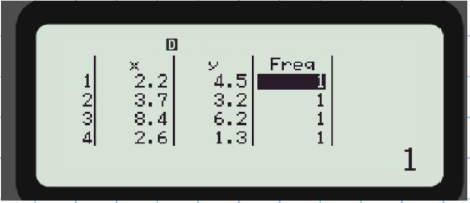
| x | 2.2 | 3.7 | 8.4 | 2.6 |
|---|---|---|---|---|
| y | 4.5 | 3.2 | 6.2 | 1.3 |
Method 1: Showing Full Working
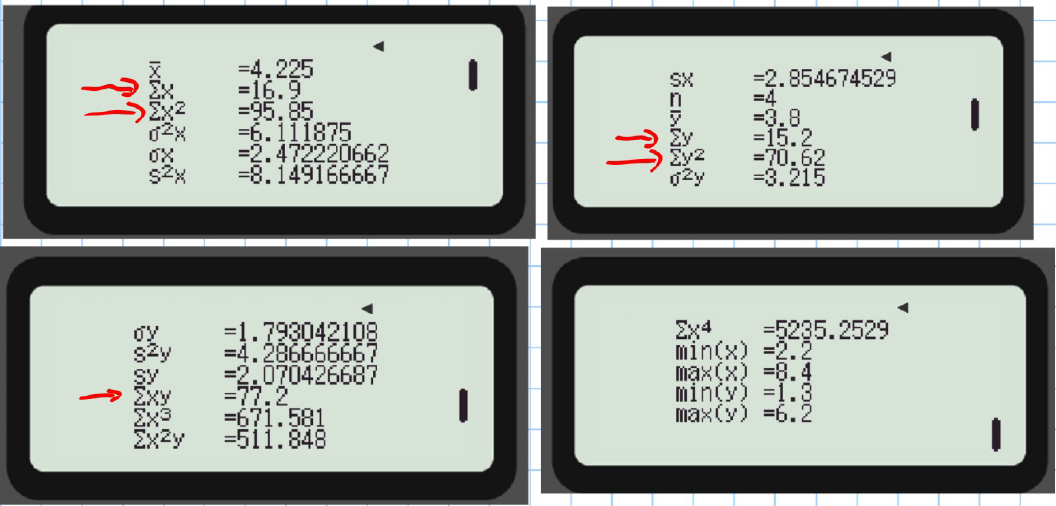
Step 1: Calculate individually :
- :
- :
- :
Using the calculator to get summary data:
-
Go into stat mode
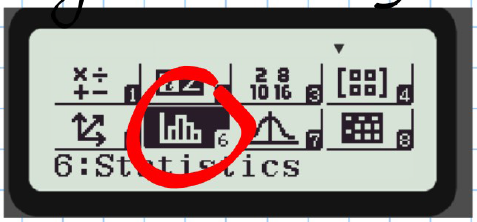
-
Go into straight line "" mode
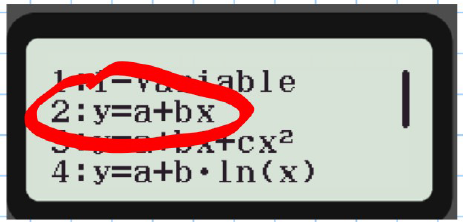
-
Input data, then press "OPTN".
-
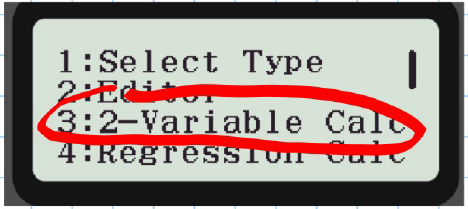
Select 2-Variable Calculation.
Method 2: Using the Calculator to Calculate
Note: This method is worth no marks if a data point is input incorrectly.
-
Follow steps (1-3) as outlined previously:

-
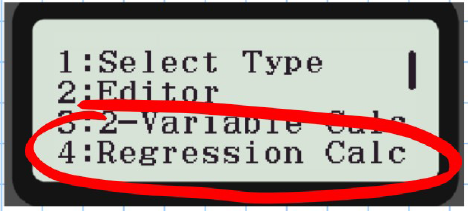
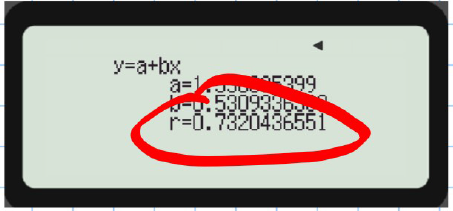
Select "Regression Calc":