Hyperbolic Functions & Graphs (Edexcel A-Level Further Mathematics): Revision Notes
📚Revision Notes
4.1.1 Hyperbolic Functions & Graphs
Understanding Hyperbolic Functions
Hyperbolic functions are analogues of trigonometric functions, but they are defined using exponential functions. The three primary hyperbolic functions are:
Hyperbolic Sine ()
Domain:
()
Range:
()
Hyperbolic Cosine ()
Domain:
Range:
Hyperbolic Tangent ()
Domain:
Range:
Graphs of Hyperbolic Functions
Graph of
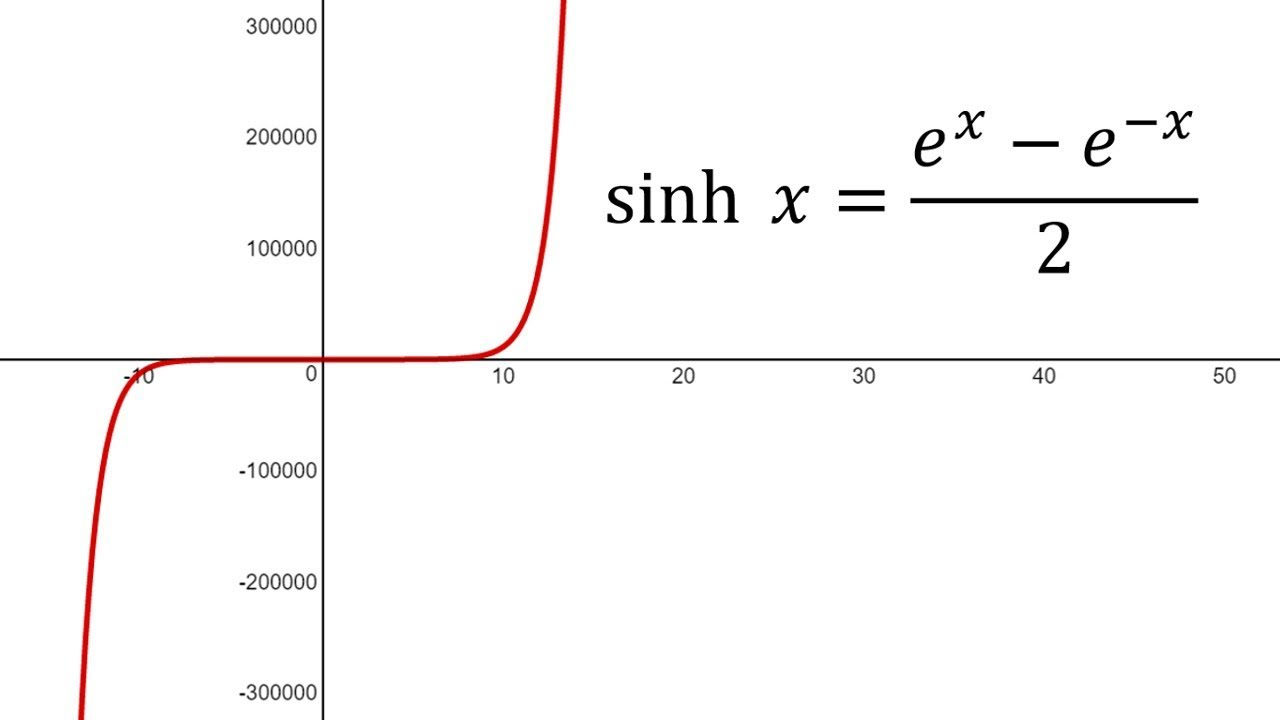
- Shape: Odd function (symmetric about the origin).
- Crosses the origin
- Rapidly increases as and decreases as
Graph of
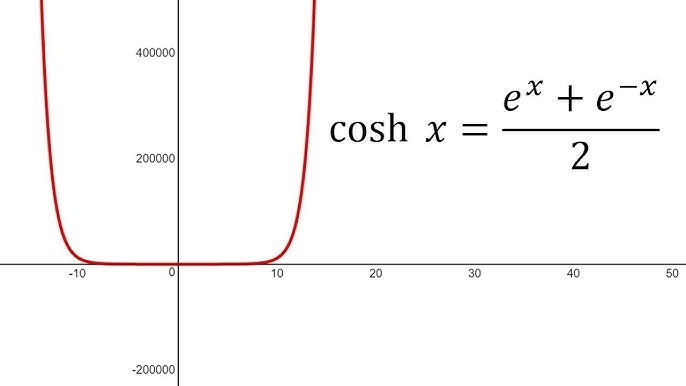
- Shape: Even function (symmetric about the ).
- Always above or equal to .
Graph of
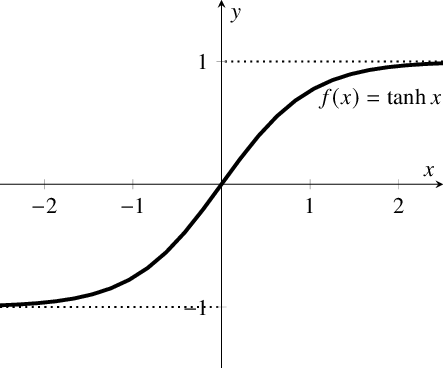
- Shape: Odd function (symmetric about the origin).
- Asymptotes: and
- Passes through the origin ().
Worked Example
Example
Example: Calculate , , and
Step 1**: Calculate** :
Approximate and
Step 2**: Calculate** :
Step 3**: Calculate** :
Note Summary
Note
Common Mistakes:
-
Confusing hyperbolic functions with trigonometric functions. Hyperbolic functions are defined using exponentials, not angles.
-
Misremembering formulas. For example,
-
Forgetting the range of Students sometimes assume has the same range as , which is incorrect.
-
Plotting errors. Failing to consider symmetry properties when sketching and .
Note
Key Formulas:
- Range of : ()
- Symmetry:
- (odd function)
- (even function)