Judging the success of rural regeneration (Edexcel A-Level Geography): Revision Notes
📚Revision Notes
Judging the success of rural regeneration
🔗 Some decisions on regeneration strategies create more conflicts within local communities than others…
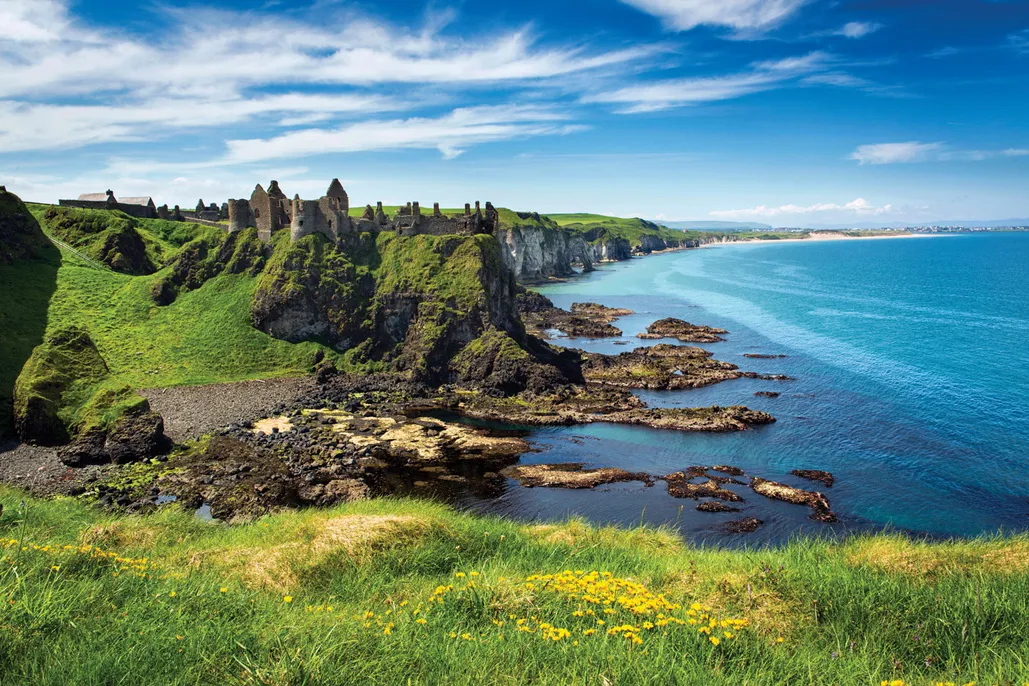
North Antrim Coast, Northern Ireland
- This coast is famous for the basalt columns of the Giant's Causeway
- 140,000 residents live in the region. Educational achievement, employment and income are lower than average for Northern Ireland
- Giant's Causeway was designated a World Heritage Site in 1986, so a huge number of stakeholders were involved in development
- Consultations showed that residents prioritised better local transport connections to access services, jobs for young people, improved childcare provision and training for farm diversification, especially into B&B
Regeneration Strategies
- Funding to support 100 farming families to diversify into activity-based tourism
- Regional food tourism initiatives and enhancement of tourist amenities, such as parking and picnic
- Activity-based tourism projects to promote cycling, walking, water-based and indoor wet weather
- Restoration of historical buildings with the aim of attracting 5000 more visitors to rural heritage
- Renewal of villages to enhance quality of life for residents of all
- The Giant's Causeway visitor centre opened in 2013 at a cost of £18 million. It attracts 1 million tourists every year (30% increase) and created 150 jobs for
The changes that have taken place as a consequence of local and national strategies can be judged using a range of economic, social, demographic and environmental variables in a rural area. Future success depends on past decisions.
Involving Stakeholders
Involving stakeholders makes assessing success a complex process owing to their differing ideas about what success means:
- National Trust = increased visitor numbers
- Moyle District Council = more employment, increased tax
- Local farmers = no disruption to farming
- Translink (public transport network) = increased demand for services
- Local hoteliers and restaurant owners = more customers throughout the year
Making changes to a rural place inevitably affects the meaning other stakeholders attach to it, which can make it a 'contested space'. Locals' objections to plans are sometimes due to Nimbyism, as they are against changes in their own area - despite agreeing with the principles behind why such change is necessary.

-
Stakeholders*
The needs of different groups produce contrasting views regarding its regeneration. For example, the National Trust has expanded a visitor centre in North Antrim with a cafe, car and coach parking facilities and it has been successful in attracting more day-trippers to the area. However, longer-term tourists to the area, such as ramblers and bird watchers visit to experience the wild coastal landscape in solitude and object to the fact that the regeneration scheme has made this rural place more crowded and congested.
Contrasting Criteria to Judge Success
Different stakeholders (local and national government, local businesses and residents) will assess success using contrasting criteria: Their views will depend on the meaning and lived experiences of a rural place and the impact of change on both the reality and the image of that place. Positive views, then, depend on whether the regeneration has met their expectations.
The differing views of residents and other stakeholders in regard to the Giant's Causeway visitor centre illustrate how regeneration is a contentious issue. Contrasting views occur for many reasons, including the different expectations of visitors to the centre, the objectives and aims of the managers of the centre (National Trust), residents of the area and local and national governments.
- Visitors to the centre seem generally to feel that it offers good facilities, but the price is too expensive and the centre makes the site too busy - by encouraging too many tourists - despite the visitors themselves being part of this problem! Great efforts have been made to minimise the impact of the new centre on the landscape, which seems to have been a success with visitors (environmental and social factors).
- For the National Trust, local and national governments, the aim of increasing local and international visitors to Giant's Causeway has been met with a 30% increase in numbers, making the centre an economic success through increased revenues and a social success because it promotes the region and provides educational opportunities.
- Residents of the area will have benefitted from the increase in tourism and the 150 jobs connected to the centre, which is important in a rural area both economically and possibly demographically if it has created more opportunities for younger people living in the However there are likely to be issues with increased congestion on the roads leading to the centre, as parking is limited. The NT has attempted to reduce this through promoting bus travel and incentivising people to travel to the site by bike or electrical car (environmental factors).
- Many residents who do not benefit directly from tourism may feel that the £18 million expenditure on the centre is money that could have been spent on improving services for rural transport and other social issues. Furthermore, the money that visitors pay to enter the centre goes to the National Trust rather than the local community - who will therefore not see the visitors centre as successful in terms of their economy or social
Another development plan on the North Antrim coast was the Bushmills Dunes golf resort, using land close to the conservation area. This was disputed (on environmental grounds) over the course of a decade by the National Trust and UNESCO, as they thought that the changes to the landscape were inappropriate in such close proximity to the protected coastline - despite the potential job creation from the proposed facilities.