Case Study → UN Convention on the Law of the Sea (Edexcel A-Level Geography): Revision Notes
📚Revision Notes
Case Study → UN Convention on the Law of the Sea
| Context | ● UNCLOS (The UN Convention on the Law of the Sea) is an agreement about how nations should manage & use the oceans ● Oceans cover more than ⅔ of the surface of the Earth |
|---|---|
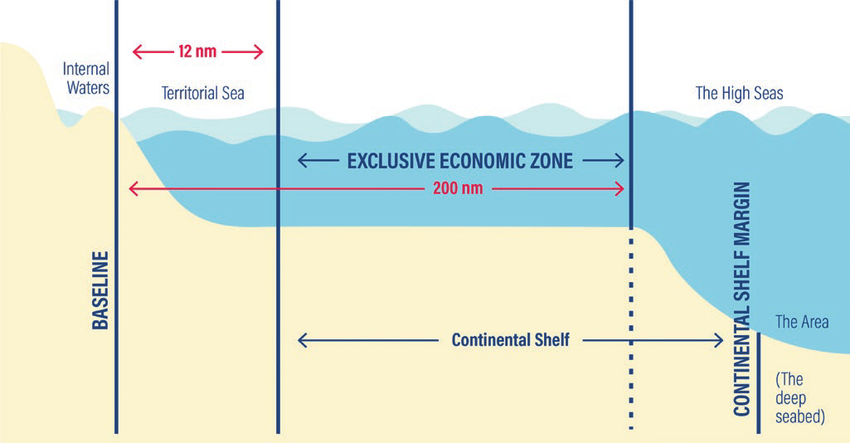
| UNCLOS facts | ● Came into force in 1994, and by 2016 was signed by 166 nations & the EU ● Sets coastal boundaries within which nations have exclusive resource rights ● Controls resource use in international waters |
| Protection of
marine
biodiversity | ● Requires countries that have signed to follow International Whaling Commission
guidelines (been in place since 1946)
○ In 1982, the IWC issued an indefinite ban on commercial whale hunting
■ But countries such as Japan have not agreed
■ Norway objected on the grounds whale hunting is part of its culture |
| Regulation of global shipping
flows | ● 90% of all global trade flows between countries involve sea travel
○ Container shipping has been described as the 'lifeblood' of the global system
● Such activities however can cause marine pollution
● Vessels are expected to follow international rules set out by UNCLOS
Success
● The progressive retirement of single-hulled oil tankers after the Prestige went down
off the coast in 2002, causing great damage to ocean species
● It is also illegal for ships that have recently delivered oil to use seawater to wash
out their tanks as flushing tanks can cause significant oil pollution
● Assisting the movement of invasive species, which swim inside the ships and become
stowaways |
| Exclusive economic zone
(EEZ) | ● An area of water extending 200 miles from a state's shoreline
○ The coastal state has the light to exploit, develop, manage and conserve all
resources found on its adjacent waters, including both biotic (fish) and
abiotic (oil, gas or minerals) resources found in the water or on the ocean
floor of the EEZ |
| Rights of
landlocked states | ● 42 states have no sea coast
● Under UNCLOS, landlocked states have a right of access to and from the ocean for the
purpose of enjoying 'the freedom of the high seas'
● Matters of coastline disputes are adjudicated at the International Court of Justice |
-
UN Convention on the Law of the Sea*