Power struggle after Mao’s death (Edexcel A-Level History): Revision Notes
📚Revision Notes
Power struggle after Mao's death
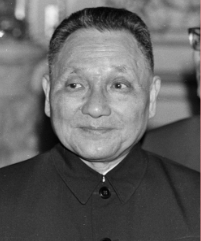
Deng Xiaoping
The PRC under Deng Xiaoping, 1976-199
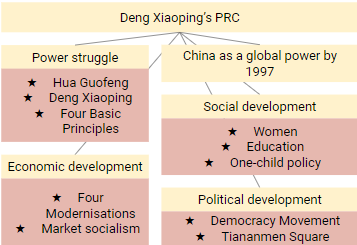
Defeat of the Gang of Four
On 5 April 1976, a protest occurred on Tiananmen Square, which was prompted by Zhou Enlai's death on 8 January 1976 and by the Nanjing incident, a movement opposing the Cultural Revolution. The People's Liberation Army (PLA) cleared the area as ordered by Mao Tse-tung, which resulted in the arrest of four thousand protesters.
Vice Premier Deng Xiaoping was suspected as the head of the protest and was immediately arrested. The people then surmised that the Gang of Four might be behind the arrest as a power struggle transpired between them and the two leaders.
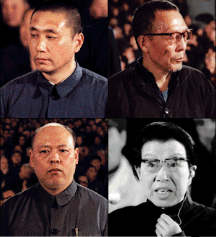
Gang of Four
After Mao's death, the Gang of Four were expected to take complete power of the government. However, they were eventually outmanoeuvred by the Politburo.
Hua Guofeng was made prime minister, the chairman of the CCP. He controlled the Party as well as the People's Liberation Army (PLA). On 6 October 1976, he ordered the arrest of the Gang of Four, accusing them of plotting to kill him as well as being hated by the people of China. They were criticised and attacked in the press, radio and posters. Deng Xiaoping was reinstated as the Vice-Chairman of the Central Committee.
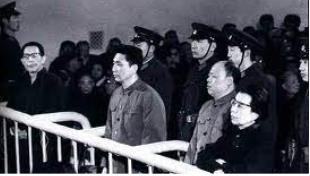
Gang of Four at trial
In 1980-81, the gang was tried and found guilty. Jiang Qing and Zhang Chunqiao received death sentences, which were later suspended, and they received life imprisonment instead in 1983. Wang Hongwen was also sentenced to life imprisonment and Yao Wenyuan to 20-year imprisonment.
By the 1980s, Deng Xiaoping had outmanoeuvred Hua Guofeng. Deng believed in economic reform. However, he approached political change in a conservative manner. He was particularly influenced by the Four Basic Principles that maintained the dictatorship of the CCP, demanding absolute obedience from the people.
In 1979, Deng Xiaoping launched the Four Basic Principles that he believed to be important for China's modernisation while ensuring that the principles of the CCP were still in place. They were integrated into the Preamble of the People's Republic of China's (PRC) constitution.
Four Principles

We must keep to the socialist road
We must uphold the dictatorship of the proletariat
We must uphold the leadership of the Communist Party
We must uphold Marxism-Leninism-Mao Zedong Thought