Trying to preserve autocracy 1855–1894 (Edexcel A-Level History): Revision Notes
📚Revision Notes
Economic and social developments
📌 Modernisation and Economy
In the 1860s, Russian industry was based on:
- Mostly state run factories to supply the military
- Craft industry in peasants' homes: weaving, spinning etc…
- Artels, wood and leather products for the domestic market
- Very limited private run industries (except sugar, textiles, and cotton)
In 1868, Alexander II invited John Hughes from South Wales to come and demonstrate what could be achieved through modern methods in iron and steel.
Between 1866 and 1881 the number of miles of railway increased from 3,000 to 13,270.
Hughesovka
- John Hughes was born in South Wales
- Developed his iron making skills
- Had patented inventions in armaments and armour plating
- In 1884 supplied Russian naval base Kronstadt with the latter
- In 1868 was invited to Russia to help with the land and mineral rights in the Donbass (part of the Ukraine)
- Set up the New Russia Company Limited with £300,000 capital from British shareholders
- Sailed to Russia in 1870 and was accompanied by 100 mostly Welsh Ironworkers and miners
- He built a Steel works and developed coal and iron ore mines
- The settlement was called Yuzovka (Hughesovka)
- Hughes died in 1889
- His sons took over and the works rapidly expanded in the industrial boom of the 1890s
- At the beginning of the 20 century the population was about 50,000
- Largest steel works in Russia which was taken over by the Bolsheviks in 1919
- Became one of the largest metallurgical centres in the Soviet Union
- Name was changed to Stalino in but in 1961 it received its present name, Donetsk
Sergei Witte: 1849 – 1915
Sergei Witte
- Born Georgia 1849
- Expert in railways
- Physically imposing, stocky – massive head and torso on short legs
- Was not popular with the royal court or with high-ranking gov. officials
- Was married to a Jewish divorcee
- Energetic, highly organised, charismatic
- Was also manipulative: engaged in bribery and involved in political spying
- Made finance industry more powerful and was a driving force behind investment in the economy
- Dismissed in 1903, was brought back in 1905 and given the job of Russian Prime minister and resigned in 1906
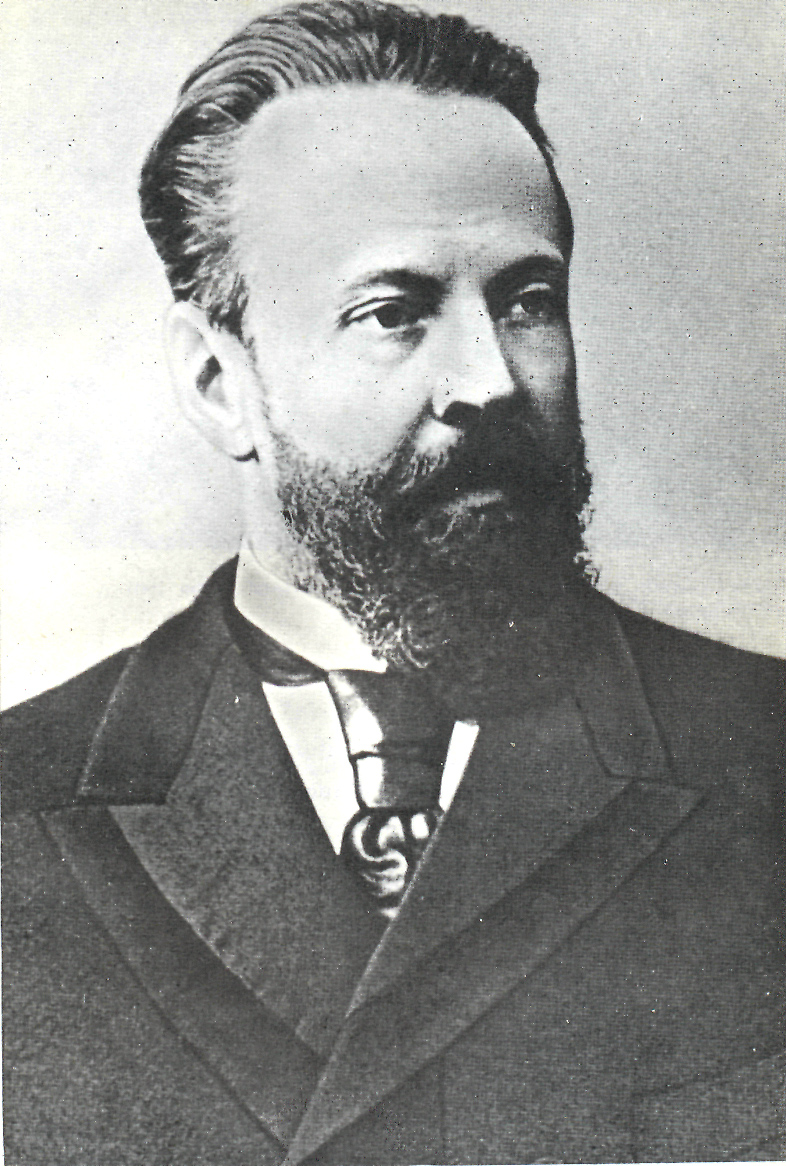
Sergei Witte
State sponsored development of heavy industry
- Witte believed the iron, coal and steel industries would form the basis for industrial development
- He used the railways as a springboard (Witte had a "holy passion" for Railways)
- Railways would link up the vast spaces, people, factories, and farms in the empire
- Railways would carry goods to markets, factories, and industrial plants
- By the end of the 1890s, about 60% of the iron and steel had been consumed by the railways - 4/5 of locomotives were built in Russia
- The Trans-Siberian railway involved 25 factories producing 39 million roubles worth of rails
- Other manufacturers produced 1500 locomotives and 30,000 waggons
- Witte invested millions of roubles of state money directly into the railways and heavy industry
- By 1899 the state bought almost 2/3 of the metallurgical production, controlled 70% of railways and owned many mines and oilfields
- Witte offered loans, subsidies and guarantees of profits to private companies
- Private businessmen could then run and develop the industries once they had taken off
Foreign loans, investment, and expertise
- Witte negotiated loans particularly from the French
- Drew in foreign investors to put money in Russian joint-stock companies
- By 1900, about one third of the capital in these companies was invested by foreigners
- Witte encouraged more foreign companies, engineers, and experts
- Encouraged the growth of private enterprise
- Despite being accused by his critics of creating a dangerous and shameful dependence on foreigners, a new class of industrialists, entrepreneurs, and businessmen began to emerge
Note
Sergei Witte, a key architect of Russia's economic modernisation in the late 19th century, played a pivotal role in securing foreign loans, particularly from France, and drawing in foreign investors. By 1900, foreign capital constituted about one-third of investments in Russian joint-stock companies. Witte's policies also attracted foreign companies, engineers, and experts, fostering private enterprise. Despite criticisms of creating dependency on foreigners, his efforts led to the emergence of a new class of industrialists, entrepreneurs, and businessmen in Russia.
High tariffs on imports
- Continued policy of high tariffs on imports to protect domestic industries from foreign competition
- Russian companies bought home-produced iron, steel, and other products - Less money flowed out of Russia
Adoption of the Gold Standard
- Russia had built up its gold reserves
- In 1897 they adopted the gold standard for the rouble
- Exchange rates were then fixed against other gold-backed currencies
- Provided added security for foreign investors
Exports of Grain
- Grain was essential in Witte's strategy
- Grain exports were the main means of Russia earning more foreign currency
- This allowed them to pay the high interest charged on foreign loans and imports - The more grain the better
📌 Did his strategy work?
- Hoped industrial growth would take off and create more wealth for everyone before it hurt too much
- Up to 1900 his plan seemed to be working
- There was an industrial spurt in the 1890s
- Growth rate hit nine percent
- Between 1890 and 1900 the production of iron and steel had risen from 9 to 76 million poods, coal output tripled, and the production of cloth increased by two-thirds
- Russia was now a major world producer of iron, steel, and oil
- Vast areas of heavy industry were opened up, like Donbass and Caucasus
- By 1900 Moscow was one of the ten biggest cities in the world
- The international recession in 1899 put a sudden stop to the expansion
- Russia entered a deep depression that affected all of the economy
- In Donbass, only 23 of the 35 blast furnaces were working in 1903
- Mines were closing
- There was a slump in the oil industry and the railway industry was badly hit
- Metalwork industry in St Petersburg suffered from falling gov. orders
- This resulted in the closure of many small firms
- Output in basic industries fell
- By 1903, Witte lost support and was dismissed by the Tsar
- Just as signs of recovery arose in 1903, the Russo-Japanese War and 1905 revolution held up further development
Note
In the late 19th century, Russia experienced significant industrial growth under the guidance of Sergei Witte, who hoped that rapid industrialisation would foster wealth before causing widespread social harm. By 1900, this plan seemed successful: industrial output soared, with iron and steel production increasing nearly eightfold, coal output tripling, and Moscow emerging as one of the world's largest cities. However, an international recession in 1899 halted this progress, plunging Russia into a severe depression. Industries across the country, particularly in Donbass and St. Petersburg, suffered greatly. By 1903, Witte had lost support and was dismissed, and although signs of recovery appeared, the Russo-Japanese War and the 1905 Revolution further stymied development.
Criticisms
- Interest rates to service foreign debt were very high and were a major resource drainer
- By 1900, 20% of the budget was used to pay off foreign debts, which was ten times the amount spent on education
- Witte prioritised heavy industry over light industry
- Smaller, more sophisticated machinery and electrical industries that could have reduced the need for imports were not developed sufficiently
- Agriculture was neglected: it was under-invested whilst industrial development was prioritised over the welfare of the population
- Rapid industrialisation meant working and living conditions were appalling in the towns and cities, this created social unrest, discontent and strikes and little was done to alleviate these conditions
- Failed to develop a market in consumer products
- This would have made life more tolerable for ordinary people
- High tariffs on foreign industrial commodities made many goods too expensive for most Russians to buy
Note
By 1900, Russia faced severe financial strain from foreign debt, consuming 20% of the budget—ten times more than was spent on education. Witte's focus on heavy industry overshadowed the development of smaller, essential machinery and electrical industries, leading to insufficient domestic production and continued reliance on imports. Agriculture was underfunded, and the prioritisation of industrial growth over public welfare resulted in dire working and living conditions. Rapid industrialisation fuelled social unrest, with widespread strikes and minimal efforts to improve living standards. Additionally, high tariffs on foreign goods rendered consumer products unaffordable for many Russians, exacerbating the struggle for ordinary citizens.