Government and Tsars (Edexcel A-Level History): Revision Notes
📚Revision Notes
Government and Tsars
📌 Alexander II
Alexander II:
The Evolution of a Tsar Shaped by Liberalism, Duty, and Autocracy
-
He was more autocratic than his father
-
He exhibited despotic and revolutionary ideas
-
Came to power in February 1855
-
His father (Nicholas I) instilled in him the value of duty and obedience, learning to enjoy the military life and taking part in ceremonies
-
He was given a well-rounded education in history, sciences, and languages. One of his tutors (the poet Zhukovsky) believed a sovereign should be raised as a 'human being' in order to win the love of his subjects
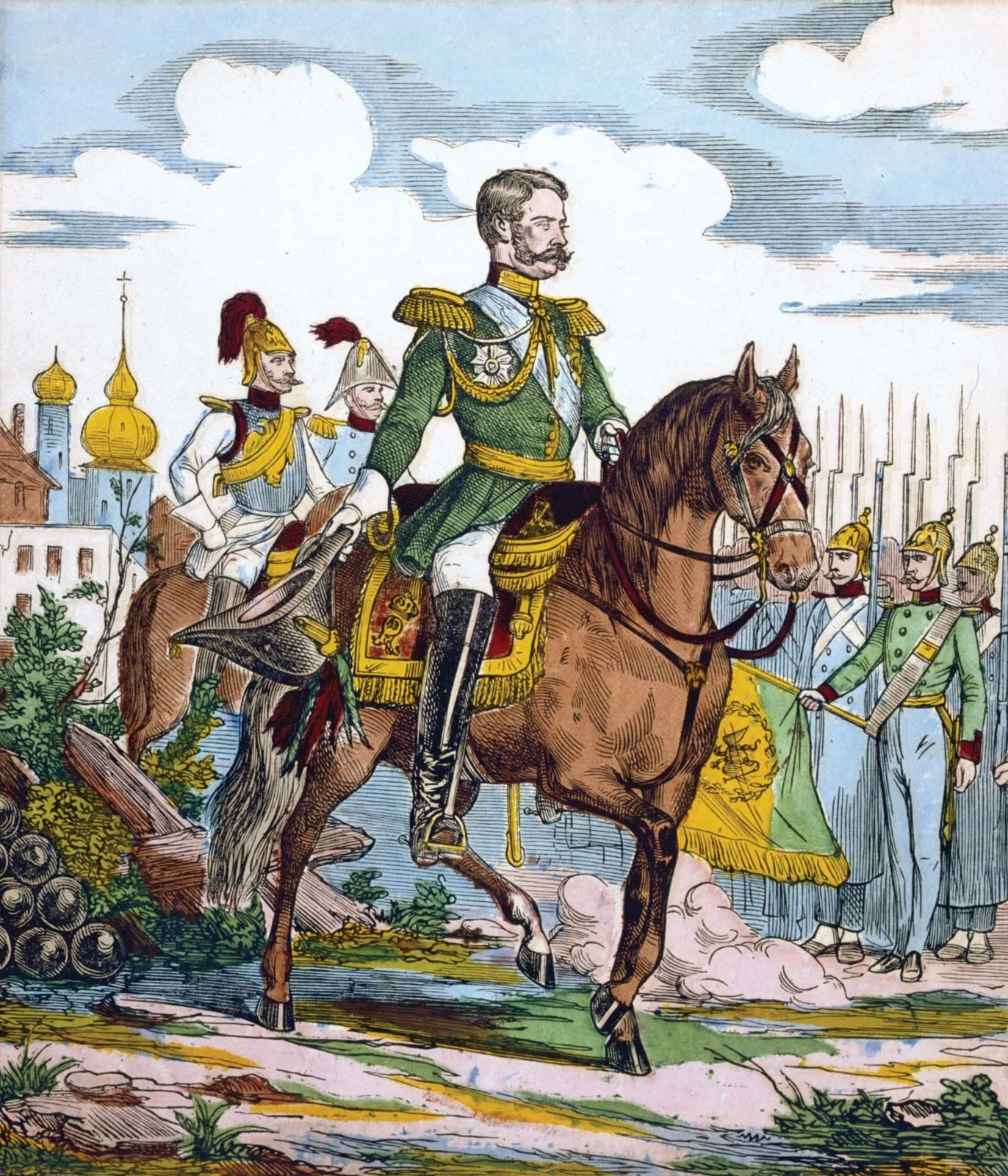
-
In 1837, with Zhukovsky, Alexander went on a tour of 29 Russian provinces, taking him to places no other members of the royal family had visited. This included Siberia, where he encountered prisoner exiles. The tour was meant to build a bond between the future Tsar and his people
-
Alexander became the first Tsar to consider that the people's approval was an important part of autocratic rule
-
In 1839 he embarked on a tour of Europe, gaining knowledge of Western traditions and ideas
-
He also met the German Princess Marie of Hesse-Darmstadt, whom he married in 1841 and they had eight children
-
Alexander's father, Nicholas, believed that the Tsar should be personally involved in all aspects of government. Nicholas placed Alexander on a number of committees and councils, which gave him knowledge of the workings of the state. He was also left in charge of routine state affairs when Nicholas was absent
-
Alexander's coronation took place in 1856, It brought a more optimistic period after the tight control of Nicholas I
-
Alexander had a humane perspective on the world and was more sensitive than his father
- He was a firm believer in autocracy, conservatism and Russia's special identity and intended to preserve the best of the old system
Note
The Humanitarian Autocrat: Alexander II, known for his humane and liberal upbringing, sought to bond with his people and valued their approval while maintaining autocratic rule.
📌 Alexander III 1881-1894
Lacked refinement
- Opposite to his 'liberal soft-hearted' father
- On 29 April 1881, in "The Manifesto on Unshakable Autocracy", he announced the Tsar would "rule with faith in the strength and truth of the autocratic power…"
- Presided over 13 years of peaceful government
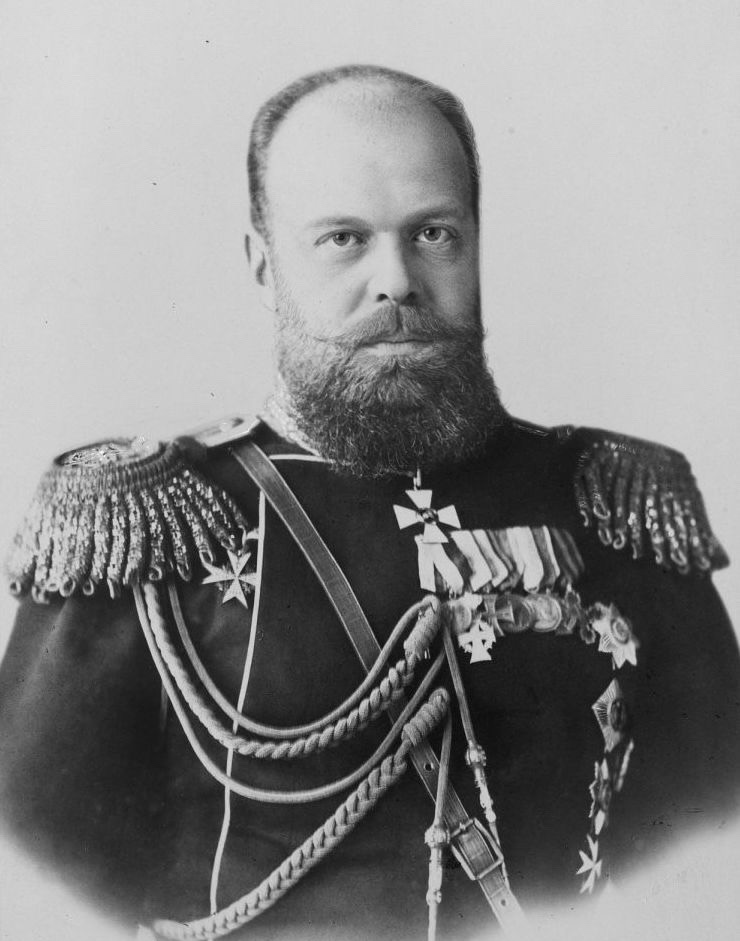
Alexander III (1881-1894)
- Diligent, honest, Strong-willed, determined and ruthless
- Became the heir after his older brother in 1865 when Nicholas died of meningitis
- At Nicholas's request Alexander married his brother's fiancée, Maria Sophia Fredericke Dagmar, daughter of the King of Denmark. They had six children together, including the future Nicholas II And he was devoted to his children
- The secret tsarist police was formed, and government officials were given extensive powers to arrest and exile political dissidents
- Alexander died suddenly from a stroke in November 1894
- Alexander had privately expressed his son Nicholas was unsuited for leadership, however the crown was still passed onto him
Note
The Resolute Autocrat: Alexander III, known for his uncompromising authoritarianism, reversed many of his father's liberal reforms, emphasising the strength and truth of autocratic power while presiding over a peaceful 13-year reign.
Nicholas I
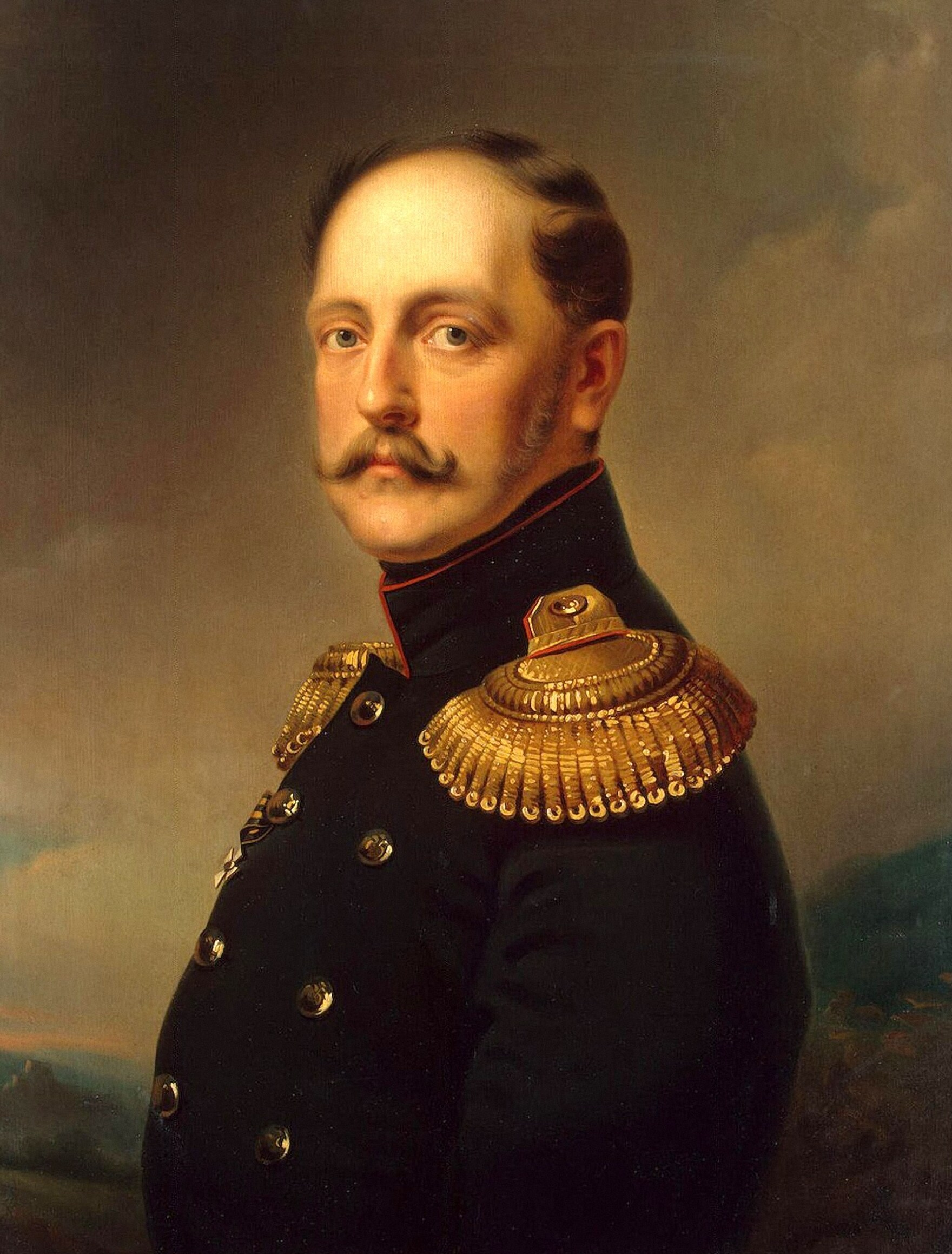
Nicholas l of Russia
- Nicholas I inherited throne aged 26 in 1894 and was extremely overwhelmed by the idea of taking over as many including himself saw him as unfit to rule in comparison to his father.
- Nicholas I was well educated, focused on military matters. He commanded respect and loyalty however lacked the leadership ability to achieve this.
- Nepotism was rife under his leadership, people he knew were promoted beyond their skillset because of how close they were to him, demonstrating his inability to rule effectively.
- Nicholas was highly narrow minded which severely impacted how he ruled, he was vocally anti-Semitic, only having time for "true Russians" and supported violence and military actions against Jews and other ethnic minorities.
- He struggled to criticise people to their face in government.
- If he didn't like the policy he wrote the creator a letter instead of criticising them in person
- He was seen politically ambivalent and 'unfit to run a post office' according to a cabinet member
- Strongly influenced by Pobedonostev and his Slavophile outlook and so was highly influenced by Pobedonostev.
Reliance on individuals
- The Tsarina (his wife): was German (an outsider) so the court turned against her, so she turned against them. She was seen as cold-hearted, was disliked, wanted the attention of the Tsar (insisted on him spending time in the evenings with the family every night)
- Rasputin: was respected and liked by the Tsar because he was the only one who could heal their son's haemophilia bleeding episodes when doctors couldn't, was given an elevated position in court because of this, had direct access to the royal family, rumours of him soliciting sexual favours led him to be disliked by the orthodox church and therefore led to tension in government.
Note
The Tsarina, originally German, was perceived as an outsider in the Russian court. Her insistence on the Tsar spending time with the family, combined with her perceived coldness, led to her being disliked by the court. This alienation caused her to withdraw further, deepening the rift between her and the Russian nobility. Rasputin, a mystic who gained the Tsar's favour by seemingly curing the royal heir's haemophilia, was granted significant influence within the royal family. However, his rumoured immoral behaviour and solicitation of sexual favours caused him to be despised by the Orthodox Church, which further fuelled tensions within the government. Together, the Tsarina and Rasputin became symbols of controversy, contributing to the growing unrest in the Russian Empire.