Points of Inflection (Edexcel A-Level Mathematics): Revision Notes
📚Revision Notes
7.4.2 Points of Inflection
Points of inflection are points on the graph of a function where the concavity of the function changes. In simpler terms, it's where the graph changes from being "curved upwards" (concave up) to "curved downwards" (concave down), or vice versa. These points are important in understanding the shape and behaviour of the graph of a function.
1. Definition of a Point of Inflection:
A point is called a point of inflection if the function
- Has a continuous second derivative around
- The second derivative changes sign at In other words, changes from concave up () to concave down (), or vice versa, at the point .
2. Conditions for a Point of Inflection:
To find points of inflection, you typically follow these steps:
Note
- Find the second derivative of the function, .
- Solve to find potential inflection points.
- Check for a change in concavity by determining the sign of before and after each potential inflection point.
- If changes sign around is an inflection point.
- If does not change sign, then is not an inflection point.
3. Example Problems:
Note
Example 1: Find the Points of Inflection for
- Step 1: Find the first derivative:
- Step 2: Find the second derivative:
- Step 3: Solve to find potential inflection points:
- Step 4: Check for a change in concavity:
- For (concave down).
- For (concave up).
- Conclusion: Since changes sign from negative to positive at , there is a point of inflection at
Note
Example 2: Find the Points of Inflection for
- Step 1: Find the first derivative:
- Step 2: Find the second derivative:
- Step 3: Solve f''(x) = 0 to find potential inflection points:
- Step 4: Check for a change in concavity:
- At , is but does not change sign (as which is always non-negative).
- Conclusion: Since does not change sign at , there is no point of inflection.
4. Geometric Interpretation:
- Concave Up: The graph is shaped like a cup or , and
- Concave Down: The graph is shaped like a cap or upside-down U, and
- Point of Inflection: The graph changes from concave up to concave down, or vice versa.
Note
Example Visualization:
Consider the function . Its first derivative is and its second derivative is
- (concave up).
- (concave down).
- The point is a point of inflection, where the graph changes concavity.
Summary:
Note
- Points of inflection are points where the graph of a function changes concavity.
- To find them, use the second derivative , find where it equals zero or is undefined, and check if the sign changes around those points.
- Points of inflection are crucial in understanding the overall shape and behaviour of functions, with wide applications in mathematics, physics, economics, and engineering.
Convexity, Concavity, and Point of Inflection
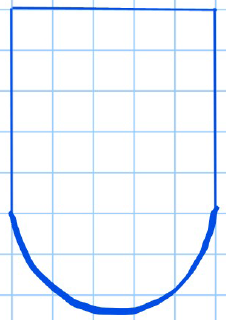
An object is convex if its surface protrudes outwards.
Note
Example:
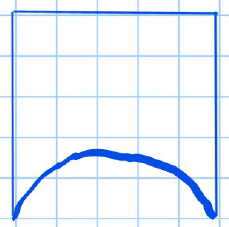
An object is concave if its surface protrudes inwards.
Note
Example:
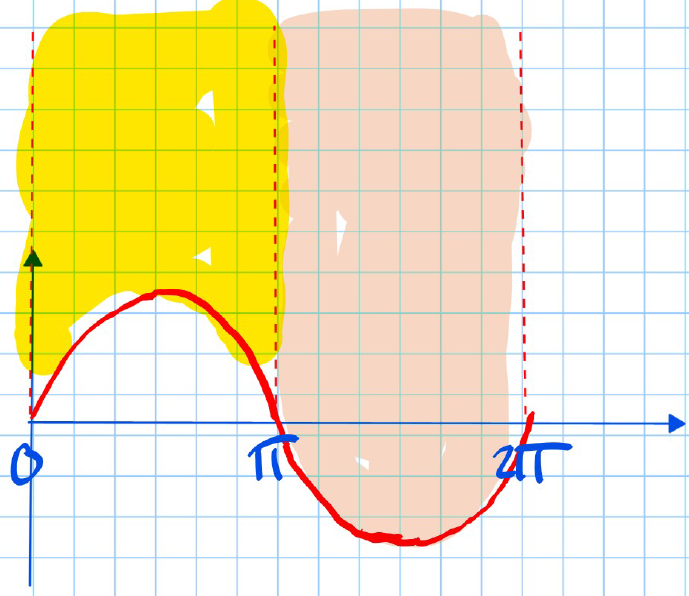
The concept is similar for functions. Take, for example, .
Note
Drawing lines from the curve upwards, we see that:
- From , the curve is concave.
- From , the curve is convex.
Technical Definitions:
Note
-
A curve is concave in an interval if, for all values in that interval, . concave implies underground (i.e., < $$0)
-
A curve is convex if in an interval.
Point of Inflection
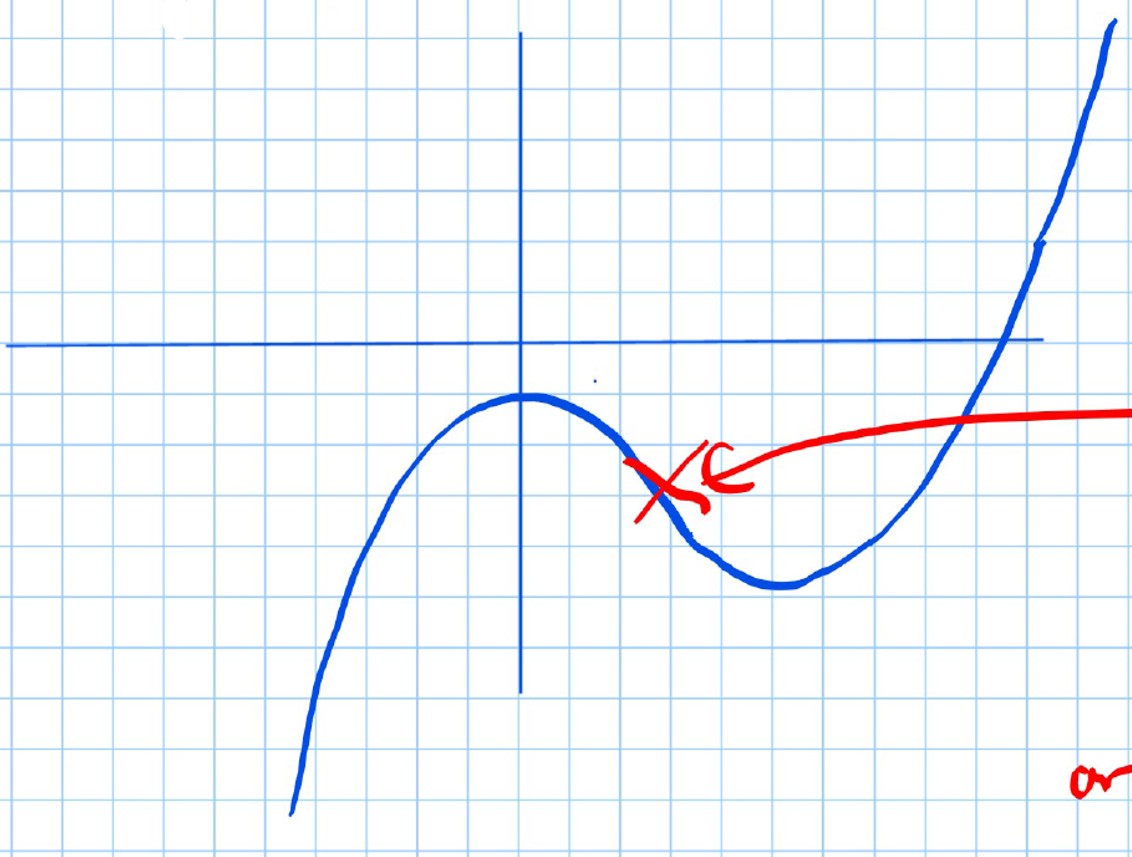
A point of inflection is a point at which the function changes from being concave convex or convex to concave. At this point, the curve is neither concave nor convex.
Note
At this point, the curve stops being concave, and after this point, the curve starts being convex, or vice versa where the curve turns. Fact:
- Point of inflection
- Point of inflection
Note
Examples:
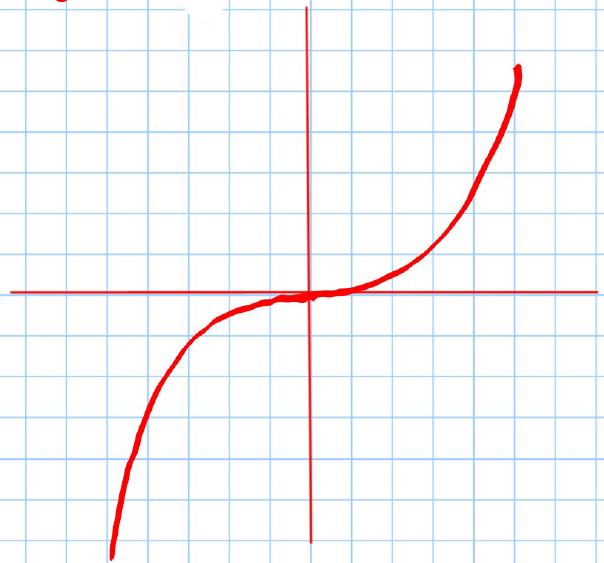
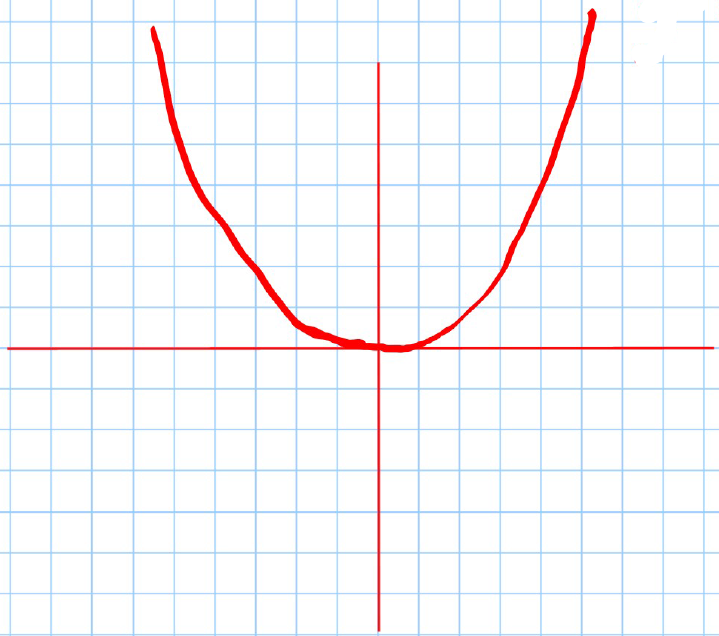
-
[Graph of showing no point of inflection]
-
[Graph of showing a point of inflection at the origin]
Note
Finding the points where
- For :
Therefore, the point is .
- For :
Therefore, the point is .
Testing for a Point of Inflection
To test for a point of inflection, we must find the gradient slightly to the left and slightly to the right of our suspected point of inflection.
For :
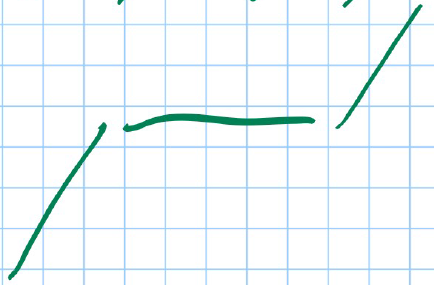
[Graph of showing a point of inflection at the origin]
-
Stationary point of inflection (i.e., both concave and convex around this point) For :
-
-
-
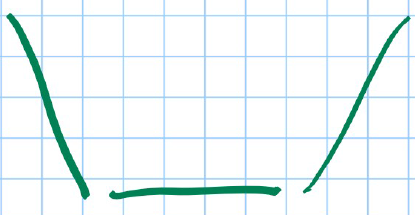
[Graph of showing a stationary point at the origin but not a point of inflection]
- Stationary point only
Note
Example
For each of the following functions, find the interval on which the function is:
- Convex
- Concave a.
- For convex,
- Convex when x > 1
- For concave,
- Concave for x < 1