Change of Sign Failure (Edexcel A-Level Mathematics): Revision Notes
📚Revision Notes
10.1.2 Change of Sign Failure
Failures of the Change of Sign Method
Note
Change of sign failure occurs when the change of sign method does not detect a root, even though one exists. This typically happens in A Level Maths under the following conditions:
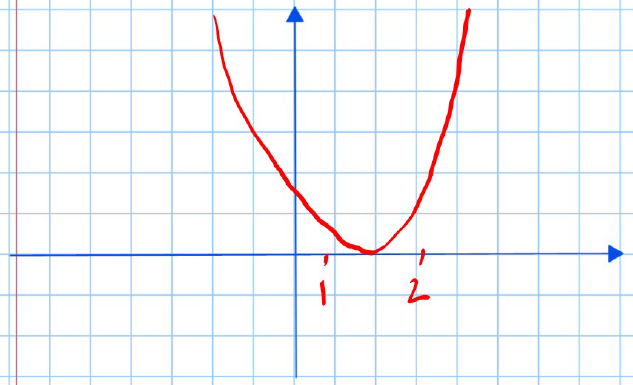
- Repeated roots: The function touches the x-axis without crossing it, as in , where there's no sign change despite a root at .
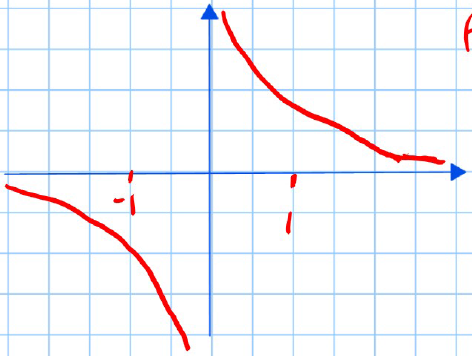
- Discontinuous functions: If the function is not continuous, it may jump over the root, preventing a change of sign from being detected. In such cases, alternative numerical methods, like Newton-Raphson or fixed-point iteration, may be more effective for finding roots.
- Multiple Roots Without a Sign Change:
- Consider a function where is negative and is also negative.
- Even though there are two roots within the interval, there is no change of sign.
- Conclusion: The method fails because it doesn't detect the roots due to the absence of a sign change.
- Discontinuities in the Function:
- Example:
- Here, and , indicating a change of sign, but there is no root.
- This occurs because the function has a discontinuity at the -axis.
- Conclusion: The Change of Sign method only works when a function is continuous within a given interval. The method fails if there are discontinuities.
- No Sign Change Despite a Root Existing:
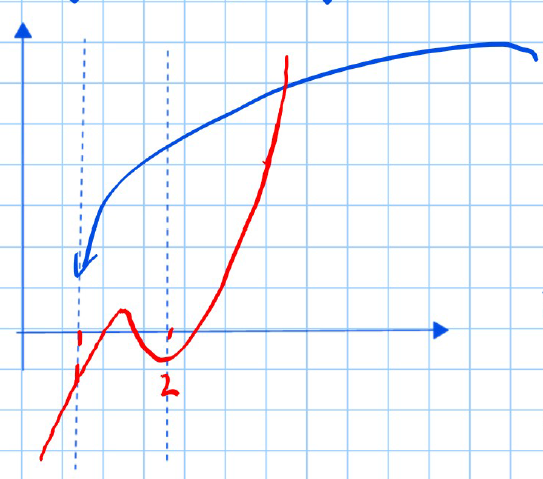
- Consider a function where and , indicating no change of sign.
- However, a root exists within the interval .
- Conclusion: The method fails because it doesn't identify the root due to the lack of a sign change within the interval.