Localisation of Function in the Brain (OCR A-Level Psychology): Revision Notes
📚Revision Notes
6.3.1 Localisation of Function in the Brain
Localisation of function
Localisation of function: The idea that certain functions are linked to certain areas within the brain
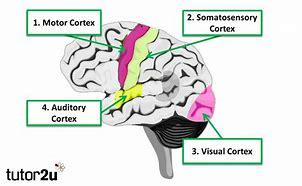
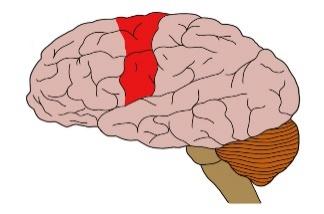
Motor cortex:
Controls body movement by sending nerve impulses to motor neurons which control muscles in the body
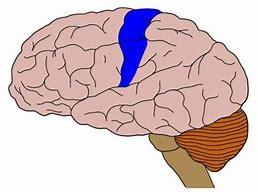
- Organised contralaterally
Somatosensory cortex:
Processes sensory information such as touch, pressure, temperature, and pain by receiving nerve impulses from sensory neurons that communicate with sensory receptors in the skin
- Organised contralaterally
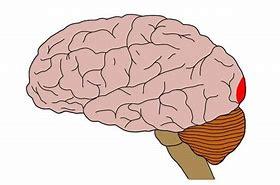
Visual cortex:
Processes visual information by receiving nerve impulses from sensory neurons that communicate with sensory receptors in the eyes
- Organised contralaterally
Auditory cortex:
Processes sound by receiving nerve impulses from sensory neurons that communicate with sensory receptors in the ears
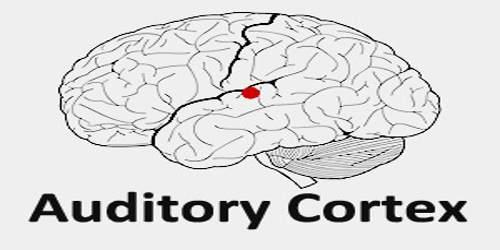
- NOT organised contralaterally
Language Centres:
Broca's area: Enables us to produce language
Wernicke's area: Enables us to understand language
- The Broca's area and the Wernicke's area are both hemispherically lateralised to the left hemisphere
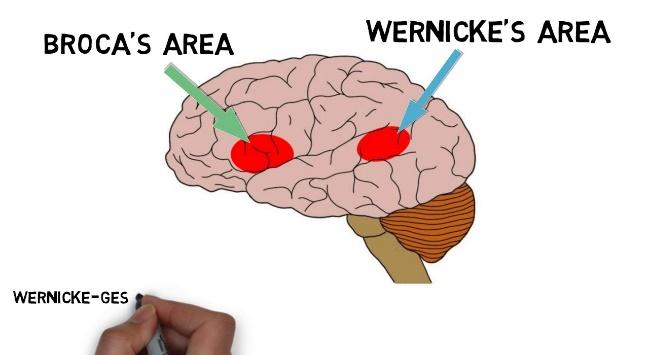
Wernicke's aphasia: Damage to the Wernicke's area
Broca's aphasia: Damage to the Broca's area
Evaluation:
(1)
Note
P: There is conflicting evidence from research into brain plasticity and functional recovery
Note
E: For instance, studies of stroke victims who have lost some brain functions due to brain damage have shown that the brain has the ability to re-wire itself with undamaged brain regions taking over the functions of damaged brain regions.
Note
E: Thus, this suggests that neurons can take over at least some of the functions that have been lost, providing evidence against localisation of function
(2)
Note
P: Localisation of function is supported by research by case studies
Note
E: For instance, the study of Phineas Gauge who was injured with a pole through his frontal lobe, found that his personality changed massively, causing him to become short-tempered and rude. This suggests that the frontal lobe may be responsible for regulating mood
Note
E: This supports the localisation of function theory as it provides evidence for the idea that specific brain regions perform specific functions