Hormones in Humans: Reproduction & Metabolism (AQA GCSE Biology Combined Science): Revision Notes
📚Revision Notes
5.3.4 Negative Feedback
Note
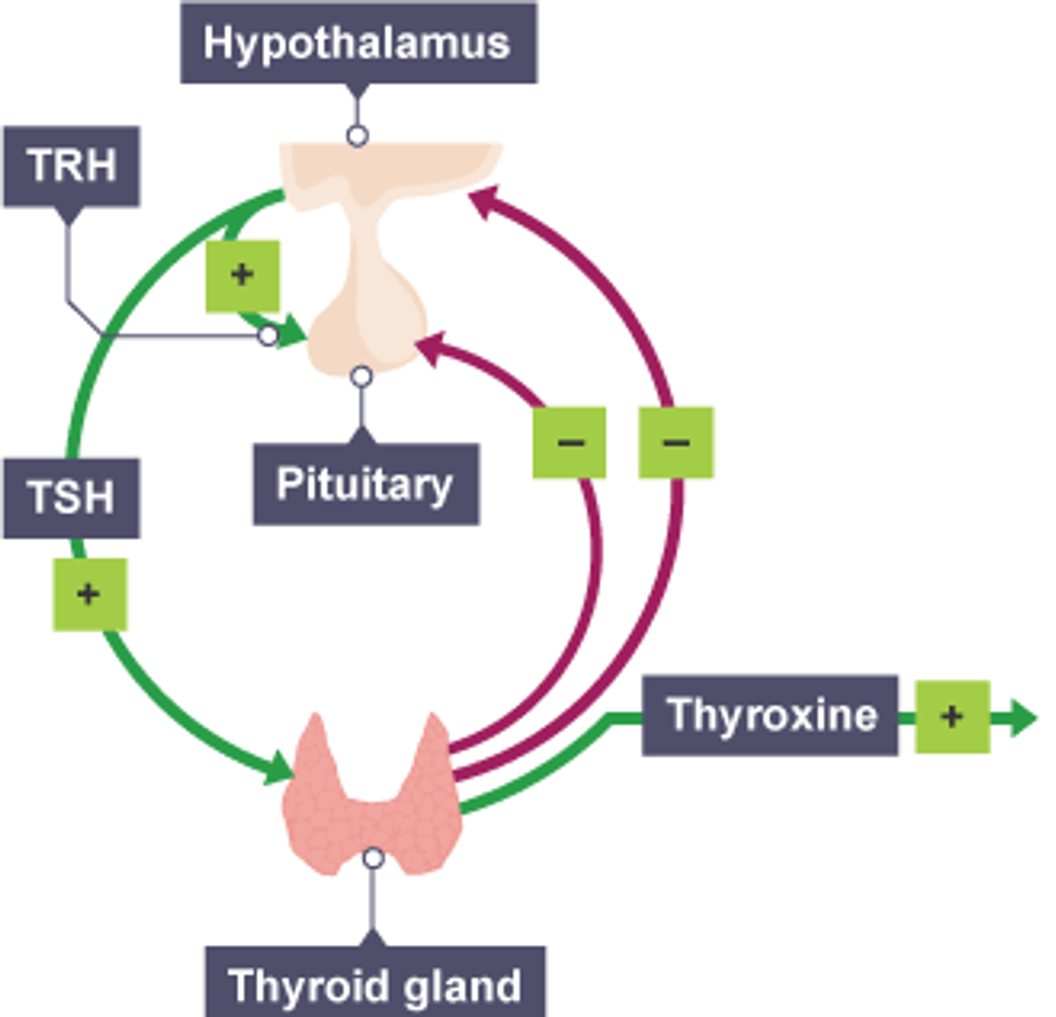
Negative feedback is when the body responds to an increase or decrease in a factor by returning it back to its original level.
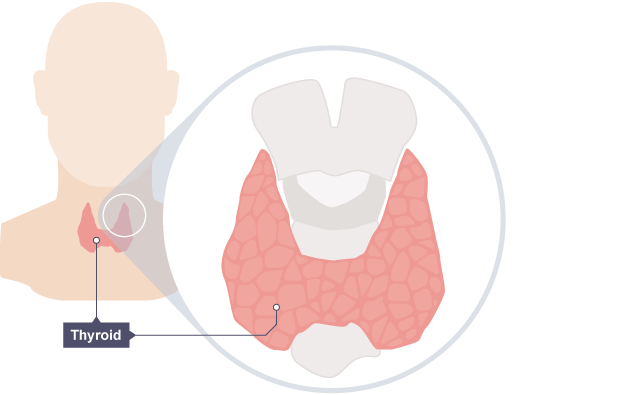
Thyroxine regulates metabolic rate (how quickly reactions occur). It is also important in growth and development.
-
Released by the thyroid gland
-
Its release is stimulated by the thyroid stimulating hormone The levels of thyroxine are controlled by negative feedback.
-
When the levels increase, it is detected by receptors in the brain
-
This inhibits the release of TSH
-
This inhibits the release of thyroxine, so levels fall
Adrenaline is produced in times of stress, and stimulates the 'fight or flight' response
- Released by the adrenal glands (on top of the kidneys)
- This is stimulated by fear or stress, detected in the brain
- The effects of adrenaline include:
- Increased heart rate and breathing rate to deliver more oxygen and glucose to the brain and muscles for respiration
- Glycogen stored in liver is converted to glucose for respiration
- Pupils dilate to let in more light
- Blood flow to muscles is increased
- Blood flow to digestive system is decreased