Cell Division (AQA GCSE Biology): Revision Notes
📚Revision Notes
1.2.3 Stem Cells
Note
Stem cells are undifferentiated cells with the unique ability to divide and produce more stem cells or differentiate into specialised cells with specific functions. This makes them crucial for growth, repair, and development in both plants and animals.
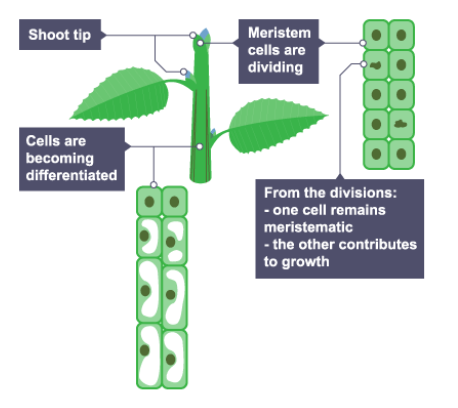
Types of Stem Cells:
- Embryonic Stem Cells:
- These stem cells form when an egg and sperm cell fuse to create a zygote.
- Embryonic stem cells are pluripotent, meaning they can differentiate into any cell type in the body.
- Scientists can clone and culture these cells in the lab, directing them to become specific types of cells, such as nerve cells, heart cells, or insulin-producing cells.
- Potential Uses: They could be used to treat conditions like diabetes by replacing insulin-producing cells, neurodegenerative diseases like Alzheimer's by replacing damaged neurons, or spinal cord injuries by generating new nerve cells.
- Adult Stem Cells:
- Found in various tissues throughout the body, such as the bone marrow, these stem cells are multipotent, meaning they can form a limited range of cells, such as blood cells.
- Uses: Adult stem cells are already used in medical treatments like bone marrow transplants for leukaemia and other blood disorders.
- Meristematic Stem Cells in Plants:
- Found in the meristems of plants, which are located at the tips of roots and shoots.
- These stem cells can differentiate into any type of plant cell and retain this ability throughout the life of the plant.
- Uses: Meristematic stem cells are used in plant cloning to produce identical plants with desirable traits, such as disease resistance, or to propagate rare or endangered plants.
Therapeutic Cloning:
- Therapeutic cloning involves creating an embryo with the same genetic material as the patient. This is done by transferring the nucleus from a patient's cell into an egg cell that has had its nucleus removed.
- The embryo is then allowed to develop to the blastocyst stage, where embryonic stem cells can be harvested.
- These stem cells can be directed to grow into tissues or organs that match the patient genetically, minimising the risk of rejection during transplantation.
Benefits vs. Challenges of Stem Cell Research:
| Benefits | Challenges |
|---|---|
| Can replace damaged or diseased tissues and organs. | The process of differentiation is not fully understood, making it difficult to control stem cell development precisely. |
| Unused embryos from fertility treatments, which would otherwise be discarded, can be utilised for research. | Harvesting embryonic stem cells involves the destruction of the embryo, raising ethical and religious concerns. |
| Provides insights into human development and disease mechanisms through research into how cells differentiate. | There is a risk of stem cells becoming contaminated with viruses, which could lead to infections in patients. |
| Ethical debates focus on the idea that this research interferes with the natural process of life. | |
| Resources (time and money) could potentially be allocated to other medical research areas. |
Note
Stem cell research holds enormous potential for advancing medical treatments and understanding human biology, but it also raises important ethical, technical, and societal questions that need careful consideration.