Required Practical: Investigating the Effect of Concentration on Rate of Reaction (AQA GCSE Chemistry): Revision Notes
📚Revision Notes
6.1.6 Required Practical: Investigating the Effect of Concentration on Rate of Reaction
Objective:
Note
To investigate how changing the concentration of hydrochloric acid influences the rate of a chemical reaction.
Overview:
- Several experiments can determine the effect of varying concentrations on the rate of reaction. This practical involves two methods:
- Gas Collection Method: Measuring the volume of gas produced when magnesium reacts with hydrochloric acid.
- Disappearing Cross Method: Timing how long it takes for a reaction mixture to turn cloudy, obscuring a marked cross.
Note
Method 1 – Gas Collection:
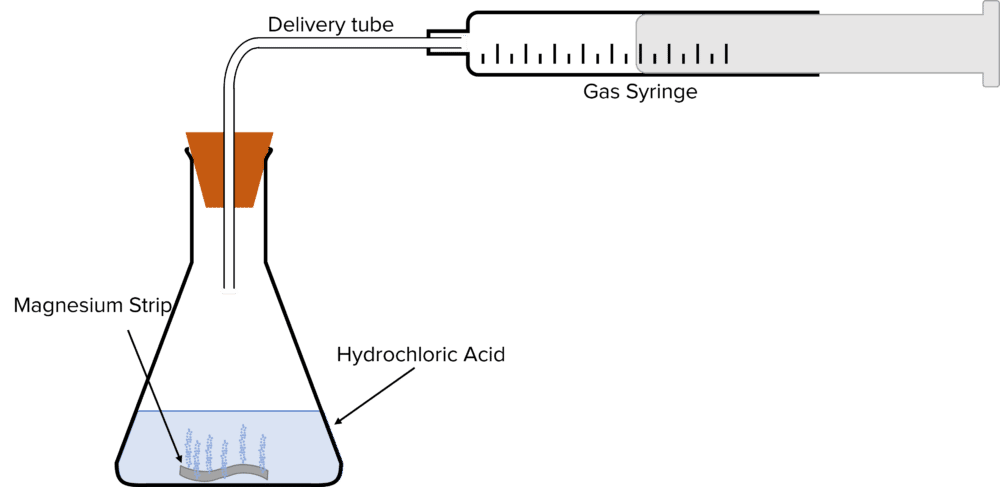
- Prepare the Reactants: Clean a strip of magnesium using emery paper.
- Set Up the Reaction: Place the magnesium strip in a conical flask containing 25 cm³ of a dilute hydrochloric acid solution.
- Collect the Gas: Quickly seal the flask with a bung connected to a delivery tube and a gas syringe. Start timing as soon as the acid is added.
- Measure Gas Volume: Record the volume of gas in the syringe every 10 seconds until the volume stops increasing.
- Final Measurement: Note the time when the gas volume stabilises.
- Repeat with Different Concentrations: Repeat the experiment with increasing concentrations of hydrochloric acid, increasing by equal increments, until reaching the highest concentration.
Method 2 – Disappearing Cross (Opaque Reaction Mixers):
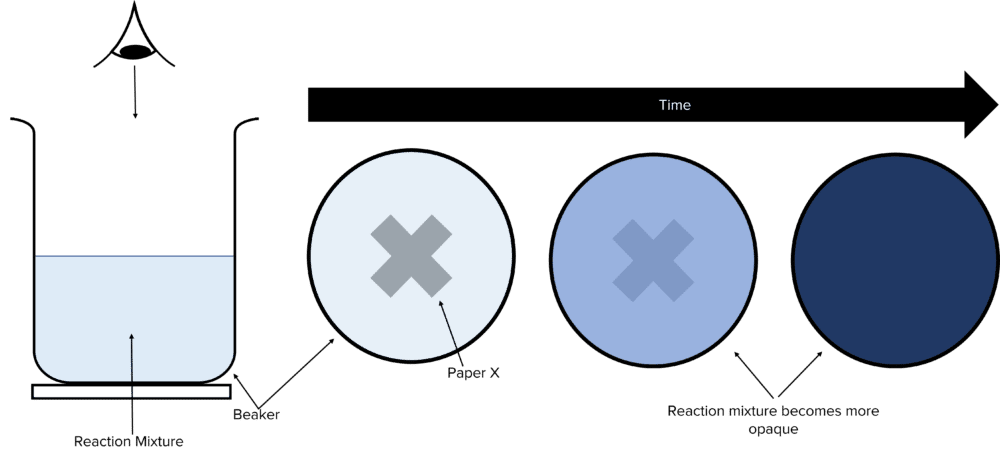
- Set Up: Place a white tile with a black cross underneath a clear beaker.
- Prepare the Reaction Mixture: Add 25 cm³ of sodium thiosulfate solution to the beaker.
- Start the Reaction: Add 25 cm³ of hydrochloric acid to the beaker and start the timer immediately.
- Monitor the Cross: Observe the cross from above. Stop the timer when the cross is no longer visible through the cloudy reaction mixture.
- Record the Time: Note the time taken for the cross to disappear.
- Repeat with Different Concentrations: Repeat the experiment, increasing the concentration of hydrochloric acid incrementally, until reaching the highest concentration.
Note
Analysis:
-
Calculate the Reaction Rate: Use the collected data to determine the rate of reaction for each concentration.
-
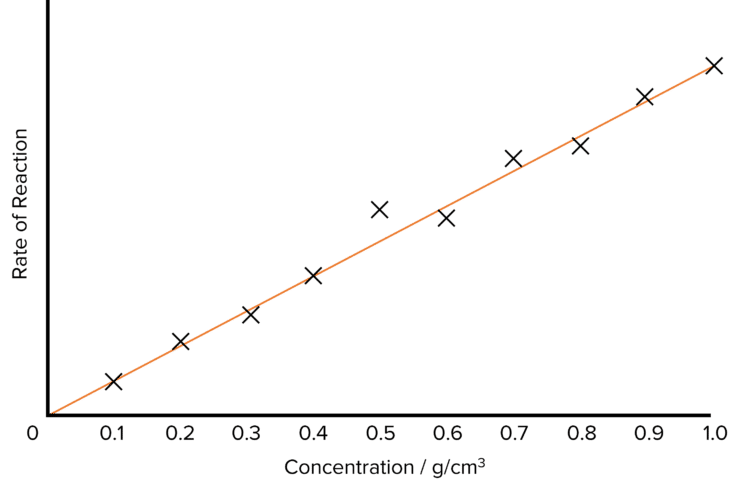
Graph the Results: Plot the rate of reaction against the concentration of hydrochloric acid and draw a line of best fit.
-
Interpret the Graph: A steeper gradient suggests a higher rate of reaction as the concentration of hydrochloric acid increases.