Language and Structure (AQA GCSE English Language): Revision Notes
📚Revision Notes
Descriptive language
What is descriptive language?
Descriptive language is one of the most powerful tools writers use to bring their writing to life. It helps create vivid images in readers' minds, making text much more engaging and interesting to read. When writers use descriptive language effectively, they can make you feel like you're right there in the story, experiencing everything alongside the characters.
Writers achieve this by carefully choosing specific techniques and vocabulary that paint a clear picture of what they're describing. The goal is to make the text more interesting, dramatic, and convincing for the reader.
Note
Descriptive language works by engaging readers' imagination and emotions, transforming simple text into an immersive experience that feels real and immediate.
Key techniques in descriptive language
Imagery techniques
Writers frequently use imagery techniques to create powerful mental pictures. These include:
- Metaphors: Comparing two different things by saying one thing is another
- Similes: Comparing two things using "like" or "as"
- Personification: Giving human qualities to non-human things
These techniques help readers visualise what's being described and make the writing more memorable and impactful.
Note
Why imagery works so well: Imagery techniques tap into readers' existing knowledge and experiences, helping them quickly understand and connect with new descriptions by relating them to familiar concepts.
Sensory descriptions
One of the most effective ways writers create vivid descriptions is by appealing to all five senses. They describe:
- What characters can see (visual details)
- What they can smell (scents and odours)
- What they can hear (sounds and noises)
- What they can touch (textures and sensations)
- What they can taste (flavours)
By engaging multiple senses, writers make their descriptions feel more real and immersive for readers.
Important
Remember the five senses: See, Smell, Hear, Touch, Taste. The more senses a writer engages, the more vivid and memorable their description becomes.
Precise word choices
Writers pay careful attention to their choice of adjectives and verbs to create specific effects:
Adjectives are particularly important because they provide detailed impressions of something. Instead of using basic words like "big" or "nice," writers choose more specific adjectives that give readers a much clearer picture.
Interesting verbs also play a crucial role. Rather than using simple verbs like "walk," a writer might choose "saunter," "stride," or "creep" to convey exactly how someone is moving and what this reveals about their mood or situation.
Building descriptions throughout text
Skilled writers don't just describe something once and move on. They often build up descriptions throughout their work by:
- Using contrasting descriptions that highlight differences
- Creating descriptions that complement and agree with each other
- Layering details to create a complete picture over time
Note
Think of descriptive language like painting a picture - writers add layers of detail gradually to build up a complete, vivid image in the reader's mind.
Analysing the effects of specific words
When you're analysing descriptive language, it's essential to consider how specific words affect the reader and what they reveal about characters or situations.
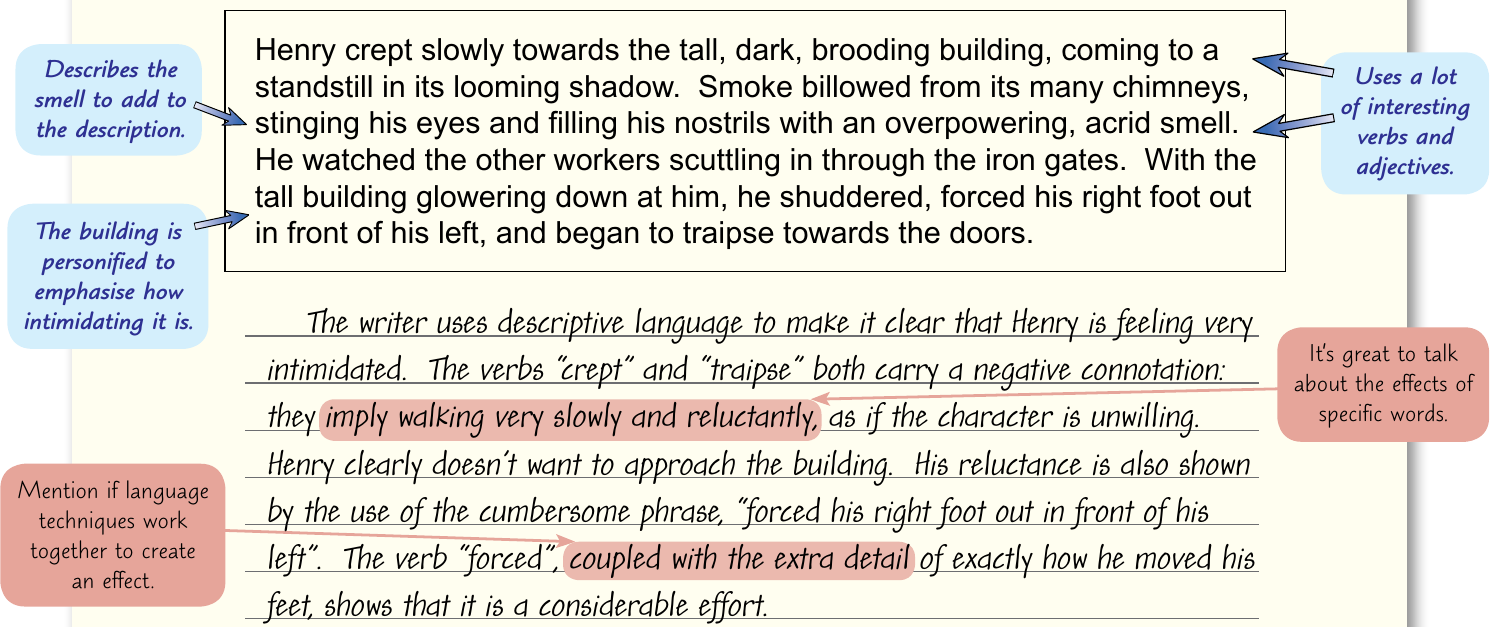
How does the writer use language here to describe how Henry feels?
Example
Worked Example: Analysing the Henry Passage
In the example about Henry approaching a building, the writer uses carefully chosen words to show Henry's feelings and create atmosphere.
Step 1: Identify the key verbs The writer selects verbs like "crept" and "traipse" which both suggest slow, reluctant movement.
Step 2: Analyse the effect These word choices immediately tell us that Henry doesn't want to approach the building - he's hesitant and possibly frightened.
Step 3: Look for other techniques The building itself is described using personification, being given human qualities that make it seem threatening and intimidating.
Step 4: Consider the combined effect The writer uses lots of interesting adjectives and verbs together to help readers not just picture what's happening, but actually feel the tension and fear that Henry is experiencing.
When you're analysing descriptive language, always ask yourself: What effect does this specific word have on the reader? How does it make you feel? What does it tell you about the character or situation?
Creating atmosphere and conveying character feelings
Descriptive language is particularly powerful for creating atmosphere - the mood or feeling of a scene. Writers can use it to make scenes feel:
- Scary and threatening
- Peaceful and calm
- Exciting and energetic
- Sad and melancholic
The language techniques work together to create these effects. In the Henry example, the combination of reluctant verbs, threatening personification, and vivid sensory details all work together to create a tense, intimidating atmosphere that reflects Henry's emotional state.
Important
Key insight: Writers often use descriptive language to show rather than tell us how characters are feeling. Instead of simply saying "Henry was scared," the writer uses descriptive language to make us feel Henry's fear through his actions and the way he perceives his surroundings.
Summary
Key Points to Remember:
-
Descriptive language makes text interesting by creating vivid images in readers' minds using carefully chosen techniques and vocabulary
-
Key techniques include imagery (metaphors, similes, personification), sensory descriptions, and precise word choices with specific adjectives and verbs
-
When analysing descriptive language, always consider the effect specific words have on the reader and what they reveal about characters or situations
-
Writers use descriptive language to create atmosphere and convey character feelings, often showing emotions through actions and perceptions rather than telling us directly
-
Look for how writers build descriptions throughout their work using contrasting or complementary details to create a complete picture