Personification (AQA GCSE English Language): Revision Notes
📚Revision Notes
Personification
What is personification?
Personification is a powerful literary technique where writers give human characteristics, actions, or qualities to non-human things. This makes descriptions much more engaging and helps readers connect with the text on a deeper level.
Important
Key Definition: Personification is describing a thing as if it were a person. When you describe something as if it were a person, you're using personification.
This technique can involve giving objects, abstract ideas, or animals human-like behaviours, emotions, or actions. The basic idea is simple - make non-human things seem human to create more vivid and relatable descriptions.
Three main types of personification
Understanding the three main categories of personification will help you both identify and use this technique effectively in your writing and analysis.
1. Describing objects as if they were alive
This is when writers give inanimate objects human actions or feelings. Objects can be described as having emotions, making sounds, or performing actions that only people can really do.
Note
Examples of object personification:
- "The desk groaned under the weight of the books"
- Buildings might "tower" over people in a threatening way
- Furniture can "creak" or "sigh" with age
2. Describing abstract concepts as if they were alive
Abstract ideas like emotions, weather, or concepts can be given human qualities and actions. This makes these invisible concepts more concrete and relatable for readers.
Note
Examples of abstract personification:
- "Fear stalked the children with every step they took"
- Time might "march on" or "crawl by"
- Opportunity might "knock" at your door
3. Describing animals as if they were people
Animals can be given distinctly human characteristics beyond their natural behaviours. This goes beyond normal animal behaviour to give them human emotions and actions.
Note
Examples of animal personification:
- "The cunning fox smiled with a self-satisfied grin"
- Birds might "gossip" with their neighbours
- A cat might "judge" its owner with disdain
How personification improves descriptions
Personification serves several important purposes in writing. First, it makes descriptions much more vivid and memorable. When something is described as having human qualities, it becomes easier for readers to visualise and understand. The technique helps bring static descriptions to life, making them more dynamic and engaging.
Note
Key benefits of personification:
- Makes descriptions more vivid and memorable
- Helps readers visualise and connect with the text
- Brings static descriptions to life
- Creates dynamic and engaging imagery
Additionally, personification can reveal the writer's or character's viewpoint and attitude towards what they're describing. If someone describes helicopters as "prowling" over a city, this suggests they view them as threatening or intimidating. The choice of personification shows us how the person feels about what they're observing.
Analysing personification in action
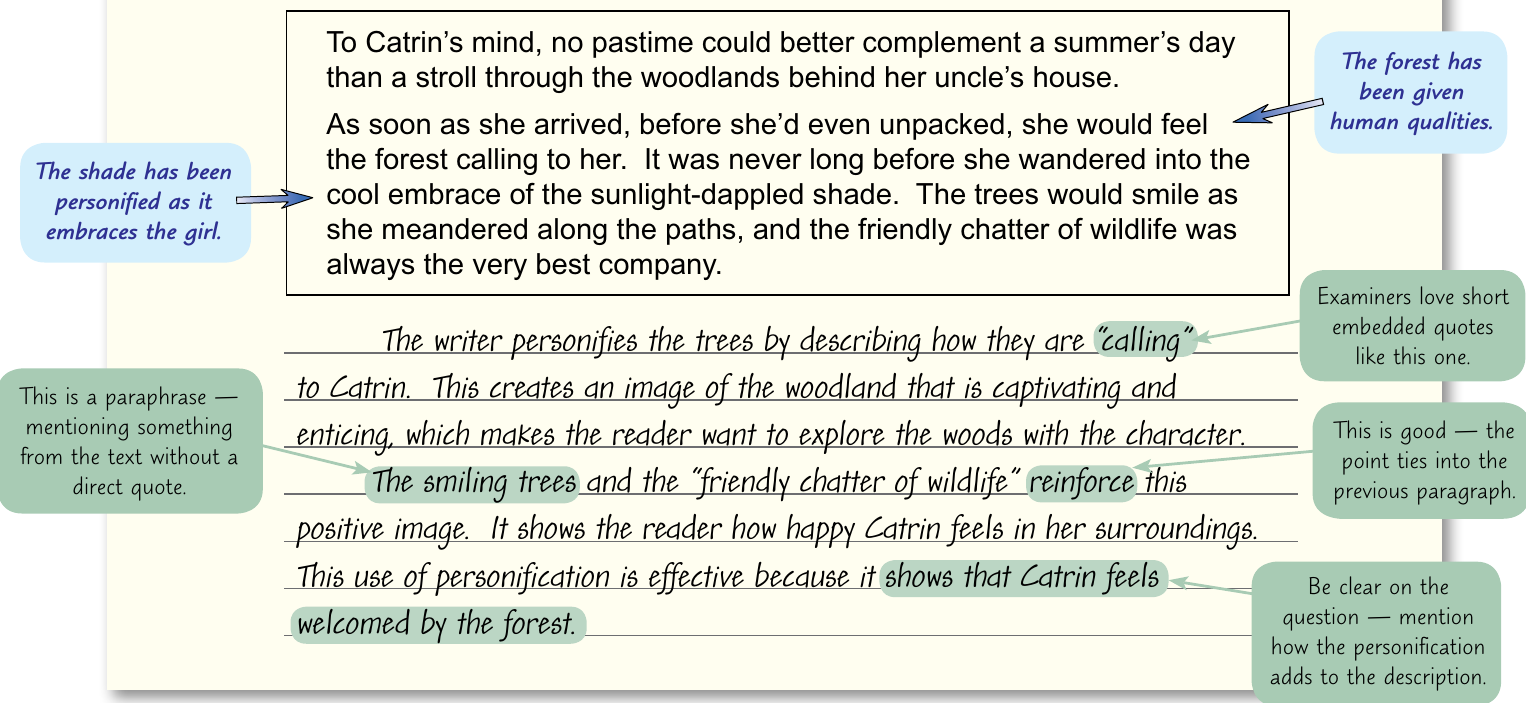
How does the writer use language here to describe the woodlands?
Example
Worked Example: Analysing Woodland Personification
In the passage about Catrin and the woodland, the writer uses several examples of personification to create a welcoming, magical atmosphere:
Step 1: Identify the personification
- The forest is described as "calling to her"
- Trees "smile" as she walks along the paths
- "Friendly chatter of wildlife"
Step 2: Analyse the effect
- "Calling to her" gives the woodland a voice and suggests a special connection
- Trees "smiling" creates a friendly, welcoming image
- "Friendly chatter" gives animals human social qualities
Step 3: Consider the overall impact This personification creates a captivating and enticing image that reflects Catrin's positive emotions and connection to nature.
This use of personification is particularly effective because it shows how Catrin feels about her surroundings. It makes readers understand why she enjoys spending time there and helps them share in her experience.
Effects on the reader
When writers use personification effectively, it helps readers form stronger emotional connections with the text. By giving human qualities to non-human things, writers make their descriptions more relatable and easier to understand. This technique can create atmosphere, reveal character feelings, and make abstract concepts more concrete.
Important
Critical concept: Personification also helps writers show rather than tell. Instead of simply stating that a character feels threatened, a writer might describe the shadows as "lurking" or the wind as "whispering warnings". This creates a more immersive reading experience.
Remember!
Summary
Key Points to Remember:
- Personification gives human characteristics to non-human things
- It works with objects, abstract concepts, and animals
- It makes descriptions more vivid and engaging for readers
- It can reveal the writer's or character's attitude towards what they're describing
- Look for human actions, emotions, or qualities being given to things that can't actually have them
- Always consider the effect on the reader and what it reveals about the writer's perspective