Writer’s Viewpoint and Attitude (AQA GCSE English Language): Revision Notes
📚Revision Notes
Writer's viewpoint and attitude
Understanding a writer's viewpoint and attitude is crucial for analysing texts effectively. These concepts help you dig deeper into what authors really think about their subject matter, beyond just what they're trying to achieve.
Understanding viewpoint versus purpose
It's important to distinguish between a writer's purpose and their viewpoint. A writer's purpose refers to what they're attempting to accomplish through their writing. Their viewpoint or attitude, however, reveals what they actually think and feel about the topics they're discussing.
Important
Key Distinction:
- Purpose = What the writer wants to achieve
- Viewpoint/Attitude = What the writer actually thinks and feels about their subject
These are two completely different analytical concepts that must not be confused.
When you're analysing a text, you can discover a writer's viewpoint by examining several key elements: the language they choose, the tone they adopt, their writing style, and the content they include. These elements work together to reveal the author's true feelings and opinions.
Example
Worked Example: Travel Writing Analysis
Consider a travel writer who urges readers to visit a beautiful valley:
- Purpose: To persuade people to visit the location
- Viewpoint revealed through: Emotive adjectives and upbeat tone
- Conclusion: The writer genuinely believes the valley is spectacular and worth experiencing
The viewpoint goes beyond the persuasive purpose to show the writer's authentic feelings.
Using tone to understand attitude
A writer's tone provides valuable clues about their attitude towards their subject. By carefully examining how authors express themselves, you can make informed inferences about their true feelings and beliefs.
When comparing different writers' approaches to similar topics, you'll often notice significant differences in their attitudes. These differences become particularly apparent when you consider the historical context in which each text was written.
Note
Making Inferences from Tone: Tone isn't just about whether writing sounds happy or sad. It reveals the writer's relationship with their subject - whether they're confident, uncertain, passionate, detached, respectful, or dismissive. Pay attention to subtle cues in word choice and sentence structure.
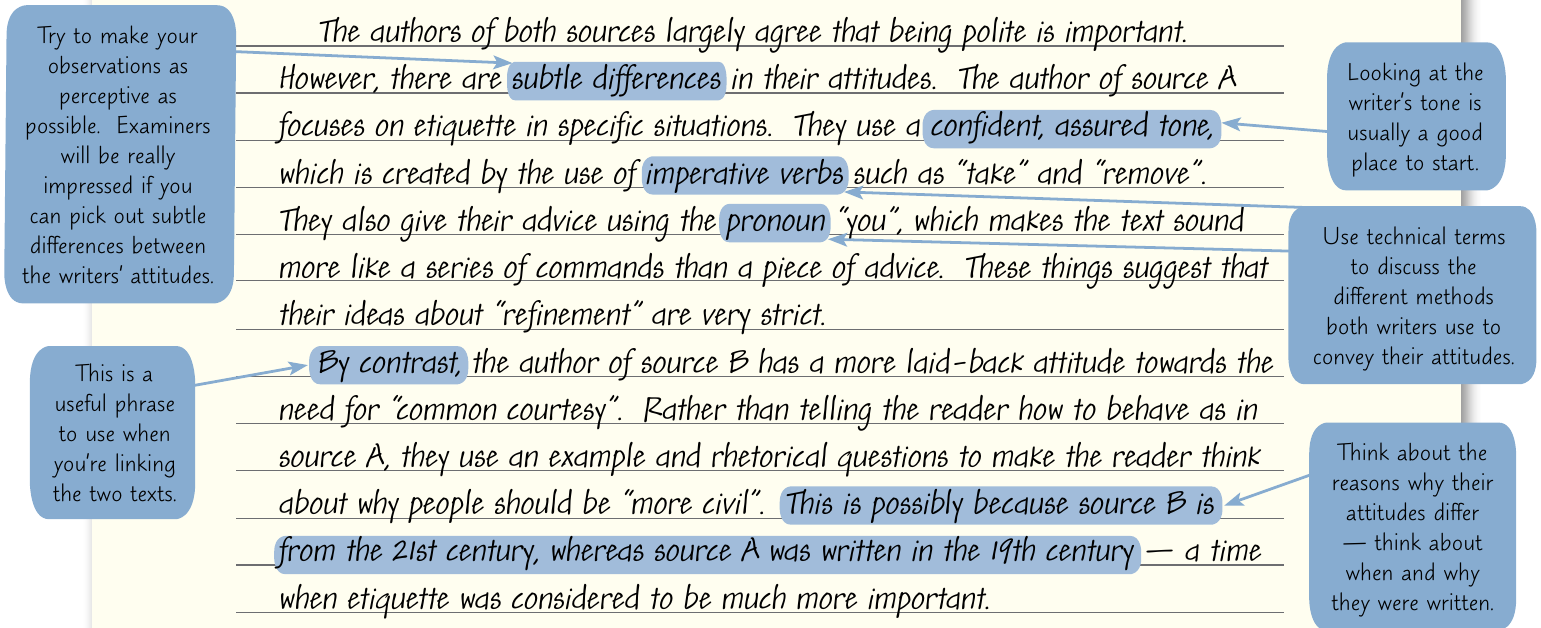
Looking at the comparison between sources from different centuries demonstrates how writers' attitudes can vary dramatically. A 19th-century etiquette guide focuses on strict rules using imperative verbs and formal language, reflecting a rigid attitude towards social behaviour. In contrast, a 21st-century newspaper article adopts a more relaxed approach, using examples and rhetorical questions to engage readers in a conversational manner.
Analysing writers' techniques
Writers employ various techniques to convey their attitudes effectively. Understanding these techniques helps you recognise the subtle ways authors express their viewpoints.
Imperative verbs create a sense of authority and urgency, often suggesting the writer feels strongly about their subject. When you encounter commands like "take" or "remove," consider what this reveals about the author's confidence in their position.
Rhetorical questions engage readers by encouraging them to think about the writer's perspective. This technique often indicates a more casual, conversational attitude and suggests the writer wants to involve their audience in their thinking process.
Emotive language reveals the writer's emotional connection to their subject. Pay attention to adjectives and descriptive phrases that carry emotional weight, as these often indicate the strength of the author's feelings.
Example
Worked Example: Technique Analysis
Text: "Why must we continue to destroy our planet's precious resources?"
Analysis:
- Rhetorical question: Creates engagement and assumes reader agreement
- Emotive language: "destroy" and "precious" show strong emotional investment
- Attitude revealed: Writer feels passionate concern about environmental issues
Considering historical context
The time period when a text was written significantly influences the writer's attitude. Social norms, cultural expectations, and prevailing beliefs all shape how authors express themselves and what they consider important.
Note
Historical Context Impact: Writers don't exist in a vacuum. Their attitudes are shaped by the world around them. A writer's confidence, formality, and choice of topics all reflect the time period in which they're writing. What seems natural to them might seem unusual to modern readers.
Earlier texts often reflect more formal, authoritative attitudes, while contemporary writing tends to be more casual and inclusive. Understanding this context helps you appreciate why writers from different eras might approach the same topic with vastly different attitudes.
Going beyond surface meaning
Remember that effective analysis requires looking beyond what writers explicitly state. Even when two authors share similar opinions, they might express these views with different levels of intensity or conviction. Pay attention to the strength of language, the certainty of statements, and the overall emotional register of the text.
Important
Analytical Depth: Don't just identify what a writer says - analyse HOW they say it. The difference between "This might be helpful" and "This will revolutionise your life" shows vastly different attitudes, even though both are positive recommendations.
Consider how writers position themselves in relation to their audience. Do they speak as experts giving advice, or as peers sharing experiences? This positioning reveals important aspects of their attitude towards both their subject and their readers.
Summary
Key Points to Remember:
- Viewpoint differs from purpose - Purpose is what writers want to achieve, viewpoint is what they think about their subject
- Analyse language, tone, style and content - These four elements work together to reveal a writer's true attitude
- Historical context matters - The time period influences how writers express their viewpoints
- Look for specific techniques - Imperative verbs, rhetorical questions, and emotive language all reveal attitude
- Go beyond surface meaning - Consider the strength and intensity of how writers express their views, not just what they say