Creative and Non-Fiction (AQA GCSE English Language): Revision Notes
📚Revision Notes
Writing letters
Understanding your audience
When writing letters, you need to remember that they are always directed towards a specific person or group of people. This means every letter has a particular audience, and it's essential that you adjust your writing style to match that audience. The way you write to your headteacher will be completely different from how you write to your best friend.
Important
Critical Concept: Audience awareness is the foundation of effective letter writing. Your choice of language, tone, and formality level must always match your intended reader.
Letter format and structure
All letters follow a standard format that helps establish professionalism and clarity. This format provides structure and helps your reader understand the context of your communication.
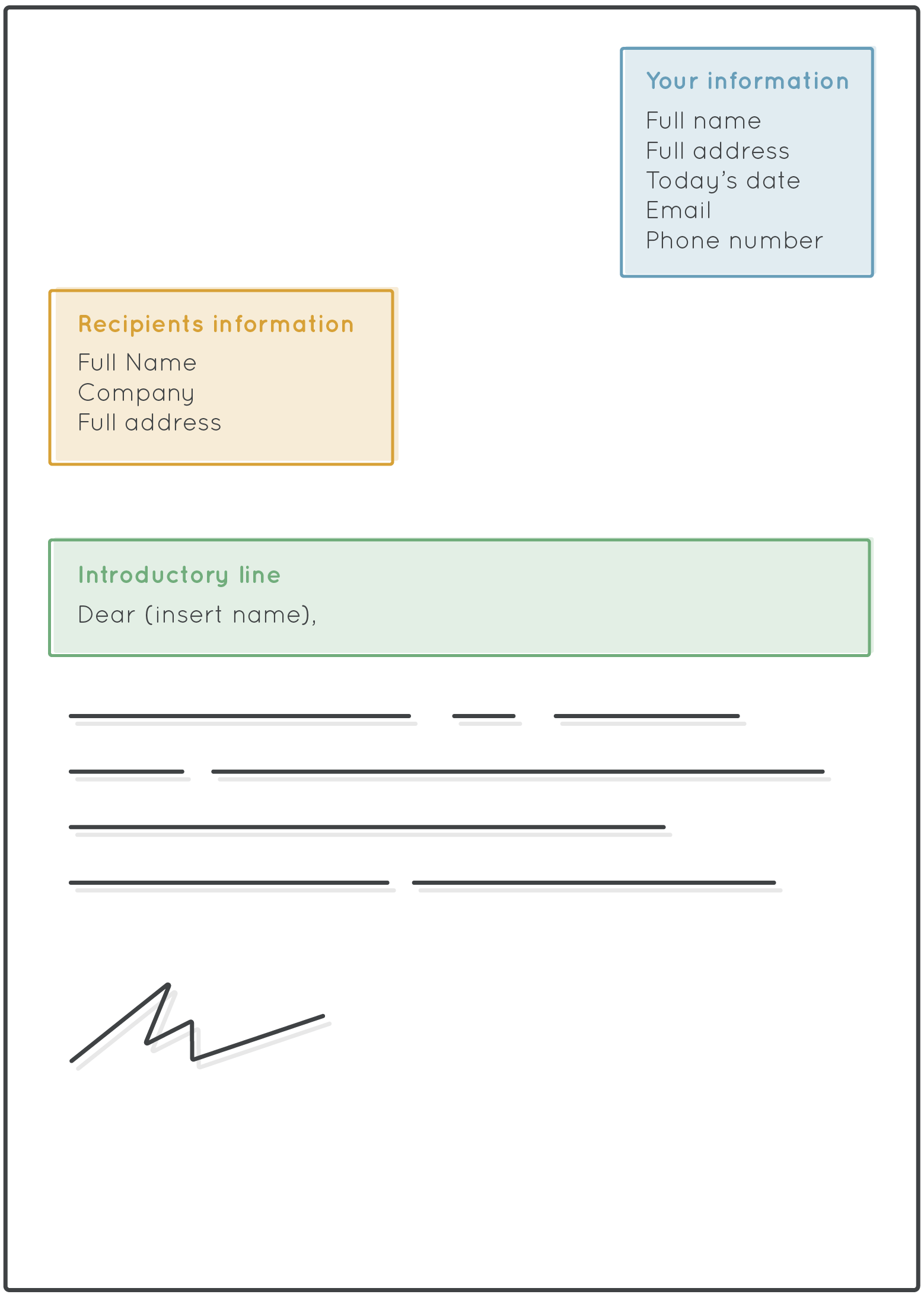
The basic structure includes the sender's address, the recipient's address, and the date. This information helps identify who is writing, who should receive the letter, and when it was written.
Note
Formatting Essentials: The three key elements of letter formatting are often remembered as the "three F's": From (sender's address), For (recipient's address), and Friday (date). This structure must appear in every letter you write.
Formal letters
When writing to someone you don't know well or someone in a position of authority, you should use a formal approach. This type of letter requires careful attention to language and tone.
Key features of formal letters
For formal correspondence, you need to maintain a serious and respectful tone throughout. Start with appropriate formal greetings such as "Dear Sir/Madam" when you don't know the person's name, or use their title and surname if you do. End your letter with formal sign-offs like "Yours sincerely" if you've used their name, or "Yours faithfully" if you haven't.
Your language should be in Standard English throughout, avoiding any text speak or slang. Use formal vocabulary and construct your sentences carefully. You might include phrases like "In my opinion..." or "I find this state of affairs..." to express your thoughts professionally.
Example
Worked Example: Formal Letter Opening and Closing
When you know the person's name:
- Opening: "Dear Mr. Smith,"
- Closing: "Yours sincerely,"
When you don't know the person's name:
- Opening: "Dear Sir/Madam,"
- Closing: "Yours faithfully,"
Informal letters
When writing to someone you know personally, or someone who isn't in a position of authority, you can adopt a more conversational style. However, your writing should still maintain fairly formal standards.
Approach for informal letters
Begin with the reader's name, such as "Dear Jenny," and conclude with warmer sign-offs like "best wishes" or "warm regards". While the tone can be more relaxed, you should still write in Standard English and avoid text speak or slang entirely.
Even in informal letters, demonstrate your ability to use interesting vocabulary and varied sentence structures. This shows the examiner that you can write engagingly while maintaining appropriate standards.
Important
Remember: Even informal letters must maintain high writing standards. "Informal" refers to tone and relationship, not to poor grammar or casual language mistakes.
Making your viewpoint clear
One of the most important aspects of letter writing is expressing your viewpoint clearly and persuasively. Whether you're writing to support or oppose something, your position should be evident from the beginning.
Developing your argument
When presenting your viewpoint, introduce your main argument early in the letter. Support your position with relevant examples and reasoning. Consider addressing counter-arguments to strengthen your case - acknowledging opposing views and then explaining why your position is stronger can make your argument more convincing.
Use formal language that demonstrates your understanding of the topic and your ability to engage with complex ideas. Your argument should be logical and well-structured, with each paragraph building on the previous one.
Important
Essential Strategy: State your viewpoint clearly in the opening paragraph, then build your argument systematically. Always support your position with specific examples and logical reasoning.
Different types of letters
Various types of letters serve different purposes and require different approaches. A letter to a newspaper will focus on presenting a clear argument about a current issue, while a business letter might request information or make a complaint.
Each type of letter has its own conventions and expectations. However, the fundamental principles of audience awareness, appropriate tone, and clear communication remain constant across all forms of letter writing.
Note
Letter Variety: While letter types vary widely - from complaint letters to applications, from newspaper responses to personal correspondence - the core principles of good letter writing remain the same across all formats.
Key takeaways
Summary
Essential Points to Remember:
- Always consider your audience when choosing your tone and language level
- Use the correct format with sender's address, recipient's address, and date
- Formal letters require formal greetings, Standard English, and professional vocabulary
- Informal letters can be more conversational but should still maintain good standards
- Express your viewpoint clearly and support it with strong arguments and examples