Cruise tourism (AQA GCSE Geography): Revision Notes
📚Revision Notes
Cruise tourism
What is cruise tourism?
Cruise tourism represents a significant and growing segment of the travel industry that offers holidaymakers unique experiences at sea. This form of tourism can take two main formats that cater to different traveller preferences and budgets.
Traditional cruise holidays involve passengers spending their entire holiday aboard a cruise ship. These floating resorts provide comprehensive facilities including accommodation, dining, entertainment, and recreational activities all included in one package. This all-inclusive approach has contributed significantly to the popularity of cruise tourism, as travellers can budget more effectively without worrying about additional costs for meals, drinks, or entertainment during their voyage.
Multi-centre holidays represent the second format, where cruise ships serve as both transportation and accommodation between different destinations. Passengers spend time exploring various ports of call on land before returning to the ship to sail to their next destination. This approach allows tourists to experience multiple countries or regions in a single trip whilst enjoying the comfort and convenience of consistent accommodation.
The appeal of cruise tourism extends across different demographic groups, with many cruise lines developing specialised packages to attract families. These include multigenerational cruises that cater to different age groups simultaneously, and themed cruises such as Disney Cruise Line that specifically target families with children.
Important
Cruise tourism is a form of holiday where passengers travel on large ships that serve as both transportation and accommodation, visiting multiple destinations or spending the entire holiday at sea.
Growth of the cruise tourism industry
The cruise tourism industry has experienced remarkable expansion over the past decade, reflecting its growing popularity among international travellers. Data shows that global cruise passenger numbers increased dramatically from 18 million in 2009 to 29 million in 2018, representing a substantial growth rate of 61.1% over this nine-year period.
Example
Calculating Growth Rate: Cruise Tourism Expansion
To calculate the percentage growth in cruise passengers:
- Initial value (2009): 18 million passengers
- Final value (2018): 29 million passengers
- Formula: (New value - Old value) ÷ Old value × 100
Calculation: (29 - 18) ÷ 18 × 100 = 11 ÷ 18 × 100 = 61.1%
This growth trajectory demonstrates the industry's resilience and appeal, with the upward trend showing consistent year-on-year increases throughout the period. The expansion reflects several factors including improved ship technology, more diverse itineraries, and increased marketing efforts by cruise companies to reach new markets.
At its peak in 2019, the global cruise industry supported an impressive ecosystem of employment and economic activity. The sector saw 29.7 million passengers worldwide and created employment opportunities for 1.3 million people globally. The industry's economic impact was substantial, paying US$50 billion in wages and contributing over US$154 billion to the global economy.
Looking towards future expansion, the cruise industry has demonstrated confidence in continued growth by commissioning 50 new ships to be built by 2025. Notably, 19 new ocean-going cruise ships were scheduled to launch in 2023 alone, providing over 38,000 additional berths to meet growing demand.
The infrastructure supporting cruise tourism has also expanded significantly, with over 1,000 ports worldwide now equipped to handle cruise liners. This extensive port network enables cruise companies to offer increasingly diverse itineraries and reach new destinations, further driving industry growth.
Caribbean as a cruise destination
The Caribbean has established itself as the world's most popular cruise destination, commanding over one-third of the global cruise market share. This dominance reflects the region's unique combination of natural attractions, convenient geography, and developed tourism infrastructure that makes it ideally suited for cruise operations.
The region's appeal centres around what tourism professionals call the "3 S's" - Sun, Sand, and Sea. Caribbean islands offer abundant sunshine year-round, pristine sandy beaches, and crystal-clear tropical waters that create the perfect backdrop for cruise tourism. Beyond these natural attractions, the islands are rich in biodiversity, providing opportunities for eco-tourism and nature-based activities that appeal to cruise passengers.
Note
The Caribbean's cultural diversity adds another layer of attraction for cruise tourists. The region's long and complex history has created a tapestry of different cultures, languages, and traditions across the various islands. This cultural variety means that cruise passengers can experience significantly different atmospheres and attractions even when visiting islands that are geographically close to each other.
More than 15 million people visit the Caribbean each year, with 11.3 million arriving via cruise ships. This makes cruise tourism a crucial economic sector for the region, with the Caribbean Tourism Organisation (CTO) reporting that 29.2 million cruise ship arrivals occurred in the Caribbean in 2018 alone.
The region has positioned itself as a luxury yet accessible destination, attracting wealthy visitors who are willing to spend money on high-quality accommodation, fine dining, and exclusive activities. This positioning is crucial because it enables Caribbean islands to maximise the economic benefits from their cruise tourism sector.
Popular Caribbean cruise destinations
The most popular Caribbean cruise destinations reflect a mix of natural beauty, developed infrastructure, and strategic location. The top five destinations by percentage of cruise visits demonstrate the diversity of the region's appeal:
- British Virgin Islands leads with 35.4% of visits, capitalising on their reputation for pristine sailing waters and exclusive appeal
- Aruba attracts 28.1% of cruise visits, benefiting from its location outside the hurricane belt and consistent weather
- Curaçao receives 23.4% of visits, drawing tourists with its distinctive Dutch colonial architecture and colourful capital
- Bahamas accounts for 19% of visits and benefits from its proximity to major cruise ports in Florida
- Jamaica captures 18.6% of visits, offering cultural attractions, mountain scenery, and beach experiences
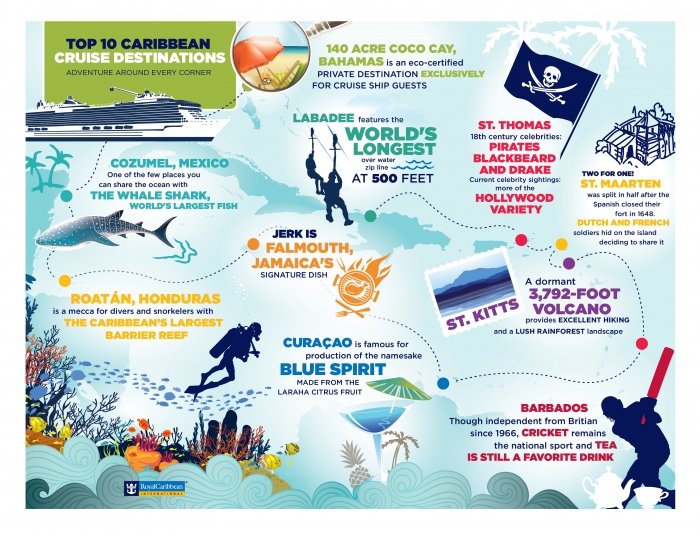
These destinations succeed because they offer the infrastructure necessary to handle large cruise ships, including deep-water ports, efficient passenger processing facilities, and well-developed tourism services. The Port of Nassau in the Bahamas exemplifies this infrastructure development, ranking as the fifth largest cruise port in the world.
Sources of cruise tourists
Understanding where cruise tourists originate provides important insights into the global nature of the cruise industry and helps explain the economic relationships between different regions. The distribution of cruise passenger origins shows clear patterns that reflect economic development, geographic proximity, and cultural connections.
The United States dominates cruise tourism, providing 54% of all cruise passengers to the Caribbean. This dominance reflects several factors including the proximity of Caribbean islands to major US cruise ports like Miami and Fort Lauderdale, the large American middle class with disposable income for luxury travel, and well-established marketing relationships between US-based cruise companies and American consumers.
Western Europe represents the second-largest source market, contributing 26% of cruise passengers. This significant European presence demonstrates the global appeal of Caribbean cruise tourism and reflects the strong economic ties between Europe and many Caribbean islands, some of which maintain political connections to European nations.
Note
China has emerged as an important growth market, now representing 10% of cruise passengers. This reflects China's rapidly expanding middle class and increased international travel by Chinese citizens, representing a significant opportunity for future growth in the cruise sector.
Australia contributes 6% of cruise passengers, whilst other countries collectively account for the remaining 4%. This global distribution highlights how cruise tourism has become a truly international industry, drawing passengers from multiple continents to Caribbean destinations.
Impacts of cruise tourism
Cruise tourism generates complex economic, social, and environmental impacts that create both opportunities and challenges for Caribbean destinations. Understanding these impacts is crucial for evaluating the overall effectiveness of cruise tourism as a development strategy.
Economic advantages
Note
Positive Economic Impacts of Cruise Tourism
The economic benefits of cruise tourism can be substantial when properly managed. The economic multiplier effect shows different returns depending on the type of tourist:
- Long-stay tourists generate US$1.60 for every dollar invested
- Daily cruise visitors generate US$1.20 for every dollar invested
Both demonstrate positive economic impacts despite lower per-day spending by cruise passengers.
Employment creation represents another significant advantage. Every hotel room creates at least one job, whilst the broader tourism industry creates at least 50 jobs for every US$100,000 invested in Caribbean tourism infrastructure. The cruise tourism sector alone generates 200 million jobs globally, making it a major employer worldwide.
The economic benefits extend beyond direct tourism spending. Over 95% of ecotourism revenue returns to the local economy, creating positive economic cycles within destination communities. Even all-inclusive package tours, which might seem to limit local spending, still produce a 20% economic return to the local economy.
Revenue from cruise tourism enables governments to invest in infrastructure improvements that benefit local populations. Tourist taxes and business revenues fund improvements to schools, hospitals, and local services. Infrastructure development to support tourism, such as roads and utilities, makes it easier for locals to move around and improves their overall quality of life.
Economic disadvantages
Note
Economic Challenges of Cruise Tourism
Despite the advantages, cruise tourism also presents economic challenges that limit its developmental benefits:
- Daily cruise spending is 55% less than spending by long-stay visitors, largely because many cruise passengers purchase all-inclusive packages that meet most of their needs aboard the ship
- Not all cruise passengers disembark at every port of call, with some choosing to remain on the ship rather than explore the destination
- Each year, visitors tend to spend less money at the islands they visit, suggesting diminishing economic returns over time
Important
Economic leakage occurs when tourism revenue flows out of the destination rather than remaining in the local economy, reducing the economic benefits for local communities.
Environmental and social impacts
Important
Environmental Concerns
Cruise tourism creates significant environmental challenges that Caribbean destinations must address:
- Caribbean cruise liners produce over 70,000 tonnes of wastewater each year
- Tourists generate twice the amount of waste per day compared to local residents
- Disposal of waste, untreated wastewater, and sewage into the sea damages marine ecosystems
The disposal of waste, untreated wastewater, and sewage into the sea damages marine ecosystems that are crucial for the region's biodiversity and long-term tourism appeal. This environmental damage can undermine the very natural resources that attract cruise tourists in the first place.
However, cruise tourism can also create positive environmental incentives. The economic value of maintaining attractive destinations encourages governments to nurture and protect their natural environment rather than allowing its degradation. Tourism revenue can fund environmental protection programmes and conservation initiatives.
Social impacts include improvements to local infrastructure and services, but also potential disruption to local communities from large numbers of visitors. The development of tourism facilities can improve the overall appearance of islands by encouraging the removal of informal housing and waste, but may also displace local communities or change traditional ways of life.
Case study: Cayman Islands
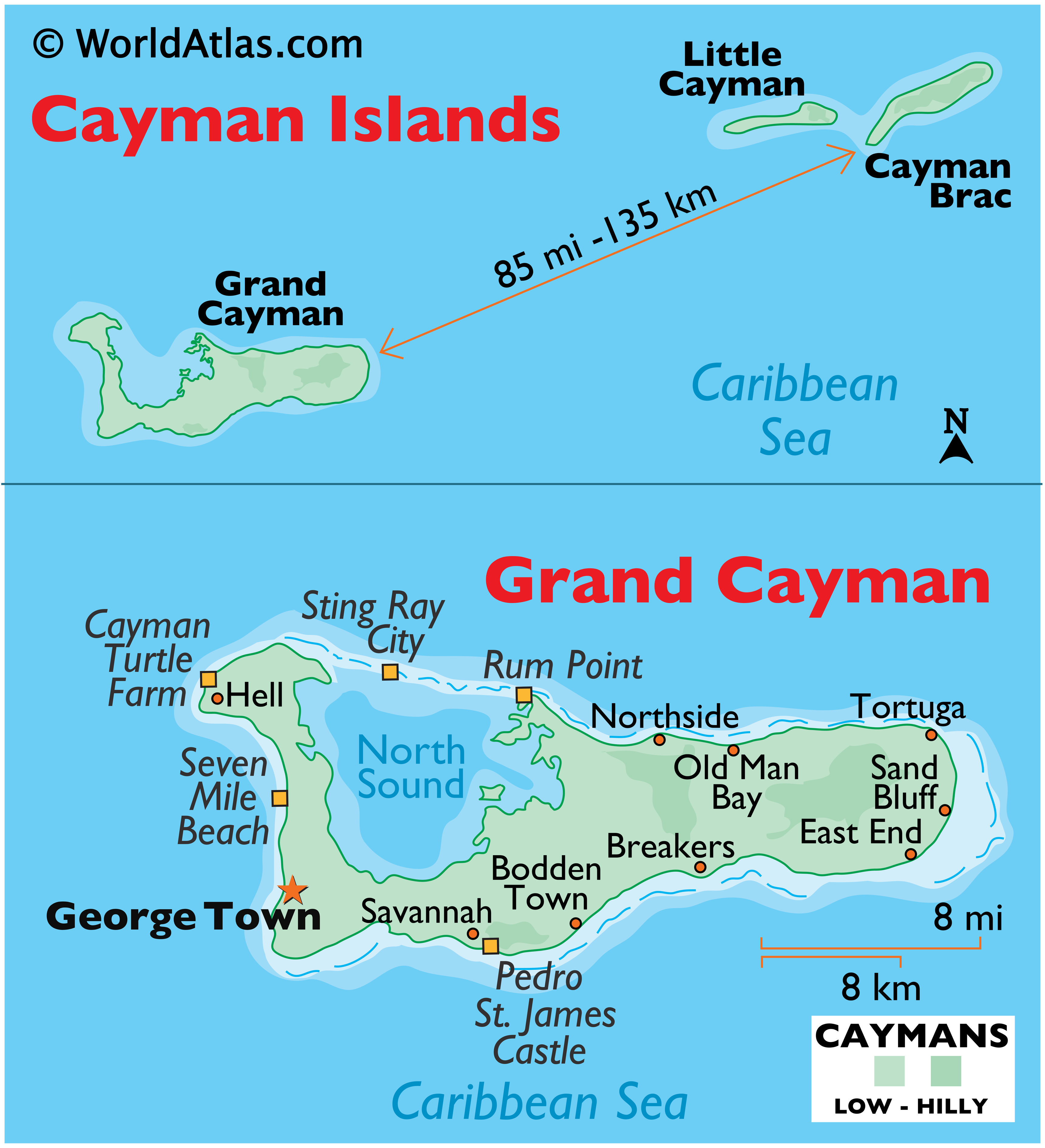
The Cayman Islands provide an excellent example of how Caribbean territories engage with cruise tourism whilst maintaining their unique characteristics and managing the associated challenges and opportunities.
As a British Overseas Territory located in the Western Caribbean, the Cayman Islands consist of three islands: Grand Cayman, Cayman Brac, and Little Cayman. This political status as a British territory provides certain advantages in terms of infrastructure, legal systems, and international connections whilst allowing the islands to maintain their distinct Caribbean identity.
The Cayman Islands have successfully positioned themselves within the competitive Caribbean cruise market by developing high-quality port facilities and tourism infrastructure. Their location in the Western Caribbean makes them accessible to cruise itineraries departing from major ports in the United States, particularly Florida.
Note
The territory demonstrates how smaller Caribbean destinations can successfully participate in cruise tourism whilst maintaining control over their development trajectory. As a British Overseas Territory, the Cayman Islands benefit from political stability and legal frameworks that provide confidence for tourism investment whilst maintaining local autonomy over tourism policy decisions.
Summary
Key Points to Remember:
-
Cruise tourism has grown dramatically from 18 million passengers in 2009 to 29 million in 2018, representing a 61.1% increase and demonstrating the sector's rapid expansion
-
The Caribbean dominates global cruise tourism with over one-third of market share, attracting visitors with the "3 S's" - Sun, Sand, and Sea, plus rich cultural diversity across different islands
-
The USA provides 54% of cruise passengers to the Caribbean, followed by Western Europe (26%), making cruise tourism heavily dependent on wealthy, developed countries
-
Cruise tourism creates both economic benefits (job creation, infrastructure development) and challenges (lower spending per visitor, environmental impacts), requiring careful management to maximise positive outcomes
-
Environmental concerns include over 70,000 tonnes of wastewater produced annually by Caribbean cruise liners and tourists generating twice the waste of local residents, highlighting the need for sustainable tourism practices