Global Atmospheric Circulation (AQA GCSE Geography): Revision Notes
📚Revision Notes
1.3.1 Global Atmospheric Circulation
Note
There's an overall movement of air between the equator and poles that affects the Earth's climate, this movement is called Global Atmospheric Circulation.
The Hadley Cell
The main cell to know is the Hadley Cell.
Note
Here's how it works:
- At the equator, the ground is intensely heated by the sun.
- This causes air to rise, creating low pressure. Air separates and moves towards the poles.
- When it reaches 30° north & south of the equator, air cools and sinks, causing a high pressure zone.
- As air sinks, it becomes warmer and drier with low rainfall. This is where deserts are found, on the Tropic of Cancer.
- When air is sinking, this is HIGH Pressure.
- When air is rising, this is LOW Pressure.
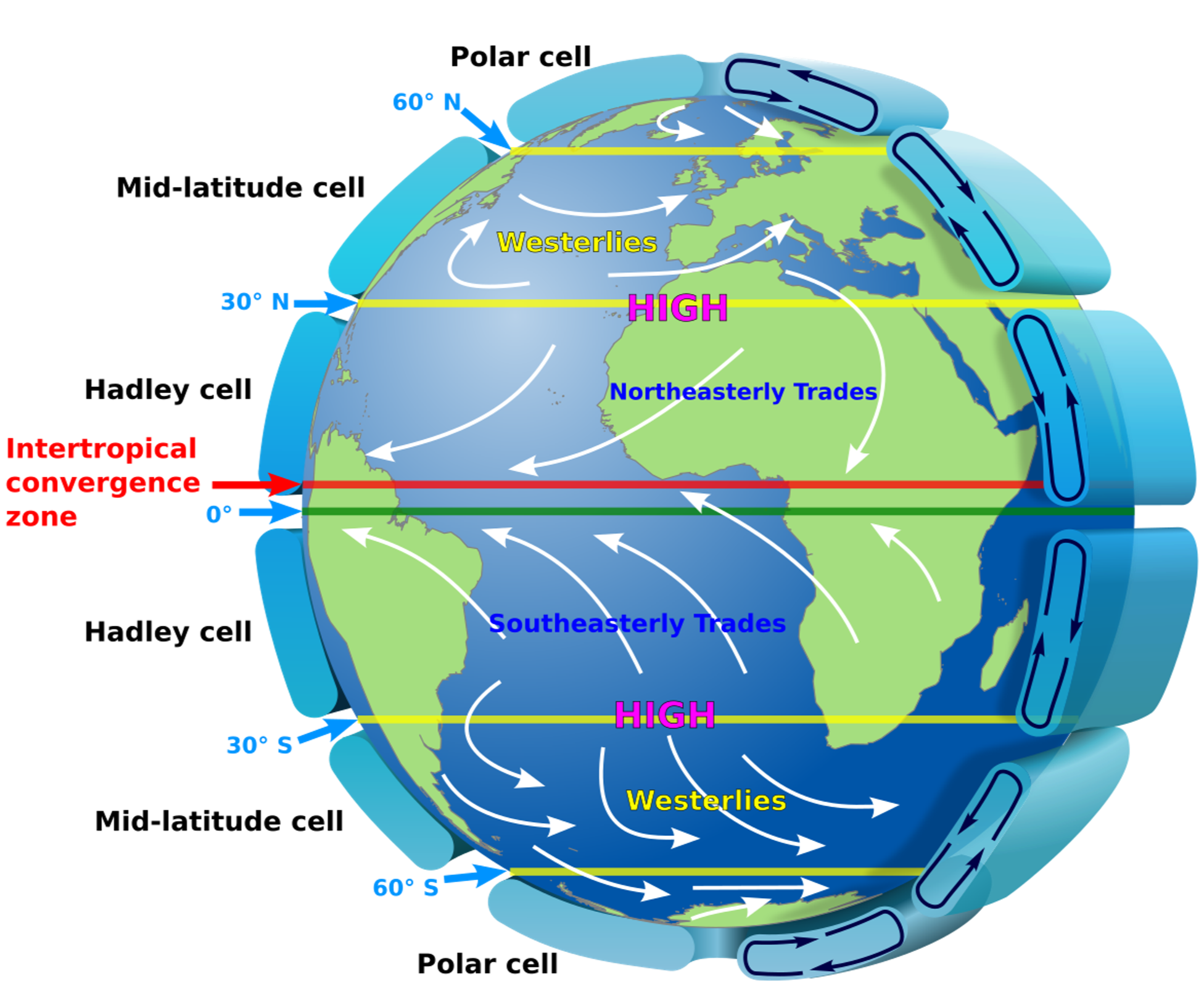
Global Atmospheric Circulation
Weather Effects
- Global Atmospheric Circulation causes areas to have some types of weather more than others. For example, the UK has a lot of low pressure systems from the Atlantic that bring wet and windy weather.