Pressure & Volume (AQA GCSE Physics): Revision Notes
📚Revision Notes
3.3.2 Pressure & Volume
Pressure
Note
The molecules of a gas are in constant random motion. The temperature of the gas is related to the average kinetic energy of the molecules. The higher the temperature, the greater the average kinetic energy and so the faster the average speed of the molecules
Note
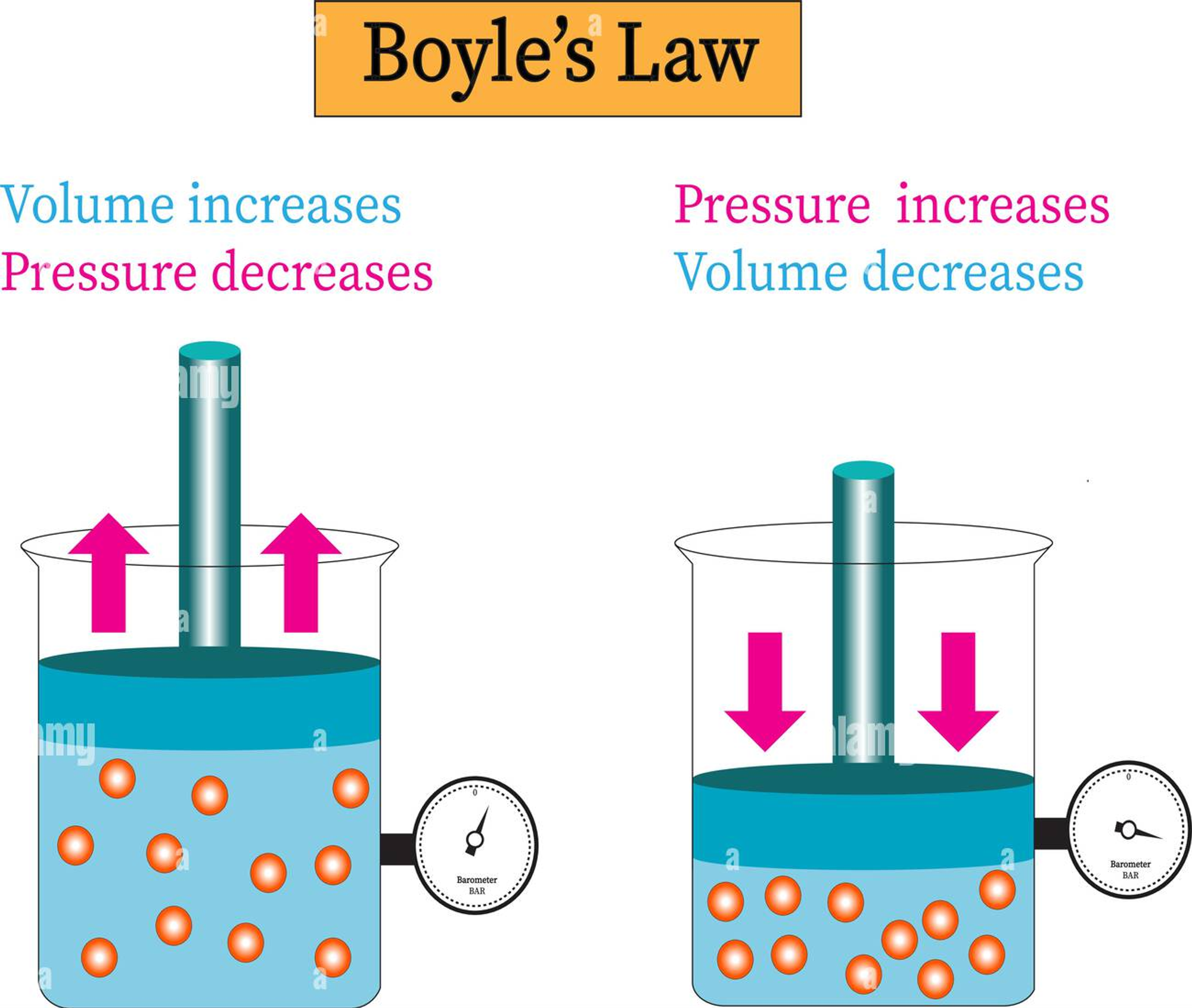
When the molecules collide with the wall of their container they exert a force on the wall. The total force exerted by all of the molecules inside the container on a unit area of the walls is the gas pressure. Changing the temperature of a gas, held at constant volume, changes the pressure exerted by the gas (known as the Pressure law).
Pressure and Temperature Relationship
Low Pressure (Low Temperature):
- At low temperatures:
- Particles have lower kinetic energy.
- There are fewer collisions per second.
- These are lower-energy collisions.
High Pressure (High Temperature):
- At high temperatures:
- Particles have higher kinetic energy.
- There are more collisions per second.
- These are higher energy collisions.