Silas Marner: Characters (Edexcel GCSE English Literature): Revision Notes
📚Revision Notes
Silas Marner: Characters
Key Characters in Silas Marner
- Silas Marner
- Eppie
- Godfrey Cass
- Nancy Lammeter
- Dunstan Cass
- Squire Cass
- Dolly Winthrop
- William Dane
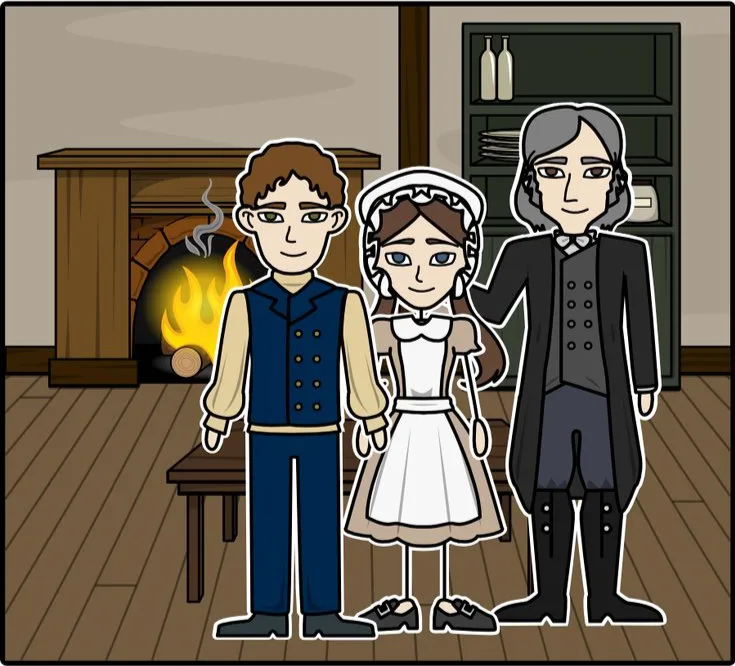
Silas Marner
Quote: "His life had reduced itself to the mere functions of weaving and hoarding."
Analysis: Silas is introduced as an isolated and mistrustful man, alienated from society after being falsely accused of theft. This quote highlights his emotional detachment and obsession with his gold, which symbolises his loss of faith and connection to humanity.
Quote: "The gold had kept his thoughts in an ever-repeated circle."
Analysis: Silas's fixation on his gold reflects his inner emptiness and need for purpose. Eliot uses this to show how material wealth cannot replace human connection, setting the stage for his transformation through Eppie.
Eppie
Quote: "Gold!—his own gold—brought back to him as mysteriously as it had been taken away!"
Analysis: Silas initially mistakes Eppie's golden curls for his stolen gold. This quote highlights the symbolic connection between Eppie and his redemption, as she brings him a new sense of purpose and joy.
Quote: "I can't feel as I've got any father but one."
Analysis: Eppie's loyalty to Silas reflects the strength of their bond. Her rejection of Godfrey Cass as her biological father underscores the theme that true family is built on love and care rather than blood ties.
Godfrey Cass
Quote: "It's part of my punishment, Nancy, for my daughter to dislike me."
Analysis: Godfrey is characterised by his cowardice and inability to take responsibility for his actions. This quote reflects his regret over abandoning Eppie and the consequences of his decisions, emphasising the theme of responsibility.
Quote: "Things come round to the same, whether you like it or not."
Analysis: Godfrey's fatalistic view underscores his failure to act decisively. Eliot uses his character to critique the lack of moral courage, showing how his inaction leads to long-term regret.
Nancy Lammeter
Quote: "I've always had the same sort of feeling towards you."
Analysis: Nancy is principled and loyal, standing by Godfrey despite his flaws. This quote reflects her steadfastness and her belief in maintaining a strong moral code, contrasting with Godfrey's indecision.
Quote: "Duty first—happiness afterwards."
Analysis: Nancy's belief in duty over personal happiness reflects the rigid social norms of the time. Eliot uses her character to explore themes of morality and the sacrifices required to uphold societal expectations.
Dunstan Cass
Quote: "He was a spiteful, jeering fellow."
Analysis: Dunstan is a selfish and manipulative character who causes much of the conflict in the story, including the theft of Silas's gold. Eliot uses him as an example of the consequences of greed and moral corruption.
Quote: "The stone pit was made to swallow up its treasures."
Analysis: Dunstan's death in the stone pit symbolises poetic justice. His greed leads to his demise, reinforcing the novel's moral message about the consequences of one's actions.
Squire Cass
Quote: "The greatest man in Raveloe was Squire Cass."
Analysis: Squire Cass represents the traditional upper class, characterised by wealth and privilege but also irresponsibility. Eliot critiques the aristocracy's moral failings through his character.
Quote: "Squire Cass's sons were not inclined to any severe labour."
Analysis: This highlights the entitlement and laziness of the Cass family, contrasting with Silas's hardworking nature. Eliot uses this to explore themes of social class and personal integrity.
Dolly Winthrop
Quote: "It's niver too late to turn over a new leaf."
Analysis: Dolly represents the moral compass of the novel, offering wisdom and kindness to Silas. This quote reflects her belief in redemption and personal growth, which mirrors Silas's journey.
Quote: "You'd be no better than a beast."
Analysis: Dolly's practical and moral advice helps Silas navigate his new life as Eppie's guardian. Eliot uses her to show the importance of community and compassion.
William Dane
Quote: "There is no just God that governs the earth righteously, but a God of lies."
Analysis: William's betrayal leads Silas to lose his faith in both God and humanity. Eliot uses William's character to explore themes of betrayal and the role of religion in shaping personal identity.
Quote: "His devious glance and guiltless words."
Analysis: William's outward appearance of piety hides his true selfishness and deceit. Eliot critiques hypocrisy and moral corruption through his actions.