Impacts of non-renewable energy resources (Edexcel GCSE Geography A): Revision Notes
📚Revision Notes
Impacts of non-renewable energy resources
Non-renewable energy sources like coal, oil, natural gas and uranium play crucial roles in meeting global energy demands, but their development and use create significant consequences for both human communities and the natural environment. Understanding these impacts helps us evaluate the true costs of our energy choices and consider more sustainable alternatives.
Note
Evaluating the full impact of energy choices requires understanding both the immediate benefits (like job creation and energy security) and the long-term costs (including environmental damage and health risks). This comprehensive view helps inform better energy policy decisions.
Coal impacts
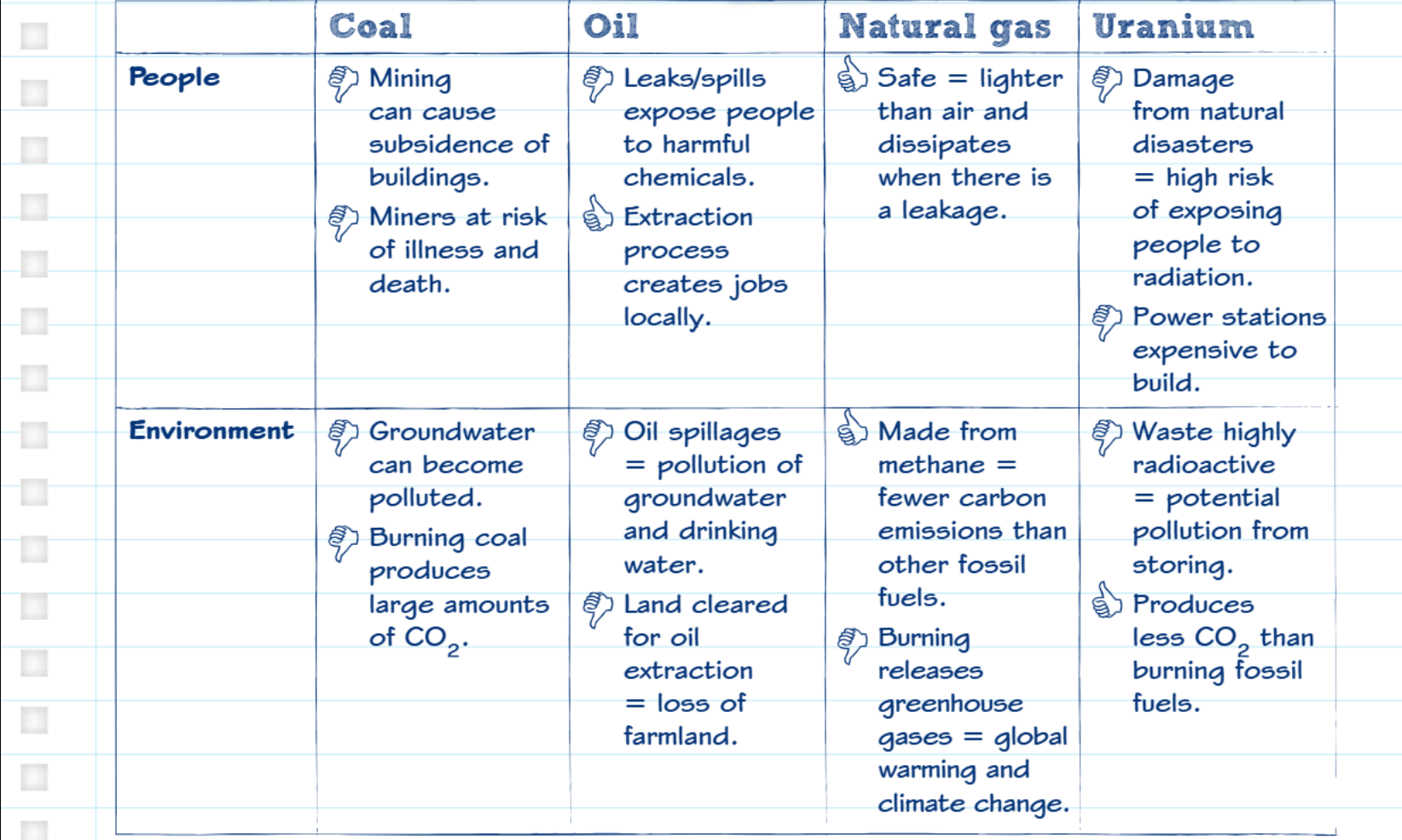
Coal extraction and combustion generate some of the most severe environmental and social consequences among fossil fuels. The mining process creates substantial risks for local communities and workers, while burning coal contributes heavily to climate change.
Important
Coal is considered one of the most environmentally damaging fossil fuels, producing the highest CO2 emissions per unit of energy and creating the most severe pollution impacts on both local communities and global climate systems.
Impact on people
Coal mining operations can cause ground instability that leads to subsidence of buildings and infrastructure in surrounding areas. This structural damage affects homes, roads and other facilities, creating safety hazards and economic losses for communities.
Important
Health and Safety Risks for Miners: Miners face serious occupational health risks, including:
- Respiratory diseases from coal dust exposure
- Workplace accidents that can result in injury or death
- Long-term health complications from prolonged exposure to mining conditions
Environmental impacts
The environmental consequences of coal use are particularly severe. Groundwater supplies can become contaminated through mining activities, affecting drinking water quality for local populations.
Important
Climate Impact: When coal burns in power stations, it releases large quantities of carbon dioxide into the atmosphere, making it one of the highest CO2-emitting energy sources and a major contributor to global warming.
Oil impacts
Oil extraction and processing create a complex mix of economic benefits and environmental risks. While the industry provides employment opportunities, oil-related activities pose significant threats to ecosystems and human health.
Note
The oil industry presents a classic example of the trade-offs inherent in energy production - providing essential economic benefits while creating substantial environmental and health risks that must be carefully managed.
Impact on people
The oil industry generates jobs during extraction and processing, providing economic benefits to local communities and workers. However, oil leaks and spills expose people to harmful chemicals that can cause health problems.
Important
Land Use Conflicts: The extraction process requires clearing land that may have been used for agriculture, leading to loss of farmland and affecting local food production, which can impact community food security and livelihoods.
Environmental impacts
Important
Oil Spill Disasters: Oil spillages represent one of the most visible and devastating environmental impacts, contaminating groundwater supplies and destroying drinking water sources. These spills also pollute soil and waterways, harming wildlife and ecosystems.
The land clearing required for oil extraction results in habitat destruction and loss of agricultural areas, creating long-term environmental consequences beyond the immediate extraction sites.
Natural gas impacts
Natural gas is often considered a cleaner fossil fuel compared to coal and oil, but it still creates environmental concerns, particularly regarding greenhouse gas emissions and climate change.
Note
While natural gas is marketed as a "cleaner" alternative to coal and oil, it's important to understand that "cleaner" is relative - natural gas still contributes significantly to greenhouse gas emissions and climate change.
Impact on people
Natural gas presents fewer direct health risks to people because it disperses safely when leaked, unlike oil or coal particles that can accumulate and cause breathing problems. This makes natural gas extraction and use generally safer for workers and nearby communities.
Environmental impacts
Although natural gas burns more cleanly than other fossil fuels, it consists primarily of methane, which contributes to greenhouse gas emissions when released into the atmosphere.
Important
Methane Emissions: These emissions still contribute to global warming and climate change, though at lower levels than coal or oil combustion. Methane is actually a more potent greenhouse gas than CO2 in the short term.
Uranium impacts
Nuclear energy from uranium offers lower carbon emissions but creates unique challenges related to radiation exposure and radioactive waste management.
Note
Nuclear power presents a unique energy profile - virtually carbon-free during operation but with distinct risks and challenges not found in other energy sources, particularly around radiation safety and waste management.
Impact on people
Nuclear power stations require enormous financial investments, making them expensive to construct and potentially affecting electricity costs.
Important
Radiation Exposure Risks: More seriously, nuclear accidents can expose large populations to dangerous radiation levels, as demonstrated by disasters like Chernobyl and Fukushima, creating long-term health risks including:
- Increased cancer rates
- Genetic damage
- Long-term evacuation of affected areas
- Psychological trauma in affected communities
Environmental impacts
Uranium produces significantly less CO2 than burning fossil fuels, offering climate benefits. However, the challenges are substantial:
Important
Radioactive Waste Challenge: Nuclear power generates highly radioactive waste that remains dangerous for thousands of years, creating complex storage challenges. Finding safe, long-term disposal methods for this waste presents ongoing environmental and safety concerns that must be managed across multiple generations.
Fracking for natural gas extraction
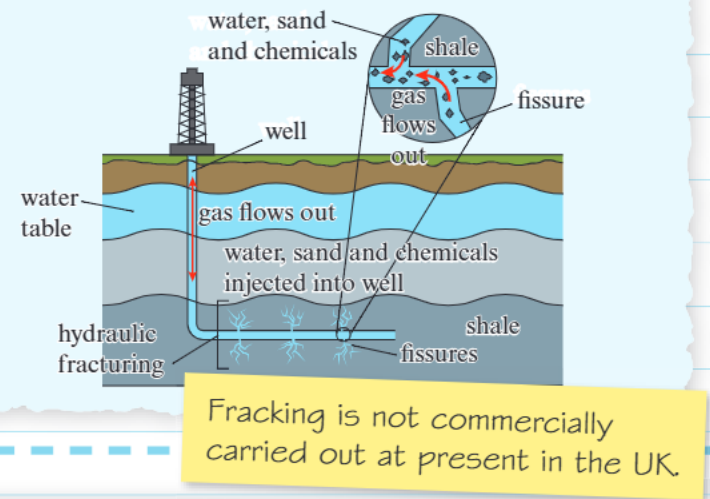
Hydraulic fracturing, commonly known as fracking, represents an innovative but controversial method for extracting natural gas from shale rock formations deep underground. This technology has transformed energy production in some countries but raises environmental and safety questions.
Note
How Fracking Works: The fracking process involves drilling deep wells and injecting high-pressure mixtures of water, sand and chemicals into shale layers to create fractures. These cracks allow trapped natural gas to flow out and be collected.
While fracking has increased natural gas availability in countries like the United States, it currently remains commercially inactive in the United Kingdom due to various concerns and regulations.
Fracking technology could potentially help reduce dependence on imported gas by accessing domestic shale gas reserves.
Important
Environmental and Safety Concerns: However, the process raises serious questions about:
- Groundwater contamination from chemical mixtures
- Induced seismic activity (earthquakes) from the fracturing process
- Environmental impact of the chemicals used in extraction
- Air quality impacts in extraction areas
Summary
Key Points to Remember:
-
Coal creates the highest environmental impact through CO2 emissions, groundwater pollution, and mining-related subsidence affecting buildings and communities
-
Oil spillages pose major contamination risks to groundwater, soil and ecosystems, while extraction destroys farmland despite providing local employment
-
Natural gas burns cleaner than other fossil fuels and dissipates safely when leaked, but still contributes methane emissions that drive climate change
-
Nuclear power produces minimal CO2 emissions but creates radiation exposure risks and generates radioactive waste requiring long-term storage solutions
-
Fracking technology enables access to shale gas reserves but remains commercially inactive in the UK due to environmental and safety concerns