Production and development (Edexcel GCSE Geography A): Revision Notes
📚Revision Notes
Energy production and development
Energy production and development involves understanding the advantages and disadvantages of different energy resources. These resources can be classified into two main categories: renewable and non-renewable energy sources. Each type has distinct characteristics that affect how they are developed and used to meet our energy needs.
Understanding energy resource types
Energy resources are fundamentally divided into renewable and non-renewable categories. Renewable resources can be naturally replenished over time, whilst non-renewable resources are finite and will eventually be exhausted.
Note
The choice between these different energy sources involves weighing up their various benefits and drawbacks in terms of production, environmental impact, and development costs. This decision-making process is crucial for sustainable energy planning.
Non-renewable energy resources
Non-renewable energy sources, such as fossil fuels, have been the backbone of global energy production for decades. These resources formed over millions of years and cannot be replaced once consumed.
Important
Non-renewable resources are finite and will eventually be exhausted, making the transition to renewable alternatives increasingly critical for long-term energy security.
Coal as an example
Coal represents one of the most significant non-renewable energy resources globally. It demonstrates both the benefits and challenges associated with non-renewable energy production.
Example
Worked Example: Coal Energy Trade-offs
Advantages of coal energy:
- Coal is an extremely productive resource that can generate substantial amounts of energy efficiently
- Current global coal reserves are sufficient to last approximately 200 years or more at current consumption rates
- Coal provides a reliable and consistent energy supply that can meet baseline electricity demands
Disadvantages of coal energy:
- Burning coal releases significant amounts of greenhouse gases into the atmosphere, contributing to climate change
- Coal mining operations are inherently dangerous and have resulted in numerous fatalities and injuries over the years
- Developing coal extraction sites requires expensive infrastructure, including mines and opencast pits, which can be costly to establish and maintain
Renewable energy resources
Renewable energy sources offer sustainable alternatives to fossil fuels, though they come with their own set of challenges and benefits. These resources harness natural processes that are continuously replenished by nature.
Wind energy as an example
Wind energy represents one of the most developed renewable energy technologies and illustrates the characteristics typical of renewable resources.
Example
Worked Example: Wind Energy Analysis
Advantages of wind energy:
- Harnessing wind energy produces no atmospheric pollution, making it an environmentally clean energy source
- Wind power has become the lowest-priced renewable energy option in many regions
- Once installed, wind turbines have relatively low operating costs since the fuel (wind) is free
Disadvantages of wind energy:
- Energy production only occurs when there is sufficient wind to rotate the turbine blades, making it an intermittent energy source
- Wind installations can be considered unsightly and may face opposition due to their visual impact on landscapes
- Initial development costs are relatively high, including expenses for turbine construction, site access roads, foundations, and electrical cabling systems
Global energy consumption patterns
Understanding how energy consumption has changed over time helps illustrate the shifting global energy landscape and the role different resources play in meeting energy demands.
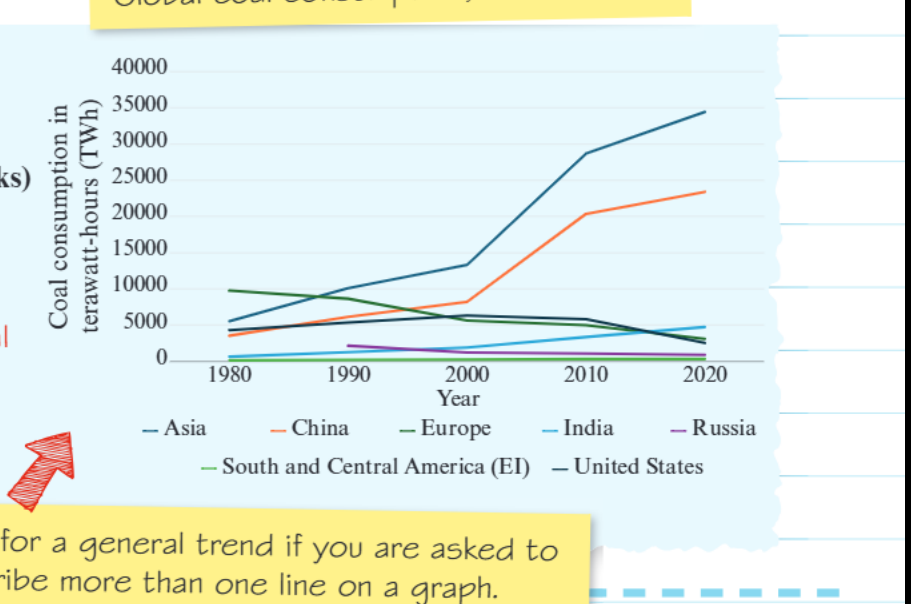
The graph showing global coal consumption from 1980 to 2020 reveals several important trends. Between 1980 and 1990, coal consumption remained relatively stable across most regions. However, from around 1990 onwards, dramatic changes occurred.
Note
Key Regional Trends:
- Asia, particularly China, experienced rapid increases in coal consumption that continue today
- Europe's coal consumption peaked around 1990 and has since declined
- The United States maintained relatively steady consumption levels before recent decreases
- Countries like India showed moderate upward trends
This pattern reflects changing economic development, industrialisation processes, and energy policy decisions across different regions of the world.
Summary
Key Points to Remember:
- Energy resources are either renewable or non-renewable - this fundamental classification affects their sustainability and environmental impact
- Coal provides reliable, high-energy output but causes significant environmental problems through greenhouse gas emissions and dangerous extraction processes
- Wind energy is clean and increasingly cost-effective but faces challenges with reliability due to weather dependence and high initial development costs
- Global energy consumption patterns vary dramatically by region with developing economies like China and India showing increased fossil fuel use whilst developed regions like Europe are transitioning away
- Both renewable and non-renewable resources involve trade-offs between factors like cost, reliability, environmental impact, and development complexity