International strategies (Edexcel GCSE Geography A): Revision Notes
📚Revision Notes
International strategies
International strategies represent various approaches used by countries and organisations to tackle uneven global development. These methods include international aid programmes and agreements between governments that aim to support developing nations and create more balanced economic growth worldwide.
Note
Understanding international strategies is crucial for comprehending how the global community addresses development inequalities and works towards more equitable economic growth across different regions.
International aid
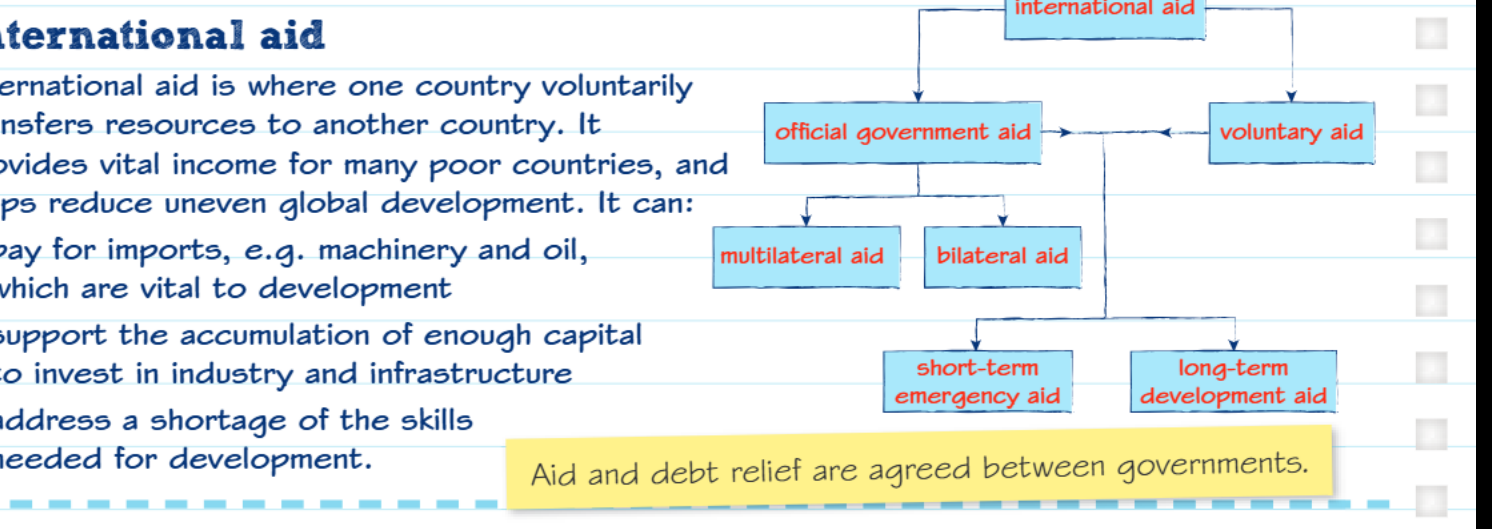
International aid involves the voluntary transfer of resources from one nation to another, providing essential income for developing countries and helping to address global development inequalities. This support system plays a crucial role in enabling poorer nations to access vital resources and build their capacity for economic growth.
Note
Classification of International Aid
The classification system for international aid divides support into two main categories: official government aid and voluntary aid. Official government aid can be further broken down into multilateral and bilateral forms, with bilateral aid subdivided into short-term emergency assistance and long-term development programmes.
Functions of international aid
International aid serves several important purposes in supporting developing nations:
Economic infrastructure support: Aid funding enables countries to purchase essential imports such as machinery and oil, which are fundamental building blocks for industrial development and economic growth.
Capital accumulation: Financial assistance helps nations build up sufficient capital reserves to invest in critical areas like industry development and infrastructure projects, creating the foundation for sustained economic progress.
Skills development: Aid programmes address shortages in essential skills and expertise needed for effective development, providing training and capacity building to local populations.
Types of international aid
Multilateral aid involves contributions made through international organisations, allowing multiple donor countries to pool resources and coordinate their assistance efforts.
Bilateral aid represents direct assistance between two governments, creating specific partnerships and agreements tailored to the recipient country's needs.
Short-term emergency aid provides immediate relief during crises such as natural disasters, conflicts, or humanitarian emergencies, focusing on saving lives and meeting basic survival needs.
Long-term development aid supports sustained improvements in economic, social, and institutional capacity, helping countries build lasting foundations for growth and prosperity.
Inter-governmental agreements
These represent formal arrangements between two or more governments designed to promote cooperation and mutual benefit in various areas of development.
Trade agreements
Trade agreements work to reduce barriers between nations, creating opportunities for developing countries to increase their participation in global markets. For instance, removing trade restrictions between regions like the EU and China can open new pathways for economic growth in developing nations by expanding their access to larger consumer markets.
Example
Trade Agreement Impact: EU-China Relations
When trade restrictions are removed between major economic regions like the EU and China, developing countries benefit through:
- Increased access to larger consumer markets
- Expanded opportunities for export growth
- Greater integration into global supply chains
- Enhanced economic development prospects
Fair trade initiatives
Fair trade represents a system where producers in developing countries work directly with retailers in developed nations to secure better prices and working conditions for their products. This approach ensures that farmers and workers receive fairer compensation for their goods, though it currently represents less than one percent of total global trade volume.
Foreign direct investment (FDI)
Foreign direct investment occurs when companies establish operations in other countries while maintaining control over those business activities. This investment strategy can significantly impact development patterns in recipient nations.
Benefits of FDI
Note
Key Advantages of Foreign Direct Investment
FDI provides several important benefits to developing countries:
Investment capital: FDI brings essential funding into developing countries, supporting business expansion and economic growth.
Market expansion: International brands can reach wider consumer bases, creating new economic opportunities and increasing competition.
Employment opportunities: Foreign companies may offer higher wages than local alternatives, improving living standards for workers.
Challenges of FDI
Important
Critical Concerns with Foreign Direct Investment
While FDI offers benefits, it also presents significant challenges that developing countries must carefully manage:
Market competition: Large international brands can overwhelm local businesses, potentially destroying traditional industries and employment.
Investment instability: Foreign investors may withdraw their capital suddenly, creating economic instability and uncertainty.
Regulatory concerns: Insufficient regulation can lead to negative environmental and social consequences, including industrial accidents and exploitation of workers.
Debt relief strategies
Debt relief represents another crucial international strategy for reducing global development inequalities. Many developing nations struggle with overwhelming debt burdens that prevent them from investing in essential services and infrastructure.
Example
Case Study: The HIPC Initiative
The Heavily Indebted Poor Countries (HIPC) initiative, established in 1996 by the International Monetary Fund and World Bank, demonstrates how debt relief can work in practice. This programme reduced the debt obligations of the world's poorest nations, allowing them to redirect funds from debt payments towards improving living conditions and essential services for their populations.
When debt relief programmes successfully reduce repayment burdens, countries can allocate more of their national income towards healthcare, education, infrastructure development, and poverty reduction programmes, creating positive cycles of development and improvement.
Remember!
Summary
Key Points to Remember:
- International aid includes both official government assistance and voluntary contributions, with various forms serving different development needs
- Trade agreements and fair trade initiatives help developing countries access global markets and secure better prices for their products
- Foreign direct investment brings capital and opportunities but also creates challenges related to market competition and investment stability
- Debt relief programmes like HIPC allow developing countries to redirect resources from debt payments towards essential development priorities
- Successful international strategies require cooperation between governments and careful consideration of both benefits and potential negative impacts