Uneven development (Edexcel GCSE Geography A): Revision Notes
📚Revision Notes
Uneven development
What is uneven development?
Uneven development refers to the way that global progress has created different impacts on people's quality of life across various parts of the world. This means that while some regions have experienced significant improvements in living standards, others continue to face considerable challenges in meeting basic human needs.
Note
This concept helps explain why we see such dramatic differences in living standards between different countries and regions, despite overall global economic growth and technological advancement.
Key impacts of uneven development
The effects of uneven development can be understood through six main areas that significantly affect people's daily lives and opportunities.
Employment challenges
In many developing regions, job opportunities are limited and often found in the informal sector, such as street trading and market stalls. These positions typically offer less security and fewer benefits compared to formal employment. Workers in these areas frequently face lower wages and more labour-intensive working conditions, making it difficult to improve their economic situation.
Note
The informal sector includes any economic activity that isn't regulated by government policies or included in official economic statistics. While it provides essential income for millions, it lacks the protections and benefits of formal employment.
Health disparities
Healthcare systems in the developing world often struggle with limited resources, resulting in fewer qualified doctors and inadequate medical facilities. This creates significant health challenges for populations who cannot access proper medical care when needed.
Important
Limited healthcare access creates a cycle where preventable diseases become major health crises, further limiting people's ability to work and improve their economic situation.
Housing difficulties
Access to adequate shelter remains a major challenge globally. Statistics show that more than 2.4% of the world's population lives in poor-quality housing conditions. The situation is particularly concerning for children, with nearly 5 million children dying before reaching their fifth birthday each year, often due to inadequate living conditions and related health issues.
Important
Critical Housing Statistics:
- Over 2.4% of global population lives in poor-quality housing
- Nearly 5 million children die annually before age 5
- Poor housing conditions directly contribute to health problems and reduced life expectancy
Educational inequalities
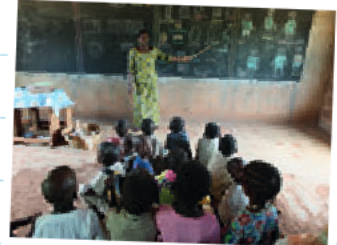
Literacy rates remain low in many developing regions, where schools are scarce and attendance rates are poor. There is a concerning pattern where people with the least education tend to have larger families, which can create cycles of debt and malnutrition as resources become stretched across more family members.
Note
This creates a self-perpetuating cycle: limited education leads to larger families, which stretches resources thinner, making it harder to invest in children's education, continuing the pattern into the next generation.
Food and water security issues
Many developing countries struggle to provide their populations with adequate access to food and clean water. This lack of basic necessities limits people's ability to grow sufficient food for their families and contributes to widespread malnutrition and dehydration problems.
Note
Food and water security are fundamental human needs. When these aren't met, it becomes impossible for communities to focus on other areas of development like education or economic growth.
Technology gaps
Investment in technology remains limited in many developing regions, with fewer people possessing the skills needed to use modern technological tools effectively. However, when appropriate technology is available and accessible, it can be highly effective in meeting local needs in sustainable ways.
Note
The key is "appropriate technology" - solutions that match local needs, skills, and resources rather than simply importing advanced technology from developed countries.
Real-world example
Example
Real-World Example: Water Access Inequality
The consequences of uneven development are clearly visible in water access issues.
Developed Countries:
- Easy access to clean, running water in homes
- Reliable water infrastructure and treatment systems
Developing Countries:
- Many people forced to walk considerable distances to collect water
- Water sources often dirty and contaminated
- People contract diseases like cholera from unsafe water
- Significantly reduced life expectancy and quality of life
This example demonstrates how a basic necessity that's taken for granted in developed regions becomes a daily struggle that affects health, time, and economic opportunities in developing areas.
Summary
Key Points to Remember:
- Uneven development creates vastly different living conditions between developed and developing regions
- Six key impact areas include employment, health, housing, education, food/water security, and technology access
- Statistical reality: Over 2.4% of global population lives in poor-quality housing, with 5 million children dying annually before age five
- Water access serves as a clear example of development inequality, affecting health and daily life significantly
- Education cycles show how limited schooling can perpetuate poverty through larger family sizes and continued disadvantage