Extended writing questions (Edexcel GCSE Geography A): Revision Notes
📚Revision Notes
Paper 3 (ii) - Extended writing questions
Understanding the question structure
Paper 3 Section C contains an extended writing question that's worth a total of 16 marks. This breaks down into 12 marks for your geographical content and an additional 4 marks specifically for your spelling, punctuation, grammar, and use of specialist terminology (SPGST).
The question requires you to demonstrate your knowledge and understanding across different geographical topics you've studied throughout your course. You'll need to apply this knowledge to a specific UK issue, drawing on both the resource booklet provided in the exam and your own learning.
Note
The extended writing question is designed to test your ability to synthesise knowledge from multiple geographical topics and apply them to real-world UK issues. This integration of knowledge is what distinguishes it from shorter response questions.
The command word: discuss
The command word for this question type will always be "discuss". Understanding what this means is crucial for your success.
Important
When you encounter a discuss question, you need to approach it systematically by:
- Exploring different perspectives or sides of the geographical issue presented
- Examining both the strengths and weaknesses of various viewpoints
- Supporting your points with well-reasoned arguments and evidence
- Demonstrating balanced analysis rather than just listing points
Remember: "Discuss" requires you to present a balanced argument, not just describe or explain one viewpoint.
Assessment objectives breakdown
Your 12-mark response will be assessed against three specific assessment objectives:
Assessment Objective 2 (4 marks) - This focuses on your ability to apply geographical knowledge and understanding to analyse and evaluate geographical information and issues.
Assessment Objective 3 (4 marks) - This examines how well you can apply geographical knowledge and understanding to analyse and evaluate geographical processes, relationships and changes.
Assessment Objective 4 (4 marks) - This assesses your ability to apply geographical knowledge and understanding to analyse and evaluate different approaches to geographical issues and problems.
Important
An additional 4 marks are awarded for SPGST, making accurate spelling, proper punctuation, correct grammar, and appropriate use of geographical terminology essential for achieving full marks. These marks can make the difference between grade boundaries!
Worked example analysis
Example
Worked Example: Brownfield vs Greenfield Development
Let's examine how to approach a question about regeneration of brownfield sites versus building on greenfield sites:
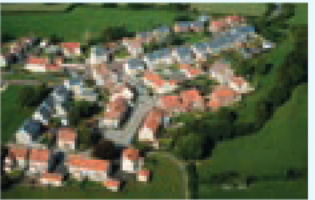
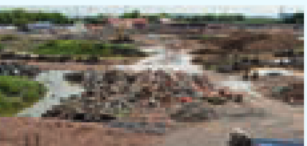
Step 1: Identify advantages of brownfield regeneration When discussing brownfield regeneration, you might argue that one significant advantage involves improving environmental quality by removing or renovating derelict buildings. However, building on greenfield sites often compromises the natural landscape's appearance.
Step 2: Consider infrastructure benefits A second advantage of brownfield development relates to existing infrastructure - roads and utilities are typically already in place. In contrast, greenfield sites require completely new infrastructure installation.
Step 3: Examine potential disadvantages Consider potential disadvantages too. Previous industrial activity may have contaminated brownfield sites with hazardous waste. Greenfield development can increase pollution because residents need to use cars for transportation to urban areas.
Key strategies for success
Developing a systematic approach to these questions will significantly improve your performance. Here are the essential strategies you should master:
Use photographic evidence effectively - The exam provides photographs that you should reference specifically. For example, mention empty buildings, boarded windows, or other visible features that support your arguments.
Note
When analysing photographs, look for specific details that support your arguments. Don't just describe what you see - explain how these visual elements support your geographical points.
Be specific in your descriptions - Rather than general statements, explain exactly how environmental issues manifest or what specific advantages exist.
Integrate your own knowledge - Combine evidence from the photographs with case studies, examples, and concepts you've learned throughout your geography course.
Structure your response clearly - Begin with an introduction that defines key terms, present balanced arguments with supporting evidence, and conclude with a reasoned judgement about which approach might be more beneficial.
Monitor your specialist terminology - Use appropriate geographical vocabulary throughout your response, as this contributes to your SPGST marks.
Summary
Key Points to Remember:
- The question is always worth 16 marks total (12 for content + 4 for SPGST)
- Use both the resource materials and your own geographical knowledge
- Structure your answer with an introduction and conclusion
- Present balanced arguments exploring different perspectives
- Support all points with specific evidence and examples
- Check your spelling, punctuation, grammar, and use of specialist terms