William's personality (Edexcel GCSE History): Revision Notes
📚Revision Notes
William's personality
Understanding William through his family relationships
William I's personality can be clearly understood through examining his difficult relationship with his eldest son, Robert Curthose. This relationship reveals key aspects of William's character, particularly his authoritarian nature and unwillingness to share power, even with his own family.
Note
The relationship between William and his heir provides one of the most revealing windows into the king's true character, showing how his political principles extended even into his most personal family relationships.
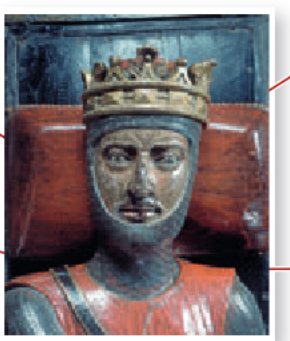
William's treatment of Robert Curthose
William's harsh treatment of his eldest son Robert provides significant insight into his personality. Despite Robert being his heir, William denied him any genuine authority in Normandy. This controlling behaviour demonstrates William's reluctance to delegate power and his need to maintain absolute control over his territories.
Robert, who was probably born in 1054, was the eldest son of William and Matilda of Flanders. However, being the heir apparent did not guarantee him respect or power from his father. William's treatment of Robert was so severe that it eventually led to open rebellion.
Important
This family conflict is extraordinary in mediaeval history - it's extremely rare to find documented cases of a king literally fighting his own heir in battle, which shows just how inflexible William's personality could be.
The character clash between father and son
The conflict between William and Robert also reveals important personality differences that help us understand William's character by contrast. While Robert was described as an able warrior, William clearly felt his son lacked the determination and strong will needed to lead the Normans against their enemies. William saw Robert as lazy and weak-willed, suggesting that William valued strength, decisiveness, and unwavering commitment above all other qualities.
The nickname "Curthose," meaning something like "shorty," shows how William even allowed or perhaps encouraged others to mock his son. This reveals a harsh, unsympathetic side to William's personality - he was not protective of his family's dignity if he felt they had not earned his respect through strength and capability.
Note
Mediaeval nicknames often reveal contemporary attitudes - the fact that "Curthose" stuck to Robert throughout history suggests that William's harsh treatment of his son was well-known and perhaps even accepted by Norman society.
Robert's revolt in Normandy (1077-80)
The three-year rebellion that began in 1077 demonstrates just how far William's authoritarian personality could drive even his closest family members. The conflict escalated to the point where father and son actually fought each other in battle at Gerberoy, France - an extraordinary situation that reveals the intensity of William's refusal to compromise or share power.
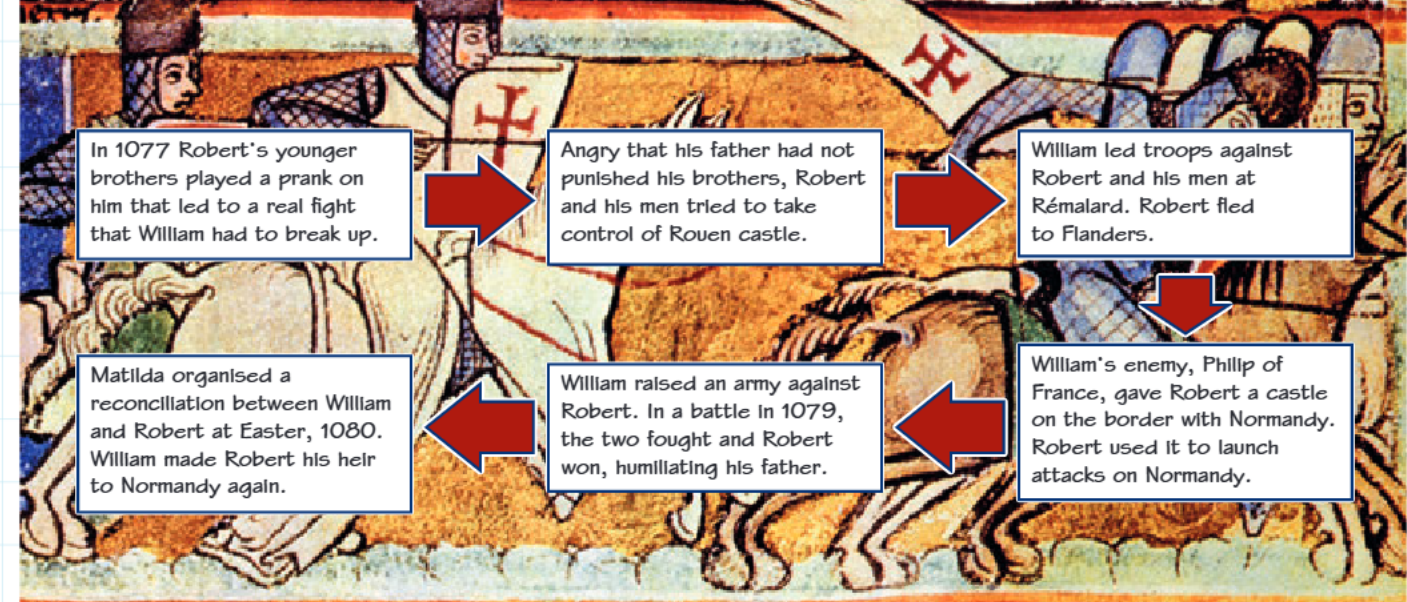
Timeline of the family conflict (1077-1080)
Example
Timeline Example: The Escalation of Family Conflict
1077: Rebellion begins when Robert's younger brothers play a prank that leads to a real fight. William fails to punish his brothers properly, angering Robert who attempts to take Rouen castle by force.
1077: William responds decisively, leading troops against his own son at Rémalard, where Robert is defeated and flees to Flanders.
1079: William raises an army against Robert, leading to a battle where both fight directly against each other. Robert actually wins this encounter, humiliating his father.
1080: Matilda organises a reconciliation at Easter, and William accepts her mediation.
The conflict began in 1077 when Robert's younger brothers played a prank on him that led to a real fight. When William failed to punish his brothers properly, Robert became angry and attempted to take control of Rouen castle by force.
William's response was characteristically decisive and harsh - he led troops against his own son and fought him at Rémalard, where Robert fled to Flanders after being defeated. This shows William's willingness to use military force even against family members who challenged his authority.
The conflict continued with William raising an army against Robert in 1079, leading to a battle where both father and son fought directly against each other. Robert actually won this encounter, humiliating his father. The fact that William accepted military support from Philip of France, who gave Robert a castle to use as a base for attacks on Normandy, shows how the personal had become deeply political.
Matilda's role as peacemaker
The resolution of the conflict reveals another aspect of William's personality - his respect for his wife Matilda's wisdom and diplomatic skills. Matilda organised a reconciliation between William and Robert at Easter 1080, and William accepted her mediation. This shows that while William was authoritarian and unwilling to compromise with those he saw as weak, he did respect strength and capability when he encountered it, even in his family relationships.
Note
William's willingness to accept Matilda's mediation suggests that his harsh treatment of Robert wasn't simply personal cruelty, but reflected his genuine belief that leaders must prove themselves through strength and determination.
The fact that William ultimately made Robert his heir to Normandy again demonstrates that his harsh treatment was not simply cruelty, but reflected his belief that leadership required proving oneself through strength and determination.
What this reveals about William's personality
This family conflict illuminates several key aspects of William's character:
- Authoritarian nature: William refused to share power even with his designated heir, showing his need for absolute control
- Harsh disciplinarian: He was willing to fight his own son in battle rather than compromise his principles
- Valued strength above sentiment: He respected capability and determination more than family bonds
- Pragmatic leader: Despite personal conflict, he ultimately reconciled with Robert when it served his political needs
- Respected competent advisors: He listened to Matilda's counsel, showing he valued wisdom and diplomatic skill
Remember!
Summary
Key Points to Remember:
- William's authoritarian personality led to a three-year rebellion (1077-80) by his own eldest son Robert Curthose
- William valued strength and determination above family loyalty, even fighting Robert in battle at Gerberoy, France
- The conflict began over William's refusal to give Robert any real power in Normandy, despite him being the heir
- William's wife Matilda had to organise a reconciliation at Easter 1080, showing William respected capable advisors
- This family conflict reveals William as a harsh but pragmatic ruler who prioritised effective leadership over personal relationships