The Harrying of the North (Edexcel GCSE History): Revision Notes
📚Revision Notes
The Harrying of the North
The Harrying of the North represents one of the most brutal and devastating military campaigns in English history. This scorched earth policy, carried out by William the Conqueror during the winter of 1069-70, demonstrated just how far William was prepared to go to maintain control over his newly conquered kingdom.
Note
The term "scorched earth" refers to a military strategy that involves destroying anything that might be useful to an enemy while advancing through or withdrawing from an area. This includes food sources, transportation, communications, and industrial resources.
What was the Harrying of the North?
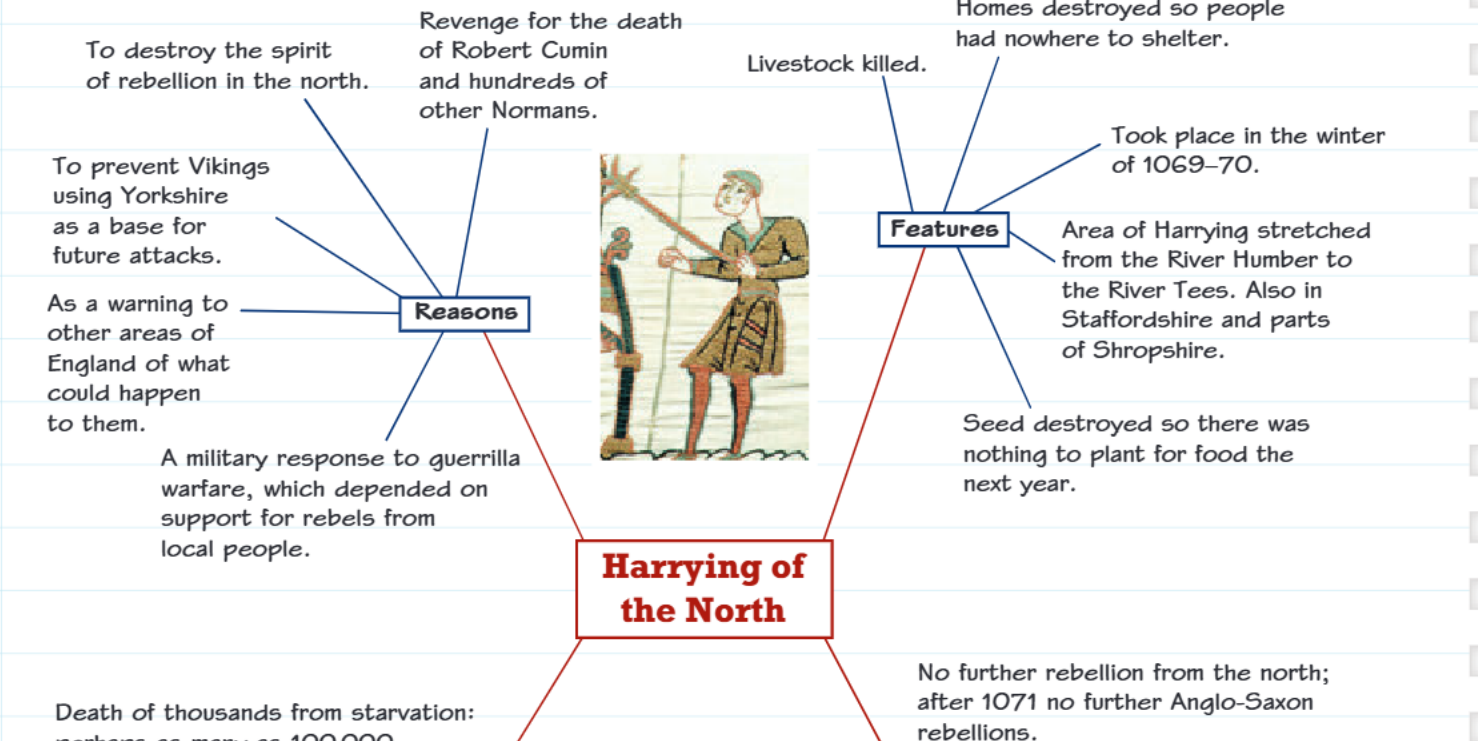
The Harrying of the North was William's systematic destruction of large areas of northern England, particularly Yorkshire. This campaign involved the deliberate devastation of the countryside, including the destruction of homes, livestock, crops, and seeds. The operation stretched from the River Humber to the River Tees, and also affected parts of Staffordshire and Shropshire.
Note
The geographical scope of the Harrying covered approximately 100,000 square kilometres, making it one of the largest military campaigns of systematic destruction in mediaeval European history.
Reasons for the campaign
William had several interconnected motivations for launching this devastating campaign. The primary trigger was his desire for revenge following the death of Robert Cumin and hundreds of other Normans who had been killed during northern rebellions. William was determined to crush the spirit of rebellion in the north once and for all.
The king also recognised the strategic threat posed by Yorkshire, which Vikings could potentially use as a base for future attacks against Norman rule. By devastating the area, William aimed to prevent any future invasions from finding local support or resources.
Additionally, the campaign served as a stark warning to other regions of England about what could happen if they dared to rebel against Norman authority. William was responding to guerrilla warfare tactics that depended heavily on support from local populations, and he calculated that eliminating this support would end the resistance.
Important
William's motivations were not purely emotional - the Harrying was a calculated strategic decision designed to solve multiple problems: eliminate rebellion, prevent future invasions, and send a clear message to other potential rebels across England.
Features of the harrying
The campaign was carried out with systematic brutality during the harsh winter months of 1069-70. Norman forces destroyed homes throughout the target areas, leaving thousands of people without shelter during the coldest time of year. They slaughtered livestock and burned crops, ensuring that people had no food sources available.
Perhaps most cruelly, the Normans also destroyed seeds that would have been planted for the following year's harvest. This meant that even those who survived the immediate devastation would face continued starvation in the months and years to come.
Note
The timing of the campaign during winter was particularly brutal, as it left people without shelter during the harshest weather conditions. The destruction of seeds ensured that the suffering would continue long after the military campaign had ended.
Immediate consequences
The human cost of the Harrying was catastrophic. Contemporary reports suggest that as many as 100,000 people may have died from starvation in the aftermath of the campaign. The scale of suffering was so severe that there were reports of cannibalism among the desperate, starving population.
Large numbers of refugees fled from the devastated north to other parts of England, particularly moving westward to escape the destruction. Some families were so desperate that they sold themselves into slavery simply to survive. These immediate effects created widespread criticism of William's brutality, even among his contemporaries, with the Pope reportedly condemning his actions.
Important
The Scale of Human Suffering
The death toll of potentially 100,000 people represented a significant percentage of England's total population at the time. This level of civilian casualties was considered extreme even by mediaeval standards, leading to contemporary criticism from religious and political figures across Europe.
Long-term consequences
The Harrying achieved William's strategic objectives, though at an enormous human cost. After 1071, there were no further Anglo-Saxon rebellions in the north, demonstrating that William had successfully broken the spirit of resistance in the region.
The campaign also had important implications for future invasions. When Danish invaders arrived in 1070, they found no viable base of operations in Yorkshire because the area had been so thoroughly devastated. This marked a significant turning point in William's control over England.
The demographic impact was long-lasting and severe. Twenty years after the Harrying, Yorkshire had still not recovered from the devastation. The Domesday Book of 1086 recorded that 60% of Yorkshire was still listed as 'waste', and the region had between 200,000 and 150,000 fewer people than it had in 1066.
Most significantly, after 1070, William decided to replace the English aristocracy with Norman nobles, fundamentally changing the power structure of mediaeval England.
Note
Long-term Recovery
The fact that Yorkshire remained 60% 'waste' twenty years later demonstrates the thoroughness of the destruction. This level of devastation had profound economic, social, and demographic effects that lasted for generations.
Timeline of key events
- 1069: Northern rebellions against Norman rule begin, including the killing of Robert Cumin and his men
- Winter 1069-70: The Harrying of the North takes place
- 1070: Danish invaders attempt to establish a base in Yorkshire but find the area too devastated to support their operations
- 1071: The last Anglo-Saxon rebellions in the north are suppressed
- 1086: The Domesday Book records Yorkshire as still 60% 'waste'
Historical significance
The early mediaeval period was undoubtedly a violent time, but even by the standards of the era, William's Harrying of the North was considered exceptionally brutal. The campaign revealed the lengths to which William was prepared to go to secure his conquest and demonstrated the ruthless efficiency of Norman military power.
The Harrying represents a crucial turning point in the Norman Conquest, marking the moment when William moved from simply defeating Anglo-Saxon armies to systematically destroying the social and economic foundations that might support future resistance.
Summary
Key Points to Remember:
- The Harrying of the North took place during winter 1069-70 and devastated large areas from the River Humber to the River Tees
- Up to 100,000 people may have died from starvation as a result of William's systematic destruction of homes, livestock, crops, and seeds
- The campaign successfully ended northern rebellions and prevented Danish invaders from establishing a base in Yorkshire
- Yorkshire took decades to recover - 20 years later it was still 60% 'waste' according to the Domesday Book
- The Harrying marked a turning point that led William to replace the English aristocracy with Norman nobles, fundamentally changing England's power structure