Increased Tension (1955 to 1963) (Edexcel GCSE History): Revision Notes
📚Revision Notes
Increased Tension (1955 to 1963)
Nasser's Rise to Power in Egypt
Gamal Abdel Nasser's rise to power in Egypt came after General Neguib resigned from his position as head of state in 1954. Before he became the leader of Egypt, he was already active in anti-British demonstrations in 1935 at the age of 17. Years later, he joined the Egyptian army, and fought in the Arab-Israeli War from 1948 to 1949. He supported revolts led by his predecessor that resulted in the overthrow of King Farouk and the Egyptian Royal Family in 1952.
As Egypt's leader, Nasser wanted to initially remove any traces of British influence in the country. However,
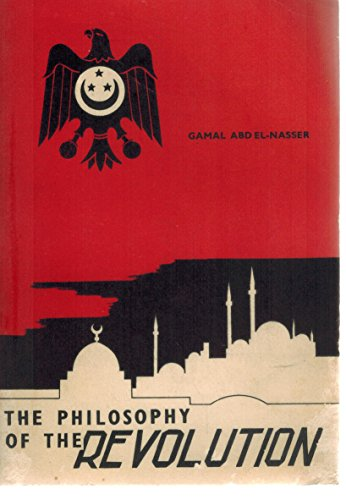 Philosophy of the Revolution by Nasser (1954)
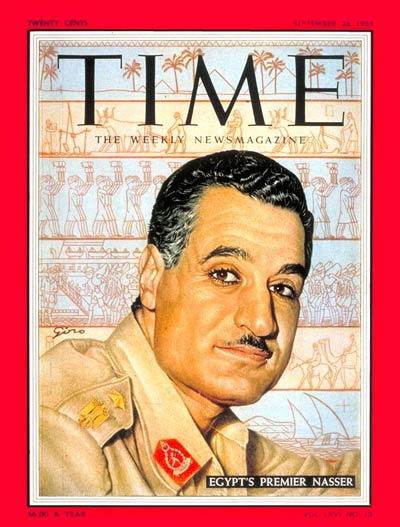 Nasser on the cover of TIME Magazine (1955)
He had a broader vision, which he outlined in his book, Philosophy of the Revolution**** written in 1954. Since the Arab world saw the need for unity after being defeated by Israel in the war, he aspired to be the leader of the Arab world. Nasser's policies were geared towards removing Western influence from the Middle East, and allocating resources solely for the Arab people. By the end of the 1950s, he was seen as the leader of the Arab world.
As the Arab world's leader, Nasser achieved persuading Britain to withdraw troops from the Suez Canal zone in October 1954. Britain's presence in the region was met with strong opposition from Nasser, though Britain, along with the United States, wanted to forge an alliance with Egypt against the Soviet Union. Nasser rejected the plan. Because of this, the West grew concerned about the Egyptian leader's intentions.
Baghdad Pact (1955)
The Baghdad Pact was a military alliance between Britain, Turkey and Iraq established in 1955. The British were suspicious of Nasser's attitude towards the pact when he became furious over Britain's persuasion of Iraq. He expressed fear that other Arab states might join and Western imperialism in the Middle East would continue.
Voice of the Arabs
One of the notable achievements of Nasser was the establishment of the Arab world's biggest radio station, the** Voice of the Arabs. It was declared that it "speaks for the Arabs and expresses their unity." From Cairo, the radio station broadcasted to the entire Middle East. Radios were present in villages and town squares to ensure a broader audience.
Israeli attacks in Gaza (1955): The Cause and Events leading to the Attack
CAUSE
February 25, 1955: Arab infiltrators murdered an Israeli civilian in Rehovot. One of the Arab militants who was killed was known to be a member of the military intelligence of Egypt.
THE PLAN
David Ben-Gurion, Israel's defence minister, and Moshe Dayan, chief of staff, convinced Israeli Prime Minister Moshe Sharett to launch attacks in Egypt in retaliation.
THE ATTACK
February 28, 1955: Operation Black Arrow was conducted with 150 paratroopers attacking an Egyptian army base in Gaza, and the military relief convoy was ambushed on its way to the area. 38 Egyptian soldiers died.
Israeli Attacks in Gaza (1955): Consequences and its Importance
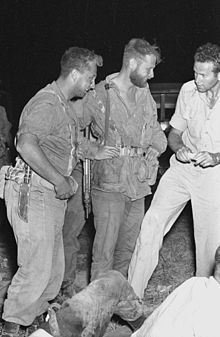 Ariel Sharon (LEFT), the Commander of Paratroopers Brigade, during the Operation Black Arrow in Gaza
Consequences of the attack and its Importance
- Humiliation emerged among the Egyptians as a result of the attack by the Israeli soldiers.
- Nasser responded by closing the Gulf of Aqaba to Israel's shipping and air traffic, and provided more support for the raids of Palestinian fedayeen in Israel.
- Nasser also agreed to an arms deal with Czechoslovakia, a close ally of the Soviet Union in the Cold War.
- Increased rivalry between Egypt and Israel, which later contributed to the crisis in the Suez Canal.
Israeli Attack on Sinai (1956): The Causes and Events leading to the Attack
Israel's attack in Sinai on October 29, 1956
Backed and supported by France and Britain.
- Egypt signed a tripartite agreement with Jordan and Syria, and acquired Soviet equipment after signing a deal with Czechoslovakia.
- Egypt blocked the Straits of Tiran and port of Eilat in Israel, which badly affected Israel's trade with Africa and the Far East.
- Attacks commenced on the Israeli borders from the Palestinian fedayeen, which was supported by Egypt's leader Nasser.
- October 29 - November 1, 1956: Israel quickly defeated Egyptian forces in Sinai using fast armoured divisions**.**
- Israel destroyed more than 90 Egyptian armoured vehicles and took Egypt's airfields in Sinai using paratroopers.
- The IDF was able to capture most of Sinai and the Egyptian garrison was not able to resist attacks.
Consequences of the attack and its Importance
- The campaign ended on November 5, 1955, which was considered a success for Israeli forces.
- ISRAEL: 231 soldiers killed
- EGYPT: 7,000 soldiers killed, while 6,000 were captured.
- The attack highlighted the Egyptian forces' weaknesses while Israel showed the strength of its forces. Israel withdrew from Sinai in 1957, as a result of pressure from the US.
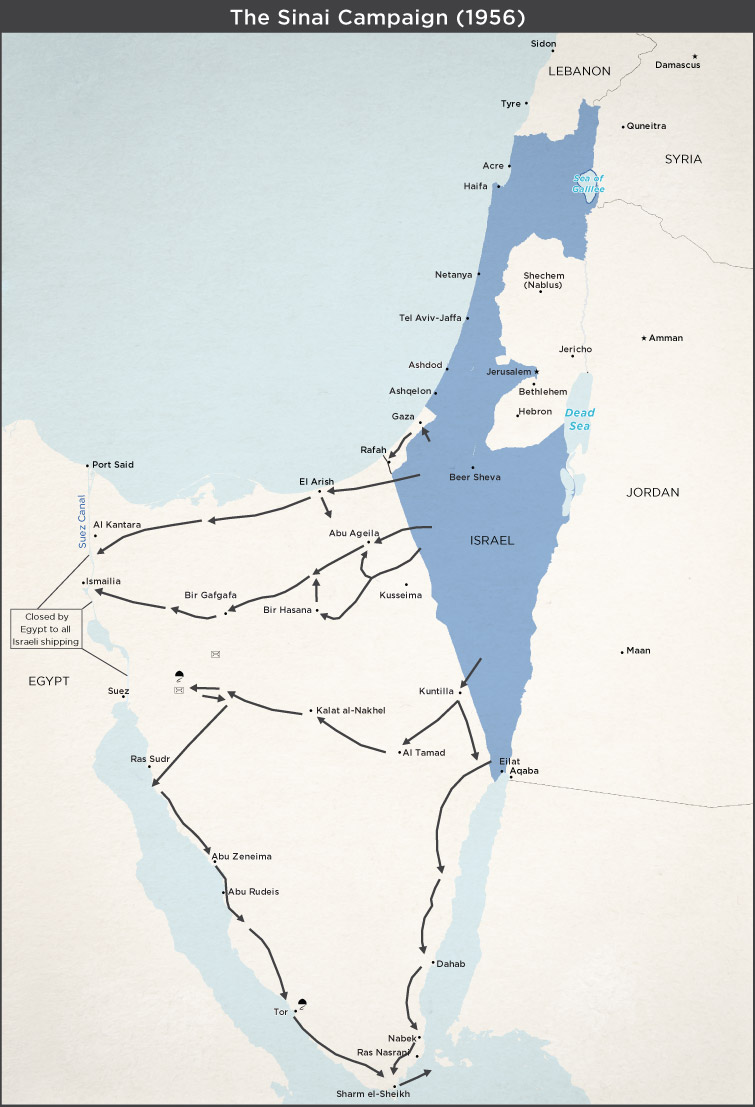 ABOVE: A map of the Sinai Campaign in 1956
The Events of the Suez Crisis: Its Causes
TIMELINE OF THE EVENTS LEADING TO THE CRISIS
OCTOBER 1954: A treaty was signed by Egypt and Britain with the following provisions:
- British troops must be withdrawn from Egypt by June 1956
- Egypt will respect the freedom of navigation in the Suez Canal
- British troops will be allowed to return if the Canal is threatened
FEBRUARY 1955: British Prime Minister Anthony Eden decided to deprive Egypt's President Nasser of British arms promised to them. Relations between the two countries worsened with this move. Nasser then purchased equipment, aircraft, and tanks from Czechoslovakia to be used to attack Israel.
JANUARY 1956: The United States and Britain committed to provide financial assistance to Egypt in building the Aswan Dam. However, concerns over Nasser's actions of purchasing arms from Czechoslovakia, a known ally of the Soviet Union, brought support into question.
The Events of the Suez Crisis: Its Causes
TIMELINE OF THE EVENTS LEADING TO THE CRISIS
- JULY 1956: Both the US and Britain withdrew their financial support for the dam project. The World Bank also refused to provide the promised $200 million loan to Egypt.
- JULY 26, 1956: In retaliation, Nasser nationalised the Suez Canal. He stated that revenues from the Canal would be used to fund the Aswan Dam project.
- RESULT OF SUEZ CANAL NATIONALISATION: British Prime Minister Eden said that Nasser's decision clearly violated the treaty signed in October 1954. He then decided on military intervention by British forces in Egypt. However, the United States refused to provide any support for any military intervention in the area.
- OCTOBER 1956: A secret agreement was entered into by France, Britain, and Israel in Paris, which aimed for Israel to capture Sinai and invade Egypt and the Suez Canal. On October 29, Israel's troops went to the Sinai Peninsula and, two days later, both British and French troops went to the Canal.
The Events of the Suez Crisis
- October 31, 1956 British forces began to bomb Cairo. The United States appealed for a resolution to the crisis.
- November 5, 1956 Paratroopers from France and Britain landed on the western part of Port Said.
- November 6, 1956 The United Nations expressed its condemnation of the actions of France and Britain, following the aggression at the Canal. For its part, the United States wanted to improve ties with the Arab states, and was against the interventions by France and Britain.
- November 6, 1956 The US government demanded Britain withdraw from Egypt or face having US aid withdrawn. The Soviet Union threatened to intervene.
The Concluding Events of the Suez Crisis
- November 6, 1956 The United Nations declared a ceasefire and immediately ordered troops from France and Britain be withdrawn from the Canal.
- November 7, 1956 Troops from France and Britain continued to occupy most of the areas in the Suez Canal.
- November 21, 1956 An emergency force was sent by the United Nations to the Suez Canal to address the crisis.
- November 23 to December 22, 1956 France and Britain began to withdraw their troops from the Suez Canal, which concluded on December 22.
The Significance of the Suez Crisis
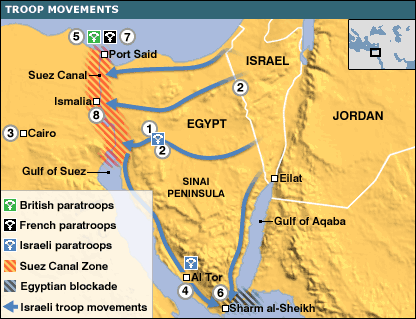 A map depicting troop movement during the Suez Crisis
The Importance of the Crisis to Egypt and the Arab World
- Egyptian media portrayed Nasser as a great hero of the Arab world for his anti-Western imperialist policies.
- According to the media, it was Nasser's courageous act of standing up against British and French forces that drove them out of the Canal. In April 1957, the Canal was reopened.
- The Suez Crisis also brought unity and nationalism to Arab states, thus, prompting the formation of the United Arab Republic.
Establishing the United Arab Republic (UAR)
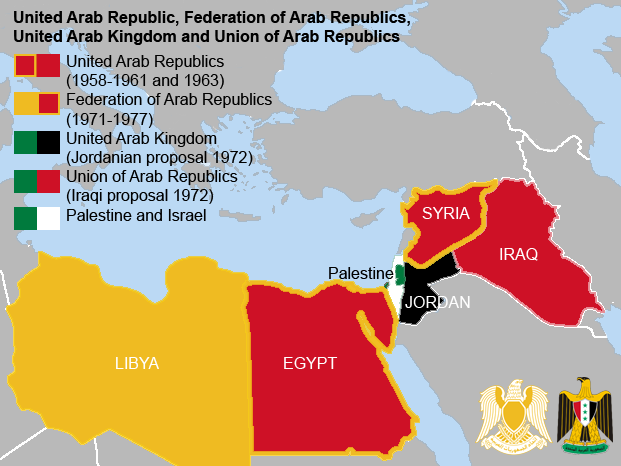 Union Arab Republic Map (See red with yellow outline)
After the Suez Canal crisis, massive Anti-West demonstrations and riots happened in most cities and towns of the Arab states. In addition, both Saudi Arabia and Syria called off their diplomatic relations with France and Britain. With these developments, a military pact was signed by Jordan, Syria, and Egypt. In 1958, at the request of Syrian leaders, the United Arab Republic was established. The UAR was the union of both Syria and Egypt that was seen to plant seeds of forming a pan-Arab state. However, this union of Syria and Egypt was short lived as disappointment on the lack of economic gains was expressed by Syria. The UAR ended in 1961.
The Importance of the Crisis to Israel
- Israeli forces were strengthened by the events that happened in 1956, particularly the attack in Sinai and Gaza.
- A UN-controlled buffer zone on the border between Israeli and Egyptian territories provided a sense of security and tightened activities by the fedayeen.
- Nasser was forced to reopen the Gulf of Aqaba, but the Suez Canal was closed to Israeli shipping by Egypt.
The Consequences of the Crisis to Great Britain
- The Suez Crisis concluded the influence of Britain in Egypt. This took a toll on Prime Minister Eden's political reputation and career, which led him to resign in January 1957.
- The crisis was a failure on the part of Britain, as plans to overthrow Nasser failed. Both France and Britain did not anticipate the events that happened, especially the response of the US.
Note
Glossary of terms
ARAB WORLD
It typically refers to Arab-speaking countries located from the Atlantic Ocean in the west, Arabian Sea in the east, Mediterranean Sea in the northernmost part of Africa, and Indian Ocean in the southeast.
NATIONALISATION
Transfer of a major industry or commerce to the control of the State.
TRIPARTITE
A term that refers to the involvement of three parties.
PACT
It is a term that refers to the agreement, compact, or covenant entered into by parties.
UNITED ARAB REPUBLIC
The union between Syria and Egypt established in 1958 but abruptly ended.