Cromwell's fall (Edexcel GCSE History): Revision Notes
📚Revision Notes
Cromwell's fall, 1540
Introduction
Thomas Cromwell met his end on 28 July 1540, executed for treason after serving as Henry VIII's most powerful minister for over a decade. His dramatic downfall came just months after Henry had rewarded him with the title Earl of Essex in April 1540, showing how quickly fortunes could change in Tudor politics. The failure of Henry's marriage to Anne of Cleves provided the catalyst, but Cromwell's fall was the result of multiple political, religious and personal factors that had been building for some time.
Note
Cromwell's downfall demonstrates the complex interplay of personal rivalries, religious tensions, and political opportunism that characterised Henry VIII's court. His case shows how even the most powerful ministers could fall from grace when multiple factors aligned against them.
The chronological fall of Cromwell
The events leading to Cromwell's execution unfolded rapidly during the summer of 1540. On 15 June 1540, Cromwell attended what he thought was a routine Privy Council meeting, only to find himself arrested on charges of treason and heresy.
Example
The Dramatic Arrest Scene
The arrest itself was a carefully orchestrated humiliation. The Duke of Norfolk personally tore the seals of office from around Cromwell's neck, symbolically stripping him of his power in front of the assembled council. His possessions, valued at £7000, were immediately seized by the crown - a substantial fortune that demonstrated just how wealthy and powerful Cromwell had become.
The legal process that followed was swift and brutal. Parliament passed an Act of Attainder on 29 June, which meant Cromwell was condemned to death without a proper trial - a cruel irony given that he had used this same legal weapon against others during his career.
Important
The use of the Act of Attainder against Cromwell was particularly ruthless. This legal mechanism allowed Parliament to condemn someone without trial, and Cromwell had previously used it against his own enemies. His execution on 28 July 1540 coincided with Henry's marriage to Catherine Howard - a timing that was almost certainly deliberate.
Despite writing a letter proclaiming his innocence and begging Henry for mercy, describing himself as Henry's "most faithful servant", Cromwell was executed on 28 July, the very same day that Henry married Catherine Howard.
The Duke of Norfolk's crucial role
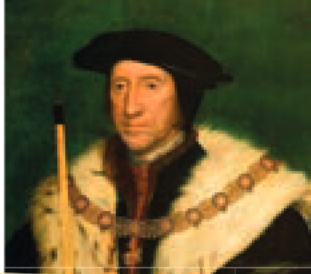
Thomas Howard, the 3rd Duke of Norfolk, played a decisive role in engineering Cromwell's downfall. As Catherine Howard's uncle, Norfolk had significant influence at court and harboured deep resentment towards Cromwell for several reasons. The Duke despised Cromwell's support for Protestant religious reforms, viewing them as dangerous to traditional Catholic values. He was also intensely jealous of how Cromwell, a man from humble blacksmith origins, had risen to become an earl and Henry's most trusted advisor.
Norfolk recognised that the failure of Henry's marriage to Anne of Cleves presented a perfect opportunity to destroy the relationship between Cromwell and the king. He orchestrated a campaign to poison Henry's mind against his chief minister, instructing his niece Catherine Howard to spread rumours that Cromwell was incompetent and had deliberately delayed the annulment process. Norfolk also falsely claimed that Cromwell wanted to force Protestant reforms on England against Henry's wishes, painting him as a dangerous radical who was manipulating the king.
Note
Norfolk's campaign against Cromwell reveals the sophisticated nature of Tudor court intrigue. By using his family connections and exploiting religious tensions, Norfolk was able to turn the king against his most trusted minister through a combination of false accusations and carefully timed political pressure.
Additional reasons for Cromwell's fall
Beyond Norfolk's scheming, Cromwell faced opposition from multiple directions that made his position increasingly vulnerable. French Catholics, particularly King Francis I, despised Cromwell as a supporter of Charles V and Protestant reform. Removing Cromwell from power would potentially improve Anglo-French relations and reduce the threat of Catholic crusade against England.
Within England itself, Cromwell had accumulated numerous enemies through his radical policies. His dissolution of the monasteries had created resentment among those who lost property, positions or religious traditions. Many courtiers and Church officials viewed him as an "evil counsellor" who had misled the king and pushed England too far towards Protestantism. These enemies were more than willing to support the Act of Attainder that led to his execution, seeing it as righteous punishment for his reforms.
The court atmosphere had also turned against religious reform by 1540, with many nobles preferring a return to more traditional Catholic practices while maintaining Henry's supremacy over the English Church.
Henry's decision to execute Cromwell
Henry faced pressure from three main sources when deciding Cromwell's fate, each pushing him towards execution for different reasons. The Duke of Norfolk represented the traditionalist Catholic faction at court, constantly whispering that Cromwell was leading England into dangerous Protestant territory. The Church hierarchy, while accepting Henry's supremacy, opposed Cromwell's radical dissolution policies and reforms that threatened their remaining power and wealth.
The broader court community had grown hostile to Cromwell, viewing his rapid rise and accumulation of wealth with suspicion and envy. Henry's own ill-health contributed to the decision, as his bad temper and hasty decision-making became more pronounced during this period. The king felt deceived by the Anne of Cleves marriage and needed someone to blame for this diplomatic and personal embarrassment.
Important
Henry's later regret reveals the tragic nature of Cromwell's fall. By 1541, Henry claimed that his courtiers had deceived him about Cromwell and that he had lost his "most faithful servant" through their manipulation - though this admission came too late to save Cromwell's life.
Timeline of key events
- April 1540: Henry awards Cromwell the title Earl of Essex
- 15 June 1540: Cromwell arrested at Privy Council meeting
- 29 June 1540: Parliament passes Act of Attainder condemning Cromwell
- 28 July 1540: Cromwell executed; Henry marries Catherine Howard same day
- 1541: Henry claims he was deceived by his courtiers about Cromwell
Summary
Key Points to Remember:
- Cromwell's fall was rapid - from Earl to executed in just three months, showing the dangerous nature of Tudor court politics
- Multiple enemies combined against him - the Duke of Norfolk, French Catholics, English traditionalists and court rivals all wanted Cromwell removed
- Religious tensions were central - the conflict between Protestant reform and Catholic tradition provided the ideological backdrop to political rivalry
- The Anne of Cleves marriage failure was the catalyst that gave Cromwell's enemies their opportunity to strike
- Henry later regretted the decision - demonstrating how court pressure and ill-health influenced the king's judgement in 1540