Opposition from Thomas More (Edexcel GCSE History): Revision Notes
📚Revision Notes
Opposition from Thomas More
Who was Thomas More?
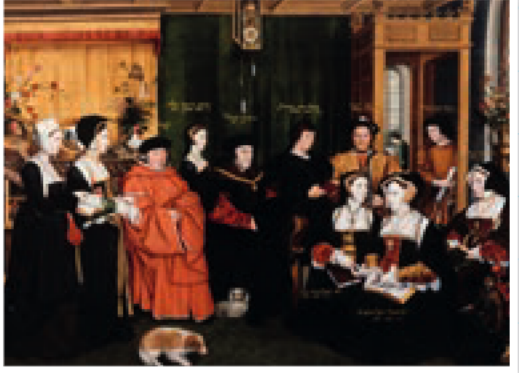
Sir Thomas More was one of the most significant opponents of Henry VIII's religious reforms. He became Henry's Lord Chancellor in 1529 after Cardinal Wolsey's fall from grace, making him one of the most powerful men in England at the time.
More was much more than just a politician - he was a renowned Renaissance scholar and thinker whose reputation extended throughout Europe. His greatest intellectual achievement was writing "Utopia", a groundbreaking book that described an ideal society. This work established him as one of the leading humanist thinkers of his age.
Despite his scholarly reputation, More held strong Catholic beliefs that would ultimately lead to conflict with his king. He was a devout Catholic who viewed Protestant reformers and Martin Luther as dangerous criminals. In his words, he saw them as people who "bespatter the most holy image of Christ crucified with the most foul excrement of their bodies." This harsh language reveals the intensity of his religious convictions.
Important
As Chancellor between 1529 and 1532, More actively worked against Protestant influence in England. He suppressed Protestant literature by burning books and hunted down suspected Protestant heretics, whom he accused of heresy. During his time in office, six Protestants were burned to death for their beliefs.
The developing conflict with Henry VIII
More's opposition to Henry's religious policies grew stronger as the king moved further away from Catholic doctrine. The breaking point came when Henry demanded that his subjects take the Oath of Succession, which required them to accept his marriage to Anne Boleyn and reject papal authority.
Note
This created an impossible situation for More. His Catholic faith meant he could not accept Henry's break from Rome or his divorce from Catherine of Aragon. At the same time, his position as a royal servant demanded loyalty to the king. This moral dilemma would ultimately cost him his life.
Timeline of Thomas More's downfall
1532 - More resigned from his position as Lord Chancellor because he could no longer support Henry in his determination to divorce Catherine of Aragon and reject papal authority. He chose to retire from public life rather than compromise his religious beliefs.
13 April 1534 - Henry forced More to take the Oath of Succession, which acknowledged Henry's supremacy over the Church and the validity of his marriage to Anne Boleyn. More refused to take the oath, making his opposition clear.
17 April 1534 - As punishment for his refusal, More was sent to the Tower of London. Even while imprisoned, he maintained that he would not take the oath because doing so would be committing treason against his conscience and God.
1 July 1535 - After more than a year in prison, More was finally put on trial. Despite several visits from Thomas Cromwell attempting to persuade him to change his mind, More held firm. Evidence was presented that he had spoken against Henry's break from Rome, though this evidence was likely fabricated. Nevertheless, it was enough to find him guilty of treason.
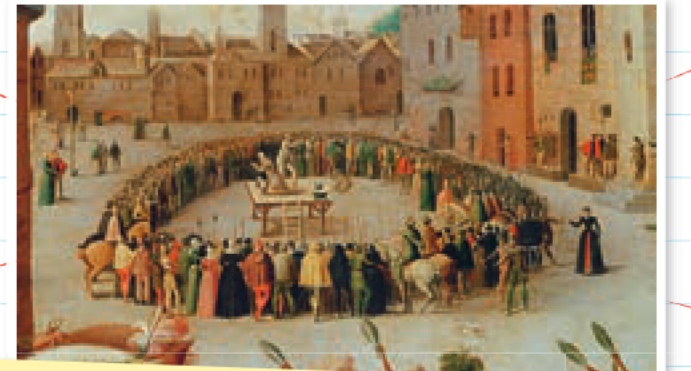
6 July 1535 - Thomas More was executed on Tower Hill, becoming a martyr for the Catholic cause.
Note
The timeline shows how quickly More's situation deteriorated - from resignation in 1532 to execution just three years later. This demonstrates Henry's growing intolerance of any opposition to his religious reforms.
The significance of Thomas More's opposition
More's resistance to Henry's reforms had consequences that extended far beyond England's borders. As one of Europe's most respected intellectuals, his execution sent shockwaves across the continent and damaged Henry's international reputation significantly.
The execution created several important consequences. First, it demonstrated that Henry would not tolerate opposition to his religious policies, regardless of a person's status or reputation. The message was clear - even the most distinguished scholars and former royal servants were not beyond the king's reach if they opposed his will.
Second, More's death made him a powerful symbol for Catholic resistance to Protestant reform. He became a martyr for the Catholic cause, inspiring others who opposed Henry's break with Rome. This encouraged unrest and rebellion among Catholics who saw More as someone who had died for defending the true faith.
Third, the execution damaged England's relationship with Catholic Europe. Foreign leaders, including Charles V, were outraged by the death of such a distinguished figure. This international criticism discredited Henry and made Catholic rulers more likely to view England as a dangerous Protestant state that threatened traditional Christian values.
Finally, More's execution accelerated the split between England and Rome. The Pope was so angered by More's death that he threatened to excommunicate Henry, further widening the gap between the English Church and Catholic Europe.
Important
The execution was deliberately designed as a warning to the nobility and other potential opponents that no one, regardless of their position or reputation, was beyond the king's authority. Henry wanted to make it clear that opposition to his religious reforms would not be tolerated.
Remember!
Summary
Key Points to Remember:
-
Thomas More was Henry VIII's Lord Chancellor and a famous Renaissance scholar who wrote "Utopia" and was respected throughout Europe
-
More's Catholic beliefs made it impossible for him to accept Henry's break with Rome - he refused to take the Oath of Succession in 1534
-
The timeline of More's downfall was swift - from resignation in 1532 to execution in July 1535, showing Henry's growing intolerance of opposition
-
More's execution had significant international consequences - it damaged Henry's reputation across Europe and made him a Catholic martyr
-
His death demonstrated Henry's determination to eliminate all opposition to his religious reforms, regardless of a person's status or previous service to the crown