The Brezhnev Doctrine and Soviet control in Czechoslovakia (Edexcel GCSE History): Revision Notes
📚Revision Notes
The Brezhnev Doctrine and Soviet control in Czechoslovakia
Background: The crisis in Czechoslovakia
In 1968, Czechoslovakia became the centre of a major Cold War crisis when Alexander Dubček, the country's leader, introduced a series of political and economic reforms. These changes, which became known as the Prague Spring, aimed to create "socialism with a human face" by allowing greater freedoms and reducing Soviet control over Czech society.
However, Soviet leader Leonid Brezhnev viewed these reforms as a dangerous threat to communist unity and Soviet dominance in Eastern Europe. The situation escalated quickly, leading to one of the most significant confrontations of the Cold War period.
Note
The term "socialism with a human face" became the rallying cry of the Prague Spring, representing an attempt to create a more democratic and liberal form of communist government that would still maintain allegiance to socialist principles while allowing greater individual freedoms.
Brezhnev's response to Dubček's reforms
Brezhnev's reaction to the Czechoslovak reforms was swift and decisive, driven by several key concerns:
Fear of losing control: Brezhnev recognised that allowing the reforms to continue could weaken Soviet authority throughout the Warsaw Pact. Any sign of weakness in controlling member states might encourage similar independence movements elsewhere in Eastern Europe, potentially leading to the collapse of the entire Soviet sphere of influence.
Failed diplomatic pressure: Initially, Brezhnev attempted to convince Dubček to abandon his reform programme through political pressure and negotiations. When these diplomatic efforts proved unsuccessful, the Soviet leader decided that more drastic action was necessary.
Important
The failure of diplomatic pressure marked a crucial turning point - it showed that Brezhnev was willing to use military force when political persuasion failed, setting a dangerous precedent for future Soviet interventions in Eastern Europe.
Military intervention: In August 1968, Brezhnev authorised the invasion of Czechoslovakia by Warsaw Pact forces. Soviet tanks rolled into Prague and other major cities, effectively crushing the reform movement and arresting Dubček.
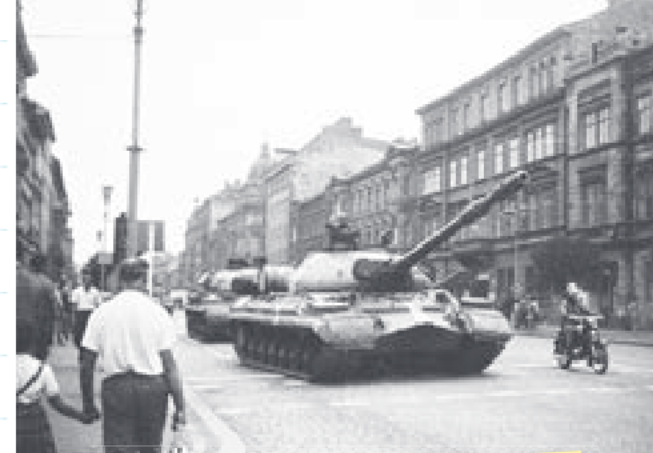
Return to strict control: Following the invasion, Czechoslovakia was placed under "normalisation" - a process that restored rigid Soviet-style communist control. Gustav Husák replaced Dubček as leader, ensuring that the country would once again follow Moscow's directives without question.
The establishment of the Brezhnev Doctrine
The invasion of Czechoslovakia prompted Brezhnev to formalise his approach to maintaining Soviet control over Eastern Europe. In November 1968, he announced what became known as the Brezhnev Doctrine, which fundamentally changed the relationship between the Soviet Union and its satellite states.
The doctrine declared that the Soviet Union had the right to intervene militarily in any Eastern bloc country where socialism was perceived to be under threat. This meant that no Warsaw Pact member could pursue independent policies that diverged significantly from Soviet-approved communist ideology. Essentially, Brezhnev was stating that national sovereignty was less important than maintaining communist unity under Soviet leadership.
Important
Core Principle of the Brezhnev Doctrine:
The doctrine established "limited sovereignty" for Eastern European nations - they could govern themselves only as long as their policies remained acceptable to Moscow. This represented a fundamental rejection of true national independence within the Soviet sphere of influence.
Consequences of the Brezhnev Doctrine
The announcement and implementation of the Brezhnev Doctrine had far-reaching effects across the Cold War landscape:
Strengthened Soviet control: The doctrine gave the Soviet Union a clear legal justification (from their perspective) for intervening in Eastern European affairs. This declaration served as a warning to other potential reformers that any attempts at independence would be met with force.
American condemnation: The United States strongly criticised the invasion of Czechoslovakia and the Brezhnev Doctrine. However, despite this condemnation, America took no direct military action to stop the Soviet intervention, fearing that such involvement could escalate into a full-scale war between the superpowers.
Note
The American response highlighted the limitations of superpower influence during the Cold War. While the US condemned Soviet actions, the risk of nuclear confrontation prevented direct military intervention, demonstrating the delicate balance that characterised Cold War diplomacy.
Impact on Western communist parties: Communist parties throughout Western Europe were horrified by the brutal suppression of the Prague Spring. Many declared their independence from Moscow's direction, arguing that they could no longer support Soviet policies that involved crushing popular reform movements.
Weakening Soviet influence: Paradoxically, while the doctrine strengthened direct Soviet control over core Eastern European states, it also pushed some countries further away. Yugoslavia and Romania, both communist nations but outside direct Soviet control, distanced themselves further from Moscow, concerned about potential future interventions.
The importance of the Soviet invasion of Czechoslovakia
The 1968 invasion marked a crucial turning point in the Cold War for several reasons. It demonstrated that the Soviet Union was willing to use military force to maintain its sphere of influence, even against fellow communist countries seeking reform. The establishment of the Brezhnev Doctrine created a framework that would govern Soviet-Eastern European relations for the next two decades.
The invasion also showed other Eastern European nations that attempts at significant political reform would not be tolerated. This understanding helped maintain relative stability in the region throughout the 1970s and early 1980s, though it came at the cost of suppressing legitimate aspirations for greater freedom and self-determination.
Summary
Key Impacts of the 1968 Invasion:
- Established the precedent for Soviet military intervention in Eastern Europe
- Created the legal framework (Brezhnev Doctrine) for future interventions
- Deterred reform movements across the Warsaw Pact for decades
- Damaged Soviet relationships with Western communist parties
- Reinforced the division of Europe during the Cold War
Timeline of key events (1968)
- January 1968: Alexander Dubček becomes leader of Czechoslovakia and begins introducing reforms
- Spring 1968: The Prague Spring reforms gain momentum, including greater press freedom and political liberalisation
- August 20-21, 1968: Warsaw Pact forces invade Czechoslovakia; Dubček is arrested
- August-September 1968: "Normalisation" process begins under Soviet supervision
- November 1968: Brezhnev formally announces the Brezhnev Doctrine
- 1969: Gustav Husák replaces Dubček as Czechoslovak leader
Summary
Key Points to Remember:
-
The Prague Spring of 1968 represented an attempt by Czechoslovakia to reform communist rule while remaining within the Soviet sphere of influence
-
Brezhnev invaded Czechoslovakia in August 1968 because he feared that allowing reforms would encourage similar independence movements throughout Eastern Europe
-
The Brezhnev Doctrine established the Soviet Union's right to intervene militarily in any Eastern bloc country where communist rule was threatened
-
The doctrine strengthened Soviet control over core Eastern European states but damaged Moscow's reputation among Western communist parties
-
The invasion demonstrated that the Cold War superpowers would use force to maintain their spheres of influence, even against their own allies