The Cuban Missile Crisis: origins (Edexcel GCSE History): Revision Notes
📚Revision Notes
The Cuban Missile Crisis: origins
Background to the crisis
The Cuban Missile Crisis didn't happen overnight - it developed from a series of events that began in the late 1950s. Understanding these origins helps us see how Cold War tensions escalated into one of the most dangerous moments in human history.
Note
Understanding the background to major historical events is crucial for grasping why they occurred and how they could have been prevented. The Cuban Missile Crisis had deep roots in US-Cuban relations that stretched back years before the actual crisis.
Cuba before 1959: an American ally
Before the Cuban Revolution, Cuba maintained very close ties with the United States. American businesses owned many Cuban companies, and the two countries had strong economic relationships. The Cuban government, led by Fulgencio Batista, was friendly to American interests and allowed significant US influence over Cuban affairs.
However, Batista's government was also corrupt and unpopular with many Cubans, setting the stage for revolutionary change.
Note
The economic relationship between Cuba and the US was so strong that Cuba was essentially an American economic dependency, with US companies controlling much of Cuba's sugar industry, utilities, and other key sectors.
The Cuban Revolution and Castro's rise to power
In 1959, a socialist revolution transformed Cuba completely. Fidel Castro and his revolutionary forces overthrew Batista's government, fundamentally changing Cuba's relationship with both the United States and the wider world.
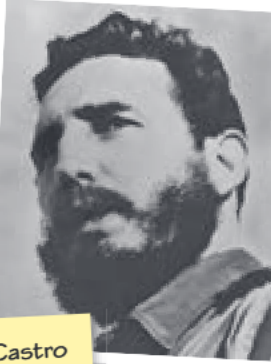
The revolution created immediate problems for US-Cuban relations. Castro's new government opposed American influence and began implementing socialist policies that threatened US business interests in Cuba. Instead of maintaining the previous close relationship with America, Castro started developing economic ties with the Soviet Union, including trading Soviet oil for Cuban sugar.
Important
The Cuban Revolution was a complete transformation - it wasn't just a change of government, but a fundamental shift from capitalism to socialism, from US alignment to Soviet alignment, and from American economic dominance to Cuban independence.
American responses to Castro's government
The United States government reacted strongly to Castro's socialist revolution, viewing it as a threat to American interests in the region. The Americans were particularly concerned about having a socialist country so close to their borders, especially one that was developing relationships with the Soviet Union.
Economic and political pressure
The US government refused to officially recognise Castro's government because they didn't want a socialist country within their sphere of influence. This was particularly concerning given Cuba's growing connections with the Soviet Union, America's main Cold War opponent.
CIA operations against Castro
The Central Intelligence Agency (CIA) took more direct action against the Cuban leader. They attempted to assassinate Fidel Castro, though these efforts were unsuccessful. The CIA also developed plans for a more comprehensive solution to what they saw as the "Castro problem."
Important
The CIA's assassination attempts against Castro were part of a broader pattern of covert operations during the Cold War. These failed attempts would later convince Castro that he needed Soviet protection to survive American hostility.
The agency convinced President Kennedy that a US-supported invasion of Cuba could successfully overthrow Castro's government and restore a pro-American leadership to the island.
The Bay of Pigs invasion - 17 April 1961
The Bay of Pigs invasion represented the most significant American attempt to remove Castro from power. This operation would have crucial consequences for US-Cuban relations and the broader Cold War.
The CIA's plan
The CIA presented President Kennedy with what seemed like a viable strategy:
- The invasion would appear to be a Cuban revolt rather than an American operation
- They had trained Cuban exiles and disguised old US planes to look Cuban
- They believed Castro's control over Cuba was weak
- They assumed most Cubans disliked Castro and would support the invasion
What actually happened
Example
The Bay of Pigs Reality Check: Plan vs. What Actually Happened
The Plan: A covert operation that would look like a Cuban uprising The Reality: The planes were immediately recognised as US aircraft and photographed
The Plan: Cuban exiles would be supported by a popular uprising The Reality: Information about the invasion was published, revealing American organisation
The Plan: Castro's weak control would crumble under pressure The Reality: Castro knew about the invasion plans in advance and was prepared
The Plan: 1,400 US-backed troops would be enough The Reality: They faced 20,000 of Castro's well-prepared soldiers and were forced to surrender
The Plan: Cubans would welcome the return of a pro-American government The Reality: Most Cubans did not support the invasion because they didn't want the corrupt former leader Batista to return
Consequences of the Bay of Pigs invasion
The failed invasion had several major impacts that would directly contribute to the Cuban Missile Crisis:
End of US-Cuban relations
The Bay of Pigs invasion destroyed any remaining possibility of friendly relations between the United States and Cuba. The invasion proved to Castro that America was actively trying to overthrow his government.
Castro's communist declaration
Following the invasion, Castro publicly announced that he was a communist. This declaration formally aligned Cuba with the Soviet Union and communist ideology, making it an official enemy of the United States in Cold War terms.
Important
Castro's communist declaration was a direct result of the Bay of Pigs invasion. Before this, he had been socialist but not explicitly communist. The failed US invasion pushed him fully into the Soviet camp.
Strengthened Soviet-Cuban alliance
Cuba and the Soviet Union began building much closer ties, including agreements for military defence. This new alliance would soon lead to the Soviet Union placing nuclear missiles in Cuba, creating the Cuban Missile Crisis of 1962.
Timeline of key events
- 1959: Cuban Revolution brings Castro to power; Cuba begins developing ties with Soviet Union
- 1959-1960: US refuses to recognise Castro's government; CIA begins planning operations against Cuba
- 1960-1961: CIA attempts to assassinate Castro; Plans for Bay of Pigs invasion developed
- 17 April 1961: Bay of Pigs invasion fails catastrophically
- Late 1961: Castro declares Cuba a communist state; Soviet-Cuban military cooperation begins
Summary
Key Points to Remember:
- The Cuban Revolution in 1959 transformed Cuba from a US ally into a socialist state aligned with the Soviet Union
- The failed Bay of Pigs invasion in April 1961 was a major turning point that pushed Cuba firmly into the Soviet sphere of influence
- Castro's rise to power and America's hostile response created the conditions that would lead directly to the Cuban Missile Crisis
- The Bay of Pigs failure demonstrated that the US was willing to use military force against Cuba, convincing Castro he needed Soviet protection
- These events show how Cold War tensions could escalate quickly from political disagreements to military confrontations