The fall of the Berlin Wall (Edexcel GCSE History): Revision Notes
📚Revision Notes
The fall of the Berlin Wall
The dramatic collapse of the Berlin Wall in November 1989 marked one of the most significant moments in the end of the Cold War. This event not only led to German reunification but also symbolised the broader collapse of Soviet control across Eastern Europe, fundamentally changing superpower relations.
The events leading to the fall
During the summer of 1989, pressure for political change had been mounting across East Germany. Citizens began organising public demonstrations in major cities, with Leipzig becoming a particular centre of protest activity. The communist leadership, led by Eric Honecker, found itself increasingly isolated as Soviet leader Mikhail Gorbachev made it clear that Moscow would not intervene militarily to suppress these growing demands for reform.
Note
Gorbachev's policy of non-intervention marked a dramatic departure from previous Soviet responses to uprisings in Eastern Europe, such as the interventions in Hungary (1956) and Czechoslovakia (1968).
The situation became untenable for Honecker when Gorbachev refused to provide assurances that Soviet forces would help crush the protests. Recognising that his hardline approach was no longer viable, Honecker resigned from power and was replaced by the more moderate Egon Krenz, who proved more willing to consider political reforms.
A crucial development occurred when Hungary began implementing democratic reforms, creating new opportunities for East Germans seeking to reach the West. East German citizens could now travel through Czechoslovakia and Hungary to reach West Germany, effectively bypassing the heavily guarded border between East and West Germany.
Important
The pivotal moment came on November 9, 1989, when the East German government made a momentous announcement: East Germans would now be permitted to travel directly to West Germany. This decision immediately triggered massive celebrations as thousands of jubilant East and West Germans gathered at the Berlin Wall.
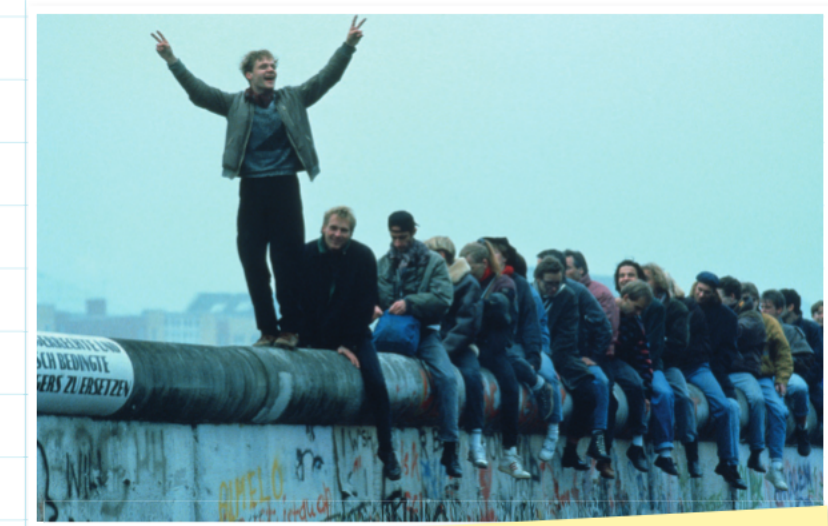
Citizens from both sides began physically attacking the wall with hammers, pickaxes, and any tools they could find, chipping away at the concrete barrier that had divided their city for nearly three decades.
The significance for Germany
The fall of the Berlin Wall had immediate and lasting consequences for Germany as a nation. Most importantly, it paved the way for German reunification, which was officially completed in 1990. East Germany ceased to exist as a separate state and became part of a united Germany, with Berlin restored as the nation's capital.
This reunification process was accompanied by significant geopolitical changes. The Soviet Union withdrew its military forces from what had been East Germany, ending decades of occupation. However, British, French, and American troops remained stationed in western Germany, reflecting the continued Western military presence in the region.
Note
The economic and social integration of the former East Germany into the unified German state would prove to be a complex and ongoing challenge, requiring massive investment and social adjustment programmes that continued for decades.
The economic and social integration of the former East Germany into the unified German state would prove to be a complex and ongoing challenge, but the political reunification represented a triumph for the principle of national self-determination.
The impact on superpower relations
The fall of the Berlin Wall accelerated broader changes in the relationship between the United States and Soviet Union. The event provided crucial momentum for what was already being called the "thaw" in Cold War tensions.
One of the most significant developments was the dissolution of the Warsaw Pact in July 1991. This military alliance, which had been the Soviet Union's answer to NATO, simply ceased to exist as its member states pursued independent foreign policies. Meanwhile, NATO not only survived but actually expanded to include many former Warsaw Pact members, including Poland and Hungary.
Note
This transformation of European security architecture represented one of the most dramatic geopolitical shifts of the 20th century, as former enemies became allies and military blocs were completely restructured.
The changing military situation in Europe led to important arms control agreements. The Conventional Forces in Europe (CFE) Agreement, signed in 1990, established limits on non-nuclear military forces deployed across the continent. This was followed by the Strategic Arms Reduction Treaty (START) in 1991, in which the United States and Soviet Union committed to reducing their nuclear arsenals by approximately one-third, with additional promises of further reductions.
These developments marked a fundamental shift from the military confrontation that had characterised the Cold War to a new era of cooperation and arms limitation between the superpowers.
Timeline of key events
- Summer 1989: Public demonstrations begin in East German cities, particularly Leipzig
- October 1989: Eric Honecker resigns and is replaced by Egon Krenz
- November 9, 1989: East German government announces citizens can travel to West Germany
- November 10, 1989: Citizens celebrate on top of the Berlin Wall as it begins to be dismantled
- 1990: German reunification completed with Berlin as capital; CFE Agreement signed
- 1990 onwards: Soviet troops withdraw from Eastern Europe
- July 1991: Warsaw Pact officially dissolved
- 1991: START Treaty signed between USA and Soviet Union
Summary
Key Points to Remember:
- The Berlin Wall fell in November 1989 due to mounting pressure for change in East Germany and Gorbachev's refusal to support military intervention
- German reunification was completed in 1990, ending the division that had lasted since the end of World War II
- The fall accelerated the end of the Cold War by contributing to the dissolution of the Warsaw Pact in 1991
- It led to important arms reduction treaties including the CFE Agreement (1990) and START Treaty (1991)
- The event symbolised the broader collapse of Soviet control in Eastern Europe and marked a shift from confrontation to cooperation between the superpowers