The Truman Doctrine and the Marshall Plan (Edexcel GCSE History): Revision Notes
📚Revision Notes
The Truman Doctrine and the Marshall Plan
Introduction
Following World War II, the relationship between the USA and Soviet Union rapidly deteriorated as both superpowers competed for influence in war-torn Europe. The United States became increasingly concerned about Soviet expansion in Eastern Europe and developed two major policies in 1947 to counter this threat: the Truman Doctrine and the Marshall Plan. These policies marked a significant shift in American foreign policy and played a crucial role in escalating Cold War tensions.
Note
The year 1947 marked a pivotal moment in world history, as the United States abandoned its traditional isolationist stance to become actively involved in preventing the spread of communism globally.
The context: post-war European crisis
Europe faced an unprecedented crisis after the war ended in 1945. The continent lay in ruins, with millions of people homeless, unemployed, and desperate for basic necessities. This desperate situation created fertile ground for communist ideas to take hold, as people looked for any solution to their suffering.
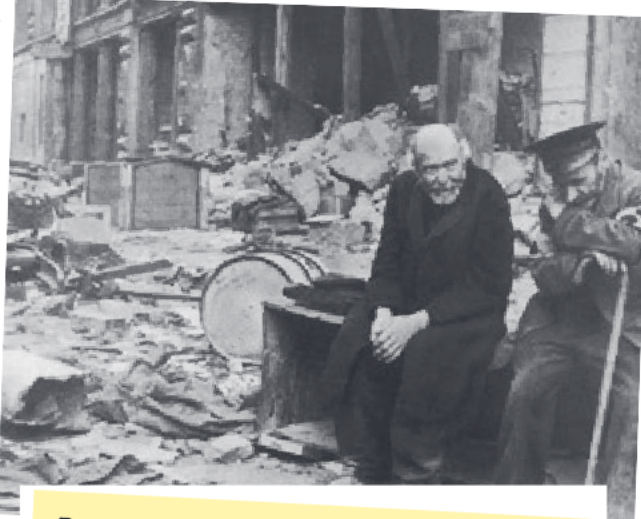
President Truman identified several key concerns that worried American policymakers. Many European countries had weak economies where people lacked jobs and hope for the future. Communist parties, particularly in France and Italy, were gaining popularity by promising to solve these problems and ensure everyone had enough to survive. The situation was made worse by the fact that several Eastern European nations, including Poland, Romania, and Bulgaria, already had communist governments installed by the Soviet Union.
Important
American leaders feared that if countries like Greece and Turkey fell to communism, it would trigger a domino effect across Europe and the Middle East. Some governments were simply too weak and poor to resist communist revolutions within their own borders, making American intervention seem necessary.
The Truman Doctrine (1947)
In a historic speech to Congress in 1947, President Harry Truman outlined what would become known as the Truman Doctrine. This policy fundamentally changed America's approach to international relations by committing the United States to active involvement in preventing the spread of communism worldwide.
The doctrine established several core principles that would guide American foreign policy for decades. First, Truman argued that all countries faced a critical choice between adopting either capitalist democracy or communist authoritarianism. He declared that communism was inherently harmful because it prevented people from exercising true freedom and self-determination.
Most importantly, the doctrine committed the United States to actively contain communist expansion rather than simply hoping it would stop on its own. This meant America would provide both financial assistance and military support when necessary to help free governments resist communist takeovers. The policy represented a complete departure from America's traditional isolationism and established the principle of containment that would define the Cold War era.
Note
The Truman Doctrine represented the first formal articulation of the containment strategy, which would become the cornerstone of American foreign policy throughout the Cold War period.
The Marshall Plan (1947)
Alongside the Truman Doctrine, the United States launched the Marshall Plan, named after Secretary of State George Marshall. This ambitious programme offered massive economic assistance to help rebuild war-damaged European countries and create prosperity that would make communism less appealing to desperate populations.
The scale of American generosity was unprecedented in world history. The United States committed approximately $13 billion (equivalent to over $150 billion today) to European reconstruction. This aid was not simply charity but a strategic investment designed to strengthen Western Europe economically and politically.
Example
Scale of the Marshall Plan Investment
To understand the magnitude of American commitment:
- Total aid: $13 billion (1947-1951)
- Modern equivalent: Over $150 billion
- Recipients: 16 Western European countries
- Condition: Countries had to adopt capitalist economic systems and trade with the US
The plan targeted sixteen Western European countries, including major powers like Britain, France, and West Germany. However, there was an important condition: recipient countries had to agree to trade with the United States and adopt capitalist economic systems. This requirement served dual purposes - it helped American businesses find new markets while ensuring that aid money supported democratic rather than communist development.
The Marshall Plan aimed to stop communist expansion by addressing its root causes. American planners understood that communism appealed most strongly to people suffering from poverty and economic instability. By providing the resources needed for economic recovery, the plan hoped to give Europeans a genuine stake in preserving capitalist democracy.
Soviet response and escalation
The Soviet Union viewed both the Truman Doctrine and Marshall Plan as direct threats to their sphere of influence in Eastern Europe. Soviet leaders criticised the Marshall Plan as an attempt by American capitalists to dominate European markets and undermine legitimate communist governments that had emerged after the war.
This Soviet opposition further deepened the ideological divide between East and West. The Marshall Plan effectively split Europe into two competing economic and political systems, with Western Europe receiving American aid while Eastern European countries remained under Soviet control. This division would become one of the defining features of the Cold War for the next four decades.
Important
The Soviet rejection of the Marshall Plan and their pressure on Eastern European countries to refuse American aid marked a critical escalation in Cold War tensions, formalising the division of Europe into opposing blocs.
Timeline of key events
- 1945: World War II ends, leaving Europe devastated
- 1947: President Truman announces the Truman Doctrine in speech to Congress
- 1947: George Marshall proposes the Marshall Plan for European recovery
- 1947-1951: Marshall Plan distributes $13 billion in aid to Western Europe
- 1947-1958: Truman Doctrine guides American containment policy worldwide
Significance and consequences
The Truman Doctrine and Marshall Plan represented a turning point in both American foreign policy and the development of the Cold War. For the first time in its history, the United States committed to permanent global leadership and intervention to prevent the spread of communism. These policies established the framework for American involvement in conflicts around the world for decades to come.
The economic success of the Marshall Plan helped rebuild Western Europe and created strong democratic allies for the United States. Countries that received aid experienced rapid economic growth and political stability, which validated the American approach to containing communism through prosperity rather than just military force.
However, these policies also contributed significantly to Cold War tensions by formalising the division of Europe into competing spheres of influence. The Soviet Union responded by tightening control over Eastern Europe and developing its own economic and military alliances to counter American influence.
Note
The success of these policies demonstrated that economic prosperity could be as effective as military force in preventing the spread of communism, establishing a model that would be used in American foreign policy for decades.
Remember!
Summary
Key Points to Remember:
- The Truman Doctrine (1947) established America's policy of containment, committing the US to prevent communist expansion worldwide through military and economic support
- The Marshall Plan (1947) provided $13 billion in aid to rebuild Western Europe and make communism less attractive to desperate populations
- These policies marked the end of American isolationism and the beginning of permanent global leadership in the fight against communism
- The Soviet Union criticised both policies as American attempts to dominate Europe, which further escalated Cold War tensions
- Both policies were highly successful in strengthening Western Europe economically and politically, creating lasting democratic allies for the United States