Civil rights achievements up to 1975 (Edexcel GCSE History): Revision Notes
📚Revision Notes
Civil rights achievements up to 1975
By 1975, significant advances had been made in many areas of civil rights across the United States. However, despite these important gains, racial equality remained an ongoing challenge with much work still to be done.
Progress during Nixon's presidency, 1969-74
During Richard Nixon's time in office, several important developments occurred in civil rights, though Nixon's motivations were often politically complex rather than purely idealistic.
Note
Nixon's approach to civil rights was unique among presidents - his policies achieved real progress, but were driven more by political strategy than moral conviction.
Key initiatives and policies
Nixon's administration introduced several programmes aimed at supporting Black Americans. These included expanded training opportunities for Black people who wanted to establish businesses in predominantly Black neighbourhoods. The government also provided favourable tax incentives to white-owned businesses that chose to expand their operations into Black communities.
One of the most significant developments was the promotion of job equality through what became known as "affirmative action" - a policy of deliberately selecting qualified Black candidates for employment positions. Additionally, more Black officials began working within the White House itself during this period.
Nixon's political calculations
Important
Nixon's approach to civil rights was heavily influenced by electoral politics. He recognised that he needed Black voters to support him, but he also had to balance this against white voters who remained opposed to civil rights progress.
This led Nixon to present civil rights improvements to white voters as a way to control Black political movements, suggesting it was about maintaining order rather than genuine equality.
Critics argued that Nixon's policies were patronising towards Black Americans, particularly his promotion of Black homeownership as a solution to prevent property destruction during civil unrest.
Concrete examples of progress
Example
Concrete Progress: Black Political Representation Growth
The period saw measurable improvements in Black political representation:
- 1964: Only 25 Black elected officials in Southern states
- 1970: Approximately 700 Black elected officials in Southern states
- Result: A dramatic increase of nearly 28 times more representation in just 6 years
A particularly notable milestone occurred in 1973 when Maynard Jackson was elected as Atlanta's first African-American mayor, demonstrating that Black candidates could successfully win major city leadership positions.
Overall civil rights movement achievements by 1975
The civil rights movement had accomplished substantial progress in desegregation across multiple areas of American society. Schools, public transportation, and restaurants had been successfully integrated in many parts of the country.
Note
While desegregation achieved major victories in public spaces and institutions, economic equality proved to be a much more persistent challenge requiring different approaches.
However, the movement's efforts to achieve economic equality proved more challenging. Despite campaigns like Martin Luther King Jr.'s Poor People's Campaign and various Black Panther Party initiatives, significant economic disparities persisted. By the 1970s, the wealth gap between the richest and poorest Americans remained largely dependent on racial factors, with Black Americans continuing to face worse employment prospects and lower wages for comparable work.
Federal government leadership in civil rights, 1965-75
The federal government played a crucial role in advancing civil rights through new legislation during this decade. In the early 1950s, both government officials and civil rights campaigners had hoped that enforcing changes through new laws would quickly transform attitudes and spread desegregation rapidly.
Legislative achievements
The government passed important new civil rights laws during this period. The 1970 Voting Rights Act prohibited state literacy tests in all states, removing a significant barrier to Black voting participation. The 1975 revision to the Voting Rights Act went further by explicitly protecting other racial minorities beyond just Black Americans.
Mixed results of government efforts
Important
By 1970, it became clear that desegregation was not progressing consistently across the country and sometimes failed to improve conditions for Black Americans in practical terms. In some cases, Black schools had actually provided better educational outcomes than the integrated schools that replaced them.
This suggested that integration alone was not a complete solution to achieving educational and social equality.
The federal government continued introducing new civil rights legislation throughout this period, but the reality on the ground often lagged behind the legal changes.
Timeline of key events
- 1964: Only 25 Black elected officials in Southern states
- 1969: Nixon becomes president, begins civil rights initiatives
- 1970: Voting Rights Act bans state literacy tests; 700 Black elected officials now in Southern states
- 1973: Maynard Jackson elected as Atlanta's first African-American mayor
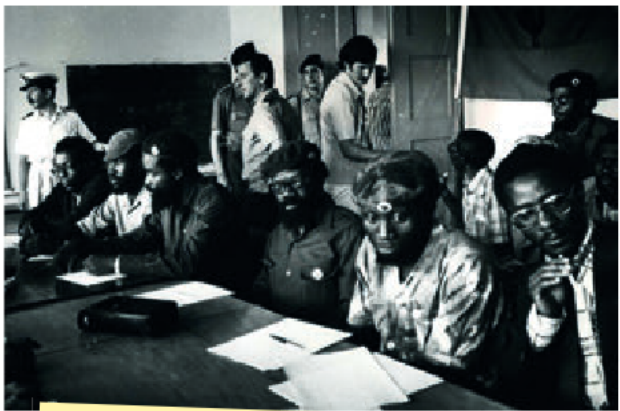
- 1975: Voting Rights Act revised to protect other racial minorities; November - African Black Panther Party meets at Capitol, Washington
Summary
Key Points to Remember:
- Significant political progress: Black political representation increased dramatically from 25 to 700 elected officials in the South between 1964-1970
- Nixon's complex motivations: Civil rights progress during Nixon's presidency was driven by political calculations rather than pure idealism
- Mixed federal results: Government legislation achieved important legal changes, but practical desegregation remained inconsistent across different areas
- Economic challenges persisted: Despite political gains, economic inequality between racial groups remained a major unresolved issue by 1975
- Ongoing struggle: By 1975, while substantial progress had been made in legal rights and political representation, true racial equality remained an unfinished goal