The weaknesses of US armed forces (Edexcel GCSE History): Revision Notes
📚Revision Notes
The weaknesses of US armed forces
The United States faced significant military challenges in Vietnam that contributed to their ultimate failure. Despite having superior technology and military strength, American armed forces struggled with fundamental weaknesses that made victory impossible to achieve.
Lack of knowledge and awareness
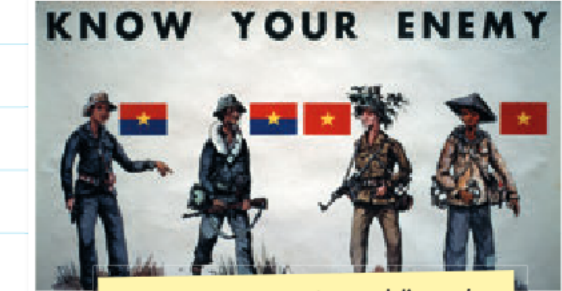
One of the most critical weaknesses was the American military's poor understanding of what they were fighting. Vietnam represented a completely unfamiliar environment for most US soldiers and commanders, creating major disadvantages from the start.
The Vietnamese conflict was entirely "alien" to American experience. Most soldiers had no knowledge of Vietnamese culture, language, or customs, making it extremely difficult to operate effectively in this foreign environment. This cultural gap meant that American forces often misunderstood local situations and failed to build meaningful relationships with the people they claimed to be helping.
Note
The cultural disconnect between American forces and Vietnamese society created a fundamental barrier that technology and firepower could not overcome. This lack of cultural awareness affected every aspect of military operations, from basic communication with civilians to understanding enemy motivations.
American military leaders consistently underestimated their enemy's capabilities and determination. Many held racist and dismissive attitudes towards Vietnamese fighters, viewing them as inferior opponents. This dangerous assumption led to poor strategic decisions and tactical mistakes that cost American lives and weakened their position.
Perhaps most importantly, US military strategists failed to understand the conflict from the Vietnamese perspective. They approached the war through an American lens, missing crucial insights about why the Vietnamese were fighting and what motivated their resistance. The geographical distance of over 13,500 kilometres between the USA and Vietnam made this cultural disconnect even more problematic.
Political and economic weaknesses
The Vietnam War marked a historic shift in American public opinion about military conflicts. For the first time in US history, America fought a war without clear public agreement about whether the conflict was justified or necessary.
Public opposition grew steadily throughout the war. American war veterans, in an unprecedented move, began calling for the war to end and even returned their military medals in protest. This represented a complete breakdown in the traditional support structure that had sustained previous American military efforts.
Note
The Role of Media Coverage
Television coverage brought the reality of the conflict directly into American homes, making it impossible for the government to maintain popular support for their policies. Media criticism intensified as the war progressed, with journalists and news organisations increasingly questioning both the war's aims and the methods being used.
The US government initially tried to ignore growing public opposition to the war, but political leaders who depended on public support for election eventually had to respond to anti-war sentiment. This created a situation where military operations were increasingly constrained by domestic political considerations rather than strategic military needs.
After 1971, Congress began restricting funding for the war effort, creating serious equipment shortages for US troops in the field. This financial constraint severely hampered military operations and sent a clear message that domestic support for the war was collapsing.
Failure of US tactics
Despite having access to advanced military technology including helicopters and sophisticated weaponry, American tactical approaches proved unsuccessful in the Vietnamese context. The US military made fundamental strategic errors that undermined their technological advantages.
American commanders mistakenly believed that victory could be achieved simply by deploying more troops and conducting more intensive bombing campaigns in North Vietnam. This approach ignored the nature of guerrilla warfare and the determination of Vietnamese fighters who were defending their homeland.
Important
Critical Tactical Misjudgment
Military leaders consistently overestimated their successes by focusing on statistics like village destruction and enemy casualties rather than meaningful measures of territorial control or political progress. This led to unrealistic assessments of how the war was progressing and prevented necessary strategic adjustments.
US troops faced additional challenges due to their youth and inexperience. Many soldiers lacked proper training in guerrilla warfare techniques, which proved essential in the Vietnamese jungle environment. Low morale became a serious problem, leading to "fragging" incidents where soldiers deliberately killed their own officers. Drug and alcohol abuse became widespread as soldiers struggled to cope with the stress and apparent hopelessness of their situation.
Failure to win Vietnamese hearts and minds
While American propaganda claimed the USA wanted to bring democracy to South Vietnam, local Vietnamese people viewed American involvement very differently. The US-backed South Vietnamese government lacked popular support and was widely seen as corrupt and illegitimate.
Many South Vietnamese civilians had far more sympathy for the ideas and values promoted by the Vietcong and North Vietnam than for the government imposed by American intervention. The communist forces were viewed as genuine representatives of Vietnamese independence and national identity, while American forces were seen as foreign occupiers similar to the previous French colonial rulers.
Important
This failure to win local support meant that American forces operated in a hostile environment where they could never be certain who was friend or enemy. The hearts and minds campaign, designed to build local support for American objectives, largely failed because it was based on American assumptions about what Vietnamese people wanted rather than genuine understanding of their needs and aspirations.
Summary
Key Points to Remember:
-
American forces lacked understanding of Vietnamese culture and consistently underestimated their enemy's capabilities and determination.
-
For the first time in US history, America fought a war without clear public support, leading to unprecedented opposition from veterans and civilians.
-
Superior military technology could not overcome poor tactical decisions based on misunderstanding the nature of guerrilla warfare.
-
The US government's failure to win local Vietnamese support meant they were fighting in a hostile environment where the enemy had significant advantages.
-
Political and economic constraints, including Congressional funding restrictions after 1971, severely limited military effectiveness and sent clear signals that domestic support was collapsing.