The legacy of the First World War (Edexcel GCSE History): Revision Notes
📚Revision Notes
The legacy of the First World War
The devastating impact of the First World War on Germany
The First World War ended in 1918, leaving Germany in a state of complete devastation and defeat. The country had been overwhelmed by the combined military forces of Britain, France, Russia, Italy, and the United States, creating a crisis that would fundamentally transform German society and politics.
Important
The scale of Germany's defeat was unprecedented in modern European history. The combination of military collapse, economic ruin, and social upheaval created conditions that would fundamentally reshape the German political system and society for generations to come.
The human cost of the war was staggering and left deep scars on German society. Approximately two million German soldiers had lost their lives during the conflict, while more than four million others returned home wounded and traumatised. This enormous loss of life affected virtually every German family and community, creating a generation marked by grief and loss.
Beyond the battlefield casualties, the war had created a humanitarian disaster on the home front. The Allied naval blockade and the demands of total war had created severe food shortages that claimed the lives of more than 750,000 German civilians. Families struggled with malnutrition and starvation, while the government's resources were entirely focused on the failing war effort.
Note
The British naval blockade of Germany continued even after the armistice was signed, prolonging the civilian suffering and contributing to the harsh conditions that German negotiators faced during the peace talks.
The economic consequences were equally catastrophic. Germany's national debt had tripled during the war years, soaring from 50 billion marks to an astronomical 150 billion marks. This financial burden would plague the new German state for years to come, making it extremely difficult to rebuild the country and care for its citizens. The combination of human suffering, economic collapse, and military defeat created the conditions for political revolution.
The abdication crisis of Kaiser Wilhelm II
The military and political collapse of Germany in late 1918 triggered a constitutional crisis centred on Kaiser Wilhelm II, who had ruled Germany since 1888. As defeat became inevitable, pressure mounted for the Kaiser to take responsibility for the disaster and step down from his throne.
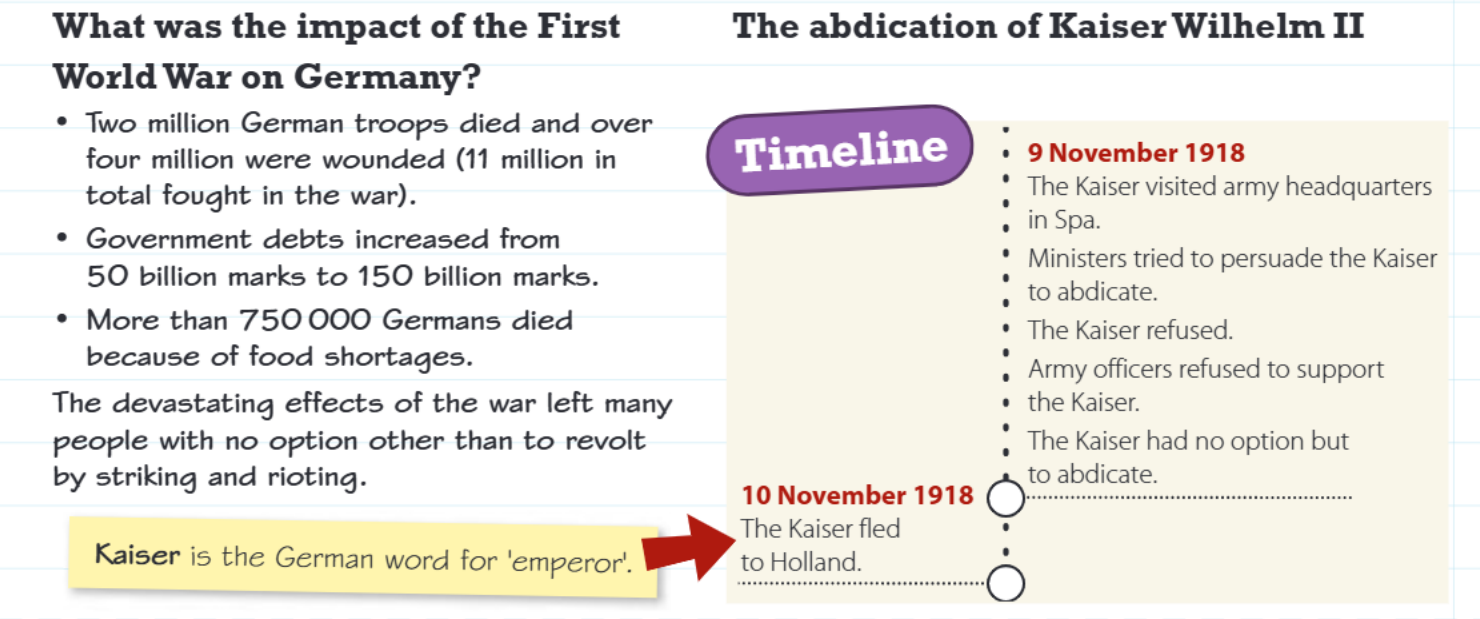
The critical events unfolded rapidly during November 1918. On 9 November, the Kaiser visited army headquarters in Spa, Belgium, where his remaining military leaders attempted to convince him to abdicate voluntarily. However, Wilhelm II initially refused to give up his crown, believing he could somehow maintain his position despite the collapsing military situation.
Note
The Hohenzollern dynasty had ruled Prussia since 1415 and had been the German imperial family since 1871. Wilhelm II's abdication thus ended over 400 years of continuous rule by this powerful German royal house.
The situation deteriorated further when army officers, who had been the backbone of the imperial system, began to withdraw their support from the Kaiser. Faced with the reality that he had lost the loyalty of his own military, Wilhelm II found himself with no viable options to remain in power. By 10 November 1918, the Kaiser had fled to Holland, effectively ending over 400 years of Hohenzollern rule in Prussia and Germany.
Important
The speed of the Kaiser's fall - from refusing to abdicate to fleeing the country in just 24 hours - demonstrated how completely the old imperial system had lost legitimacy. This rapid collapse cleared the way for Germany's first experiment with democratic government.
This abdication marked the end of the German Empire and created a political vacuum that would need to be filled by new democratic institutions. The speed of the Kaiser's fall demonstrated how completely the old order had collapsed under the weight of military defeat and popular discontent.
Revolution and the birth of the German Republic
With the Kaiser's flight, Germany experienced a rapid transition from monarchy to republic. On 9 November 1918, the German Republic was officially declared, marking the birth of what would later be known as the Weimar Republic. This momentous change occurred amid revolutionary chaos in Berlin and other German cities.
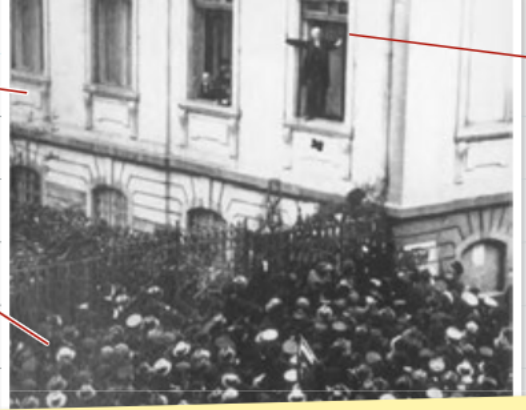
Friedrich Ebert, leader of the Social Democratic Party (SDP), emerged as a key figure during this transition period. On 10 November, he took the crucial step of suspending the old Reichstag (German parliament) and establishing the Council of People's Representatives as a temporary governing body. This revolutionary government was designed to maintain order during the transition to a fully democratic system.
Example
Historic Moment: The Proclamation of the Republic
On 9 November 1918, Philipp Scheidemann stood at a window of the Reichstag building in Berlin and addressed the crowds gathered below. In a dramatic moment that would define German history, he declared: "The German people have won all along the line. The old and rotten has broken down, militarism is dead. Long live the German Republic!"
This spontaneous proclamation occurred without consultation with other Social Democratic leaders, but it effectively established Germany's first democratic government.
The streets of Berlin became the stage for this historic transformation. Large crowds gathered throughout the city, with some people carrying weapons as various political groups competed for influence. Philipp Scheidemann, another prominent Social Democratic leader, addressed these crowds from the Reichstag building, officially proclaiming the new Republic to the German people. He was particularly concerned about preventing communist groups from seizing control of the revolution and worked to ensure a peaceful transition to democratic governance.
Note
The revolutionary period was marked by competing political visions. While Social Democrats like Ebert and Scheidemann wanted gradual reform, more radical groups like the Spartacists (led by Rosa Luxemburg and Karl Liebknecht) demanded immediate communist revolution similar to what had occurred in Russia.
The revolutionary period that began in November 1918 continued until August 1919, when the new Weimar Republic was finally established with a proper constitution. This extended period of political uncertainty reflected the enormous challenges facing Germany as it attempted to build democratic institutions from the ruins of the old imperial system.
The armistice agreement
The final piece of Germany's transformation came with the signing of the armistice on 11 November 1918. This agreement formally ended the fighting in World War I and represented the first major decision made by Friedrich Ebert's new republican government.
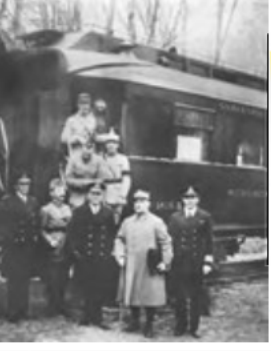
The armistice negotiations took place in a railway car in the forest of Compiègne, France, where German representatives met with Allied military leaders to agree on the terms for ending the war. This location was chosen by the Allies to emphasise Germany's defeat, and the signing ceremony marked Germany's complete military surrender.
Note
The choice of a railway car in the forest was deliberately symbolic - it emphasised that Germany was coming as a defeated supplicant, not negotiating as an equal partner. This symbolic humiliation would be remembered by many Germans and later exploited by Hitler, who forced France to sign its surrender in the same railway car in 1940.
However, the armistice was only the beginning of Germany's diplomatic challenges. The peace agreement that would follow - the Treaty of Versailles - would prove to be an enormous burden for the new German Republic. The harsh terms imposed by the victorious Allies would create lasting resentment and economic difficulties that would plague the Weimar Republic throughout its existence.
Important
The armistice was meant to be a temporary ceasefire, but it effectively became Germany's surrender. The harsh terms included immediate withdrawal from occupied territories, surrender of military equipment, and continuation of the naval blockade until a final peace treaty was signed. These conditions left Germany powerless to resist whatever terms the Allies would later impose.
The armistice thus represented both an ending and a beginning: it concluded the devastating war that had destroyed the German Empire, but it also marked the start of a new era of international humiliation and economic hardship that would define much of the Weimar period.
Timeline of key events - November 1918
9 November 1918:
- Kaiser Wilhelm II visited army headquarters in Spa
- Ministers attempted to persuade the Kaiser to abdicate
- German Republic was declared by Philipp Scheidemann
10 November 1918:
- Army officers refused to support the Kaiser
- Kaiser Wilhelm II fled to Holland
- Friedrich Ebert formed the Council of People's Representatives
11 November 1918:
- Armistice agreement signed, ending World War I
- First major decision of the new German Republic
Summary
Key Points to Remember:
-
Devastating war impact: Germany suffered 2 million military deaths, 4+ million wounded, and over 750,000 civilian deaths from starvation, while national debt tripled to 150 billion marks.
-
End of monarchy: Kaiser Wilhelm II's abdication on 10 November 1918 ended centuries of imperial rule and created the political space for Germany's first democracy.
-
Revolutionary transition: The German Republic was declared on 9 November 1918, with Social Democrats like Friedrich Ebert and Philipp Scheidemann leading the peaceful transition from monarchy to democracy.
-
Armistice burden: The 11 November 1918 armistice ended the fighting but led to the harsh Treaty of Versailles, which would create lasting problems for the new Weimar Republic.
-
Foundation for crisis: The legacy of WWI - military defeat, economic collapse, and political revolution - created the unstable conditions that would challenge German democracy throughout the 1920s and beyond.