Reproduction (OCR GCSE Biology A, Combined (Gateway Science Suite)): Revision Notes
📚Revision Notes
6.1.8 Sex Determination
Note
Human body cells have 23 pairs of chromosomes.
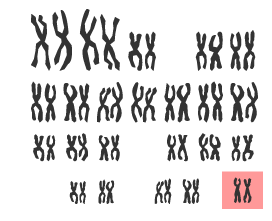
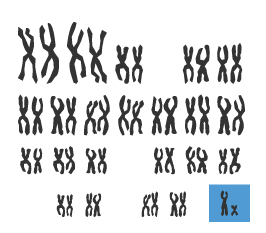
- 22 control characteristics, and the chromosomes in each pair look very similar
- The 23rd pair carries sex determining genes, and the two chromosomes can look different to each other (Y chromosomes are much smaller than X chromosomes) The two possible chromosomes in the 23rd pair are X chromosomes and Y chromosomes. When cells undergo meiosis to form a gamete, one sex chromosome goes into each gamete.
-
Females have two X chromosomes, so therefore only pass on X chromosomes in their eggs.
-
Males have one X chromosome and one Y chromosome, so therefore can pass on X or Y chromosomes in their sperm.
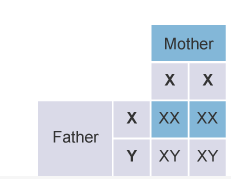
Punnett squares can be used to show sex inheritance. There is a 50% chance of the child being male, and a 50% chance of the child being female.