Arranging the Elements (OCR GCSE Chemistry A, Combined (Gateway Science Suite)): Revision Notes
📚Revision Notes
1.2.1 Arranging the Elements
Note
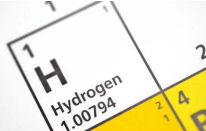
Atoms can be represented by symbols. The atoms of each element are represented by a chemical symbol. This usually consists of one or two different letters, but sometimes three letters are used for newly discovered elements.
Examples of Chemical Symbols:
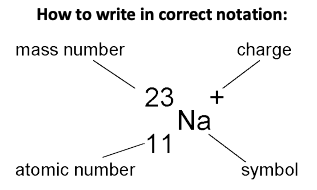
O = Oxygen
Na = Sodium
C = Carbon
Ag = Silver
Au = Gold
W = Tungsten
Rules:
The first letter in a chemical symbol is always an UPPERCASE letter, and the other letters are always lowercase.
For example, the symbol for a magnesium atom is Mg and not mg, MG, or mG.
The Periodic Table
All the different elements are arranged in a chart called the periodic table. A Russian scientist named Dmitri Mendeleev produced one of the first practical periodic tables in the 19th century. The modern periodic table is based closely on the ideas he used:
Key Concepts:
- The elements are arranged in order of increasing atomic number.
- The horizontal rows are called periods.
- The vertical columns are called groups.
- Elements in the same group have similar properties to each other.
- Metals appear on the left side of the table, while non-metals are on the right.
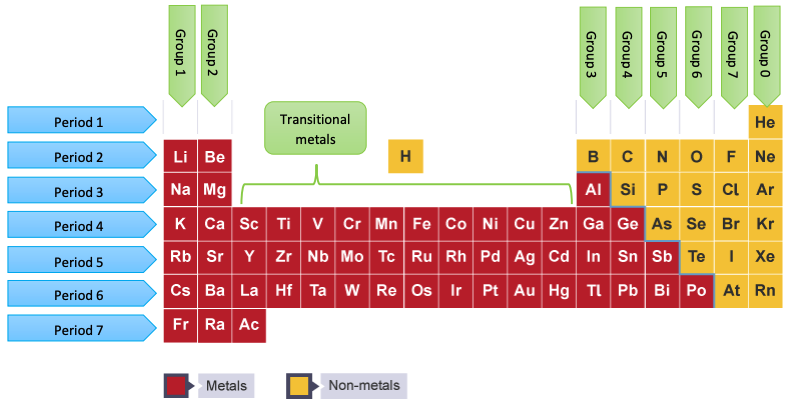
The Periodic Table
Structure of the Periodic Table:
- Periods: These are the horizontal rows (e.g., Period 1, Period 2, etc.).
- Groups: These are the vertical columns (e.g., Group 1, Group 2, etc.).
- Transitional Metals: These are found in the central block of the periodic table.
- Metals vs. Non-metals:
- Metals are shaded in red.
- Non-metals are shaded in yellow.
Intermediate Properties:
Elements that appear close to the divide between metals and non-metals often have intermediate properties. This means they can sometimes behave like metals and/or non-metals.